
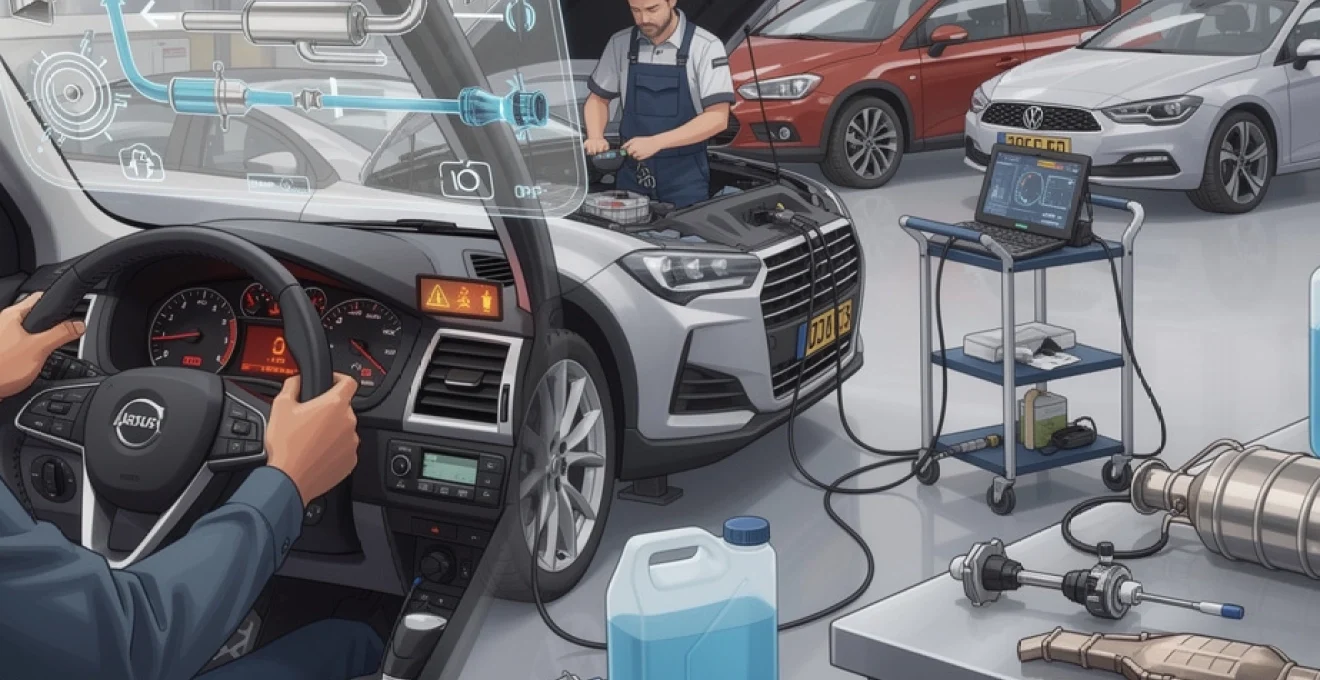
If you drive a modern diesel with AdBlue and an SCR system, the message “Emissions fault: starting impossible in 700 miles” can feel like a ticking time bomb on the dashboard. The car still runs, but the built-in countdown to a no‑start condition creates real anxiety, especially if family or work depend on that vehicle. Understanding what the warning actually means, how the AdBlue system works, and what steps you can take immediately can make the difference between a controlled repair and a stranded car on the driveway. This guide looks at the technical side, the practical steps you can follow, and the UK legal and warranty angles so you can decide what to do next with confidence.
Understanding the “emissions fault: starting impossible in 700 miles” warning on modern diesel cars
How AdBlue, SCR (selective catalytic reduction) and NOx sensors interact to trigger the countdown
The countdown message typically appears on Euro 6 diesel cars equipped with an SCR (Selective Catalytic Reduction) system, which injects AdBlue (Diesel Exhaust Fluid) into the exhaust stream to reduce harmful NOx emissions. AdBlue is a carefully controlled mix of 32.5% urea and 67.5% de‑ionised water. When injected upstream of the SCR catalyst, it decomposes to ammonia, which reacts with NOx to form nitrogen and water vapour. NOx sensors, usually one before and one after the catalyst, constantly measure emissions. If the control unit sees that NOx levels are too high, or that AdBlue dosing does not match demand, it flags an emissions fault and starts a mileage countdown to zero‑start.
ECU logic: why the engine start is inhibited after 700 miles / 1 100 km on euro 6 vehicles
The logic behind the “starting impossible in 700 miles” warning is regulatory rather than mechanical. Under Euro 6 rules, manufacturers must prevent drivers from running indefinitely with a non-functioning urea system. The engine control unit (ECU) runs self‑diagnostics on the AdBlue tank, pump, injectors and NOx sensors. If it cannot guarantee legal NOx control, it is programmed to give a series of escalating warnings: first a simple AdBlue warning, then an emissions fault with a mileage countdown, then a hard no‑start once the distance reaches zero. Think of it as a built‑in compliance lock: the engine itself may be mechanically fine, but the software refuses to start the car to avoid excessive pollution.
Differences in wording between peugeot, citroën, vauxhall, BMW, mercedes and VW group dashboards
The core function is similar across brands, but the wording varies significantly, which can confuse you if you change cars or read forums from different regions. Peugeot and Citroën typically show phrases like “Emissions fault: starting impossible in 700 miles” or “Urea emissions fault”. Vauxhall Combo and other Stellantis-based models often display “emissions fault: starting prevented in 1700 miles” as seen in many owner reports. VW Group dashboards may say “AdBlue: no engine start possible in XXX miles” or “Exhaust fluid range: XXX miles”. BMW iDrive systems tend to use “No start in XXX miles – check AdBlue system”, while Mercedes uses “Engine start not possible in XXX km – AdBlue system”. VW and Mercedes also sometimes flash a separate AdBlue symbol alongside the engine management light, which can make the cluster look more intimidating than it actually is.
Common related messages: “urea system fault”, “AdBlue no engine start”, “exhaust fluid system malfunction”
Once the emissions fault countdown has been triggered, you may notice an entire family of related warnings. These include “Urea system fault”, “Check anti-pollution system”, “Exhaust fluid system malfunction” and “Starting impossible in XXX miles”. Some cars also show generic engine warning messages like “Engine fault: repair needed”, “Service emissions system” or even just an illuminated MIL (Malfunction Indicator Lamp). The wording may change as the fault evolves: for example, an initially low AdBlue level warning can escalate to “starting impossible in 700 miles” if the ECU detects that refilling has not occurred or the level sensor is not changing. If you see multiple messages like this together, it is a strong indicator that the SCR system needs detailed diagnostics rather than a simple top‑up.
Typical root causes behind the emissions fault countdown on AdBlue-equipped diesel engines
Adblue level, crystallisation and contaminated DEF (diesel exhaust fluid) in the tank
Low AdBlue level is the most obvious cause people think of, but on many cars a simple refill does not clear the countdown if other issues are present. AdBlue can crystallise when it dries, forming white deposits around the filler neck, tank, or injector. Over time, crystallisation can block level sensors or dosing lines, leading the ECU to believe that the system is not delivering fluid. Contamination is another major trigger: using water, off‑spec urea solution, or AdBlue stored for too long can change the fluid quality. DEF typically has a shelf life of around 12–18 months when stored correctly; beyond that, its composition can drift outside the acceptable range, which is why many dealer-level diagnostics include an AdBlue quality check.
Faulty AdBlue pump, pressure sensor and dosing module failures (bosch, continental units)
The AdBlue tank on many vehicles integrates the pump, heater, level sensor and temperature sensor in a single sealed module. If one component fails, the entire tank assembly may have to be replaced, which can be costly. Faulty pumps lead to low pressure in the AdBlue line, so the SCR system cannot inject the required amount of fluid. Pressure sensors and dosing modules (often supplied by Bosch or Continental) may also suffer from internal electrical failures or contamination. On Peugeot 3008 and similar models, technical bulletins have recommended replacing the urea reservoir when persistent DTCs remain even after software updates. When these modules fail, the ECU usually records codes related to low pressure, pump circuit faults or dosing deviations, all of which can trigger the countdown.
Nox sensor degradation, wiring harness issues and DTCs such as P20EE, P2200, P229F
NOx sensors are among the most failure‑prone parts of modern diesel exhaust systems. They operate in a harsh environment, exposed to heat, condensation and chemical contaminants. Over time, their readings drift or they fail completely. Common fault codes include P20EE (SCR NOx catalyst efficiency below threshold), P2200 (NOx sensor circuit malfunction) and P229F (NOx sensor 2 performance). Wiring harness damage—often from road debris, corrosion in connectors, or poor previous repairs—can create intermittent faults that are hard to trace. When the ECU no longer trusts the NOx readings, it uses a failsafe strategy based on stored maps and often starts the no‑start countdown while limiting engine torque or increasing fuel consumption.
SCR catalyst efficiency losses, particulate filter loading and EGR valve malfunction
Sometimes the AdBlue system is functioning correctly, but the SCR catalyst itself has degraded. High sulphur fuel, repeated overheating, oil contamination or internal cracking can reduce its efficiency. When the catalyst no longer converts enough NOx, the ECU compares inlet and outlet readings and logs an efficiency fault. In some cases, a heavily loaded DPF (diesel particulate filter) or a sticking EGR valve can change exhaust temperatures and gas composition enough to upset SCR performance. For example, an EGR valve stuck open can reduce exhaust temperature, leading to incomplete AdBlue decomposition and increased deposits. This interaction between subsystems means you may see both “anti‑pollution system fault” and specific AdBlue messages even though the root cause lies upstream.
Cold-weather effects, freezing of AdBlue and blocked supply lines in UK and EU climates
AdBlue freezes at around −11°C, which is not uncommon in parts of the UK and northern Europe. Modern cars are designed for this: tanks and lines have heaters, and the SCR system can operate with limited dosing until thawed. However, if the heater fails or the system has pre‑existing crystallisation, freezing can block lines, split plastic pipes or damage pumps. After a severe cold spell, you might notice new emissions warnings or the dreaded “starting impossible in 700 miles” message even though the car seemed fine previously. Short journeys in cold conditions also prevent the exhaust from reaching optimal SCR temperatures, which can accelerate deposits and reduce catalyst efficiency over time.
Immediate actions to take when you first see “starting impossible in 700 miles” on the dashboard
Safe driving strategy, mileage management and when to stop using the vehicle
Once the countdown appears, the car remains legal and drivable in the short term, but your usable range is limited. Treat the remaining 700 miles (or whatever value is displayed) as a hard cap, not a suggestion. If you rely on the car for work or family duties, start planning an inspection as soon as possible, rather than waiting until the last 50 miles. Avoid unnecessary trips, and try to keep journeys longer so the exhaust reaches full operating temperature, which sometimes helps the system complete self‑checks after minor glitches. If the message escalates to a shorter range or the car goes into limp mode with reduced power, it is safer to stop using it until at least a basic diagnostic scan has been carried out.
Checking AdBlue level, refilling correctly and performing a proper ignition reset cycle
The first practical step is to confirm that the AdBlue level is adequate. Consult the owner’s manual for the correct filler location and minimum volume; many systems require at least 3–5 litres added in one go for the level sensor to recognise the change. Use only certified DEF that meets ISO 22241, and avoid decanting from unlabelled containers. After refilling, perform a proper ignition cycle: lock the car, wait a few minutes, then turn the ignition on without starting and leave it for around 30 seconds before starting the engine. This gives the level sensor and ECU a chance to re‑initialise. If the countdown continues unchanged after a few driving cycles, the issue is more serious than a simple low level.
Reading fault codes with an OBD-II scanner (e.g. autel, foxwell, carly) before visiting a garage
An affordable OBD-II scanner can give valuable insight before you speak to a mechanic. Tools from Autel, Foxwell, Carly and others can read emissions‑related fault codes on most cars, although manufacturer‑specific tools still go deeper. Look for stored or pending codes such as P20EE, P229F, or general “SCR system efficiency” errors. If the scanner shows multiple NOx sensor codes or AdBlue pressure faults, take a note or photo of them. Even if you do not fully understand the codes, having them recorded can help a garage avoid unnecessary trial‑and‑error diagnostics and can support any warranty or dealer dispute, especially if problems keep returning.
Documenting symptoms, messages and conditions for your mechanic or main dealer
Careful documentation makes troubleshooting faster and can be crucial if you later challenge a dealer or finance company about a mis‑sold or faulty car. Note the exact wording of dashboard messages, when they first appeared, and whether they came on during specific driving conditions (for example, motorway runs, urban stop‑start, or after refuelling). Photographs and short videos of the cluster showing the “emissions fault starting impossible in 700 miles” message are particularly useful. If a dealer has already inspected the car, keep copies of job sheets, emails and diagnostic reports. In one Peugeot 3008 case, for example, a local dealer documented failed ECU updates, Urea reservoir replacement, and a manufacturer recommendation to change the turbo, injectors and clean the EGR valve, which provided strong evidence of a serious underlying issue.
Dealer-level diagnostics and repair workflow for emissions fault countdown issues
Using manufacturer tools such as peugeot planet, DiagBox, VCDS, ISTA and mercedes xentry
Dealer or specialist diagnostics go far beyond what a basic OBD-II tool can see. Peugeot and Citroën use DiagBox or Peugeot Planet, VW Group specialists often rely on VCDS or ODIS, BMW workshops use ISTA, and Mercedes uses Xentry. These platforms can access manufacturer‑specific SCR tests, software updates, and guided fault‑finding procedures. For instance, in documented 3008 BlueHDi cases, technicians followed a technical bulletin linked to DTC P20EE, performed an ECU update, replaced the AdBlue tank and, after escalation, were instructed by the technical team to replace the turbo and injectors and to clean the EGR. Access to these official procedures helps ensure that the repair pathway is backed by the manufacturer rather than improvised.
Live data analysis of NOx sensors, AdBlue pressure, injector duty cycle and SCR temperatures
Once connected, a good technician will not just read fault codes, but also monitor live data. Key parameters include upstream and downstream NOx values, AdBlue line pressure, injector duty cycle (how often and how much fluid is being dosed) and SCR catalyst temperatures. Healthy systems show clear differences between inlet and outlet NOx levels under load and stable pressure during dosing events. If the downstream sensor shows little reduction in NOx, or if pressure fluctuates wildly, that points to catalyst or pump issues. Live data is especially useful for intermittent faults, where the system only misbehaves under certain driving conditions, such as heavy acceleration or high-speed cruising.
Leak tests, dosing quantity tests and AdBlue quality checks with refractometers
Beyond electronic checks, physical tests play a major role. Many manufacturer procedures include leak tests of AdBlue lines, where the pump is commanded to build pressure and the system is inspected for drops indicating leakage. Dosing quantity tests involve injecting AdBlue into a measuring container for a fixed time to confirm that the injector is delivering the expected volume. Some workshops also use refractometers to verify AdBlue concentration; out‑of‑spec fluid can lead to over‑ or under‑dosing and long‑term SCR damage. If you drive mostly in cold or dusty environments, asking your garage to inspect the filler neck and visible lines for crystallisation or damage is a sensible extra step.
Firmware updates, ECU reprogramming and service campaigns for SCR and AdBlue systems
Manufacturers frequently release software updates to refine SCR control strategies, improve AdBlue consumption, and address known sensor issues. In several Stellantis and VW Group models, service campaigns have been launched to update ECU software when specific codes like P20EE or persistent AdBlue countdowns appear. These updates may adjust thresholds, enhance sensor plausibility checks, or modify regeneration strategies. Firmware updates are not magic fixes, but they can resolve marginal calibration issues that would otherwise trigger ongoing faults. Before committing to expensive hardware replacements, ask the dealer to check for open service campaigns, recalls or technical bulletins relevant to emissions or AdBlue systems.
Cost ranges in the UK for AdBlue tanks, NOx sensors and SCR catalyst replacement
Repair costs vary dramatically depending on the exact failure and the brand of car. As a general UK guide, AdBlue tanks with integrated pump and sensors often cost £700–£1,500 fitted at main dealers, due to the labour involved in dropping the tank and coding the new unit. NOx sensors typically range from £250–£450 per sensor, and many vehicles have two. SCR catalysts are the most expensive component; OEM replacement can exceed £1,500–£2,000 including labour, particularly on SUVs and large saloons. For context, independent industry data suggests that emissions system repairs account for over 20% of major out‑of‑warranty diesel repair bills on Euro 6 cars, a figure that has risen sharply in the last five years as fleets age.
Model-specific patterns: common emissions faults by brand and platform
Peugeot, citroën and vauxhall 1.6 and 2.0 BlueHDi engines (DV6, DW10) and AdBlue tank failures
On Peugeot and Citroën BlueHDi engines, especially the 1.6 DV6 and 2.0 DW10 units, AdBlue tank and pump failures are widely reported. Tanks on these models often integrate the pump, heater, level sensor and filter, so any single failure can necessitate full replacement. Owners of Peugeot 3008, 308 and Citroën C4/Grand Picasso frequently report the “Anomaly anti-pollution system” or “emissions fault: starting impossible in XXX miles” messages, sometimes linked to DTC P20EE. In a number of cases, warranty coverage was questioned because earlier services were not carried out exactly on schedule, which can complicate repair authorisation. Vauxhall Combo and other Stellantis‑based vans share similar hardware and exhibit the same countdown wording when the system detects persistent faults.
VW group TDI engines (EA288, EA189) with SCR systems in golf, A3, passat and octavia
VW Group’s later EA288 and some updated EA189 engines use AdBlue systems that are generally reliable but still prone to specific issues. NOx sensor failures are common, as are faults with the AdBlue injector or heater. Drivers of Golf, Passat, Audi A3 and Skoda Octavia models often see “AdBlue: no engine start in XXX miles” paired with the engine warning light. After the diesel emissions scandal, VW implemented numerous software updates that altered SCR dosing strategies, and some independent specialists argue that this has increased the sensitivity of the system to marginal sensor or catalyst performance. From a practical perspective, ensuring the latest official software and checking both NOx sensors before replacing the SCR catalyst can save unnecessary expense.
BMW 1 series, 3 series and X models with B47/N47 diesel and frequent NOx sensor faults
BMW diesels with the N47 and B47 engines, found in 1 Series, 3 Series and various X models, are particularly well known for NOx sensor problems. Owners often report exhaust fluid warnings followed by no‑start countdowns, even when the AdBlue level is fine. In many cases, replacing one or both NOx sensors and updating the DDE (engine control) software resolves the issue. However, if high mileage or previous oil consumption has contaminated the catalyst, SCR efficiency codes may persist. Independent BMW specialists often recommend, as a first step, a thorough diagnostic session focusing on live NOx readings under real‑world driving to distinguish between sensor drift and genuine catalyst failure.
Mercedes BlueTEC (OM651, OM642) AdBlue heater and injector problems
Mercedes BlueTEC systems on engines such as the OM651 and OM642 have a different architecture, but exhibit familiar failure modes. AdBlue tank heaters and line heaters can fail, particularly in colder regions, leading to frozen or blocked systems that trigger “Engine start not possible in XXX km” messages. Injectors can also suffer from crystallisation build‑up if the car is driven mainly on short journeys. Some models use separate AdBlue control units that can themselves fault, leading to confusing and seemingly unrelated warnings. Given Mercedes’ strong dealer network, many owners benefit from manufacturer goodwill or extended coverage if a full dealer service history exists, especially within six to eight years of first registration.
Ford EcoBlue diesels in transit and focus with DEF quality and dosing issues
Ford’s EcoBlue diesels, used in Transit, Transit Custom and passenger cars like the Focus, rely heavily on correct DEF quality and dosing. Fleet operators report that off‑spec or contaminated AdBlue, often from bulk storage tanks, can trigger repeated emissions faults and no‑start countdowns. Dosing modules may also fail or clog, resulting in under‑dosing and high NOx. Because many of these vehicles are used in delivery or trade work, the impact of a no‑start condition can be severe, with significant lost income. Proactive maintenance—regular AdBlue filter changes where specified, line inspections, and sticking closely to OEM-approved DEF—pays dividends on these engines.
Legal, warranty and MOT implications of driving with an active emissions fault countdown in the UK
Manufacturer warranty, extended goodwill and recall checks for AdBlue and SCR components
Emissions systems often fall into a grey area between “exhaust” and “engine management”, and warranty cover can vary. Many manufacturers in the UK provide at least three years or 60,000 miles of comprehensive cover, with some offering longer specific cover on major emissions components. Even if the official warranty has expired, there may be goodwill contributions for known issues, especially where there is a recognised pattern of AdBlue tank or NOx sensor failures. For financed cars, including PCP agreements, ongoing emissions faults like “starting impossible in 700 miles” can raise questions about satisfactory quality and fitness for purpose under the Consumer Rights Act 2015. Thorough documentation of dealer attempts to fix the problem, as seen in some Peugeot 3008 cases, strengthens any complaint to the finance company or relevant ombudsman.
How emissions-related DTCs affect UK MOT tests and “MIL on” (malfunction indicator lamp) rules
Under current UK MOT rules, an illuminated engine management light related to emissions can be an automatic fail. If a car arrives for its MOT with an active “emissions fault” or AdBlue-related code storing a MIL, the tester may have no choice but to record a failure, even if the vehicle still drives well. The DVSA guidance is clear that serious emission control faults must be treated as major defects. For cars close to MOT date, it can therefore be risky to ignore a countdown in the hope that it will clear itself. From a purely practical angle, scheduling diagnostics and repair work several weeks before the MOT expiry gives time to source parts and verify that all monitors have reset and that no new fault codes remain.
Consequences of AdBlue delete, SCR removal and ECU remapping under UK and EU emissions law
Because of the cost and complexity of SCR repairs, some drivers are tempted by AdBlue delete services or ECU remaps that disable the countdown and “fool” the system into thinking everything is working. From a legal and practical standpoint, this is a high‑risk strategy. Removing or disabling any part of the emissions control system is illegal for road use in the UK and EU. If detected at MOT, by roadside emissions checks, or after an accident investigation, the vehicle can fail tests, be subject to enforcement action, and potentially invalidate insurance. Professional opinion is that such modifications may also reduce resale value, especially as more buyers check vehicle history and emission equipment status. For long‑term peace of mind, investing in correct repair, pursuing manufacturer goodwill, or challenging a mis‑selling case through official channels offers a far more sustainable solution than attempting to bypass the AdBlue system entirely.