
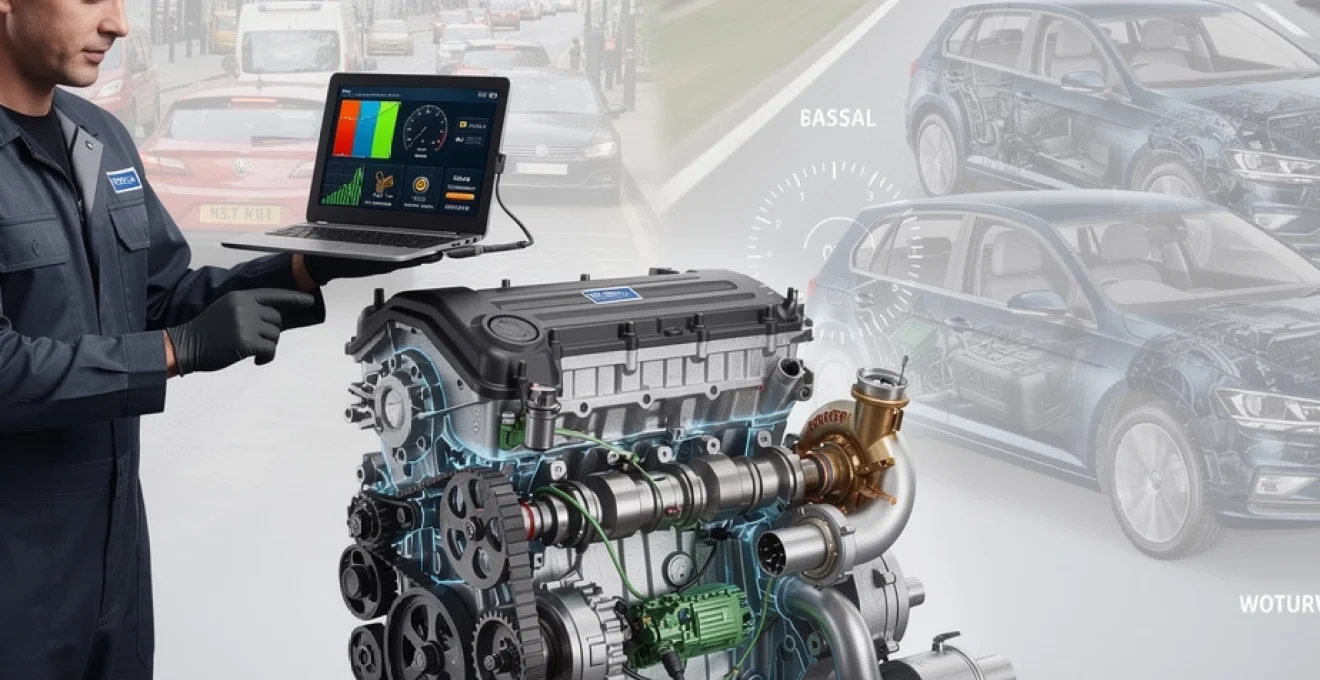
The VW 1.6 TDI has a mixed reputation: frugal and torquey when treated well, fragile and expensive when neglected. For anyone running a Golf, Passat, Polo or Caddy with this engine, the real question is not the official brochure mpg, but how many miles you can realistically expect before major work is needed. With the right oil, sensible service intervals and driving patterns that suit a modern diesel, a 1.6 TDI can comfortably exceed 200,000 miles and, in many cases, pass the 300,000‑mile mark. Understanding why some engines reach that kind of mileage while others struggle past 120,000 miles is the key to protecting your investment and planning long-term ownership.
VW 1.6 TDI engine variants and codes: CAYB, CAYC, CLNA, CLLB, CAYD compared
The VW 1.6 TDI belongs to the EA189 and later EA288 engine families, with several important variants such as CAYB, CAYC, CLNA, CLLB and CAYD. These codes denote changes in emissions equipment, injection hardware and software calibrations that directly influence engine longevity. For example, CAYB and CAYC are among the most common Euro 5 units found in Mk6 Golf and Caddy models, while CLNA and CLLB are later Euro 6 versions used in Mk7 Golf and newer small-platform cars. When you assess a used VW diesel engine or plan long‑term servicing, decoding which version you have matters more than the badge on the boot.
Euro 5 vs euro 6 VW 1.6 TDI design differences and their impact on engine longevity
Euro 5 1.6 TDI engines such as CAYB and CAYC use a simpler emissions layout than Euro 6 units like CLNA and CLLB. Euro 5 models typically rely on a close-coupled Diesel Particulate Filter (DPF) and high EGR (Exhaust Gas Recirculation) rates but do not use AdBlue SCR on smaller cars. Euro 6 engines add more complex aftertreatment, tend to run higher injection pressures and often operate at higher exhaust gas temperatures to meet stricter NOx limits.
From a durability perspective, Euro 5 units generally impose slightly less thermal stress on the cylinder head and turbocharger, especially on long motorway journeys. However, Euro 6 engines run cleaner, and when maintained with correct oil and fuel, soot loading is lower, which benefits long-term wear. If you mainly do mixed or motorway mileage and follow a conservative 10,000‑mile oil interval, both Euro 5 and Euro 6 engines can realistically reach 250,000 miles, but Euro 5 units may suffer fewer expensive AdBlue and sensor-related failures over that distance.
Common-rail injection evolution in the 1.6 TDI: bosch piezo vs solenoid injectors
The 1.6 TDI family uses Bosch common-rail injection, but two main injector types appear across its life: early piezo injectors and later solenoid injectors. Early EA189 engines commonly used Bosch piezo units designed for very fine control of injection timing and quantity. These offered excellent refinement and emissions performance but proved sensitive to fuel quality and moisture contamination. Injector replacement on these systems can be costly, and misfire issues on high-mileage units are not rare.
Later revisions and Euro 6 EA288 1.6 TDI engines moved back to Bosch solenoid injectors, which are slightly less precise but more robust in everyday use. For you as an owner, this shift generally favours long-term reliability over theoretical refinement. Using high-quality diesel and changing the fuel filter on time dramatically reduces injector wear, especially on the earlier piezo-equipped engines that already have more than 150,000 miles on the clock.
Dpf-equipped vs non-DPF 1.6 TDI engines and long‑term reliability trade‑offs
Most VW 1.6 TDI engines in Western Europe are DPF-equipped, although some markets originally received non‑DPF commercial variants. A DPF brings clear emissions benefits and allows access to low‑emission zones, but it introduces a new reliability variable. Short-trip usage prevents full regeneration, leading to soot and ash accumulation, higher back‑pressure and, in extreme cases, turbo and EGR overheating.
Non‑DPF engines avoid those issues and can be more tolerant of urban driving, but they are now increasingly restricted by regulations and may be unpopular in stricter cities. For long‑term reliability, a DPF‑equipped 1.6 TDI can last just as long as a non‑DPF engine, provided you regularly give it sustained runs at operating temperature and keep the correct low‑ash VW 507.00 oil in the sump. If your driving is almost exclusively urban, a 1.6 TDI with DPF is mechanically capable but will require more frequent attention and diagnostic checks to preserve its lifespan.
Typical power outputs (90, 95, 105, 110 PS) and associated engine stress levels
The VW 1.6 TDI appears in several power levels: 90 PS, 95 PS, 105 PS and 110 PS, often sharing the same basic hardware. The main differences lie in turbocharger calibration, injection timing and boost targets. Lower-output versions like the 90 and 95 PS units run gentler boost and injection maps, which can translate into slightly lower thermal and mechanical stress at a given road speed.
A 105 or 110 PS 1.6 TDI is still conservatively tuned and, in standard form, far from its design limits. However, when remapped beyond 140 PS and around 320 Nm, the safety margin shrinks, especially for the clutch and turbo. For a driver planning to exceed 250,000 miles, keeping the engine stock or using only a mild, well‑calibrated tune is advisable. The small additional performance of the higher‑powered factory variants does not significantly reduce longevity when combined with good servicing and sensible warm‑up habits.
Real-world VW 1.6 TDI mileage examples: expected lifespan in golf, passat, polo and caddy
Real‑world mileage data show the 1.6 TDI is capable of genuinely high figures when used in the right way. Taxi and fleet operators often report 250,000 to 350,000 miles on original bottom ends, with only routine wear items replaced. In private hands, where shorter journeys are more common, the average engine life expectancy tends to fall between 160,000 and 240,000 miles before major attention becomes economically sensible. The spread is large, and your own result is heavily influenced by driving style, oil quality and how often the DPF has been forced into emergency regenerations.
Documented 300,000+ mile VW 1.6 TDI case studies in Mk6/Mk7 golf and mk7.5 golf
Across enthusiast forums and fleet records, numerous Mk6 and Mk7 Golf 1.6 TDI cars have surpassed 300,000 miles with the original engine internals intact. Common patterns in these high‑mileage examples include strict adherence to fixed service intervals, frequent motorway use and the use of premium diesel. One well-documented Mk7.5 Golf 1.6 TDI Bluemotion reached over 320,000 miles on its original turbo and injectors with compression still within factory tolerance, helped by 10,000‑mile oil changes and weekly 100‑mile motorway runs.
These case studies demonstrate that for a driver covering 20,000 to 25,000 miles a year, a 1.6 TDI run for 10 to 12 years can still deliver strong performance and acceptable oil consumption. Engines that reach such mileages typically have full, verifiable service histories, including at least one preventative timing belt kit change earlier than VW’s official maximum interval.
Engine life expectancy in urban-use polo 1.6 TDI vs motorway-driven passat B7/B8
The same 1.6 TDI installed in different models faces very different operating conditions. In a Polo used mainly for short urban trips, the engine spends a lot of time cold, idling or running light loads. That pattern is hard on DPF systems and leads to increased fuel dilution of the oil during frequent regenerations. Statistics from independent workshops suggest many urban‑use Polo diesels require EGR, DPF or turbo attention between 90,000 and 140,000 miles.
By contrast, a Passat B7 or B8 1.6 TDI, typically used as a company car or family cruiser on the motorway, can clock 200,000 miles with few engine‑internal issues. If you are choosing between diesel and petrol for mostly inner‑city journeys, a modern 1.6 TDI may not be the most cost‑effective long‑term choice, even though the engine itself is durable when properly warmed through.
VW caddy 1.6 TDI high-mileage fleet usage patterns and wear characteristics
The 2004–2015 VW Caddy, particularly the Mk3, is a common platform for the 1.6 TDI in trades and delivery fleets. These vans frequently reach 250,000 miles or more, often with the same engine that left the factory. Typical fleet usage involves long daily runs with steady loads, which is ideal for diesel longevity. The suspension and bodywork usually show their age long before the core engine components.
Routine maintenance is crucial: oil changes at 10,000 miles, timing belt at 60,000 to 75,000 miles and gearbox oil at around 40,000 miles keep the whole powertrain in balance. When used as intended, a Caddy 1.6 TDI can be expected to achieve a similar or slightly higher life expectancy than a privately owned hatchback, simply because the engine spends more time at stable operating temperature and less time in stop‑start traffic.
Taxi and delivery use: duty cycles that push the 1.6 TDI beyond 400,000 miles
Some private hire and taxi operators report 1.6 TDI engines passing 400,000 miles, often in Caddy Maxi Life or Golf estate platforms. These extreme‑mileage examples are not typical, but they provide useful insight. The engines are usually run almost continuously, with minimal cold starts and very little time idling from cold. Oil is changed even more frequently than recommended, sometimes every 8,000 miles, and only quality fuels are used.
Interestingly, the gearbox, particularly the DQ200 7‑speed dry clutch DSG, often becomes the limiting factor rather than the engine itself. Clutch pack failures and bearing noise can make it uneconomical to repair the car, even though the engine is still mechanically sound. If you aim for such high mileage, budgeting for DSG servicing and potential replacement is as important as caring for the engine.
Key design features influencing VW 1.6 TDI service life
Aluminium cylinder head, cast-iron block and long-stroke design implications
The 1.6 TDI uses a cast‑iron block with an aluminium cylinder head and a relatively long‑stroke design. This combination allows strong low‑end torque at modest engine speeds, which suits a diesel that spends much of its life between 1,500 and 2,500 rpm. Cast iron provides excellent wear resistance and dimensional stability, while aluminium helps the engine shed heat efficiently. That balance is a major reason why, when serviced correctly, bottom‑end failures are rare even beyond 250,000 miles.
The long stroke, however, means higher piston speeds than some shorter‑stroke rivals at the same rpm. Sustained high‑rpm driving near the red line is therefore not ideal if you care about engine life expectancy. For daily use and motorway cruising, keeping revs moderate helps minimise wear on rings and bearings over very high mileage.
Turbocharger architecture (garrett VNT units) and boost pressure durability limits
Most 1.6 TDI engines are equipped with small Garrett variable-geometry (VNT) turbochargers. These turbos are designed for quick spool and good low‑rpm response. When treated with care—allowing the engine to warm up before heavy load and idling briefly after hard runs—they are capable of lasting 200,000 miles or more. Oil starvation or carbon build-up in the VNT mechanism is usually what ends their life, not the basic design.
Remapped engines that run higher boost place additional strain on the turbo’s bearings and turbine. While the hardware can handle modest increases, aggressive tuning and repeated full‑throttle acceleration from low revs can shorten turbocharger life significantly. From a longevity standpoint, keeping boost pressures within sensible margins and using high‑quality oil with correct change intervals has a much greater impact than the stock power rating itself.
Exhaust gas recirculation (EGR) and diesel particulate filter (DPF) thermal load
The EGR and DPF systems are both essential for emissions and central to how long a 1.6 TDI engine lasts. EGR routes a controlled amount of exhaust back into the intake to reduce NOx, but it also carries soot and oil vapours that coat intake tracts and valves. Over time this build-up restricts airflow, increases combustion temperatures and forces the turbo and DPF to work harder.
The DPF periodically heats up to burn off accumulated soot, a process known as regeneration. On a healthy engine with regular long runs, these regens are quick and efficient. On a car used exclusively for short trips, the system may attempt frequent incomplete regenerations, raising oil dilution and thermal load on the exhaust side. That extra heat can contribute to premature EGR cooler failures and cracks in exhaust components if left unchecked.
Timing belt-driven camshafts and water pump: design vs chain-driven competitors
Unlike some chain‑driven rivals, the VW 1.6 TDI uses a timing belt to drive the camshaft and, in many cases, the water pump. Belts have a finite life but tend to run more quietly and impose lower friction than chains. VW’s official maximum intervals for EA189 common‑rail engines can be as high as 130,000 miles, but many independent specialists recommend replacement every 60,000 to 80,000 miles or 4–5 years, whichever comes first.
From a life-expectancy standpoint, a belt system is only a weakness if neglected. A snapped belt or seized tensioner will usually destroy valves and pistons instantly. Replacing the belt, tensioners, idlers and water pump as a complete kit is relatively cheap insurance compared with the cost of an engine rebuild or replacement unit.
Closed crankcase ventilation and intake tract contamination over high mileage
The 1.6 TDI employs a closed crankcase ventilation system that routes blow‑by gases back into the intake. Over high mileage, especially with long oil intervals or poor-quality lubricants, this system can carry oil mist into the intake manifold where it mixes with EGR soot. The result is sticky deposits on ports, valves and swirl flaps that gradually reduce volumetric efficiency and can cause poor idle or hesitation.
Preventative cleaning every 100,000 miles or so, plus using the correct low‑volatility oil, minimises this contamination. Ignoring intake build‑up does not usually destroy the engine outright, but it pushes combustion temperatures higher and makes DPF and EGR systems work harder, shortening their usable life.
Known VW 1.6 TDI weak points that shorten engine life
EGR valve and EGR cooler clogging leading to increased combustion temperatures
EGR valves and coolers on 1.6 TDI engines are prone to clogging with soot and carbon, particularly on cars used mostly for city driving. A sticking EGR valve can cause rough running, poor throttle response and higher NOx emissions. More importantly for engine life, a malfunctioning EGR system can lead to elevated combustion temperatures, which in turn stress pistons, valves and the turbocharger.
Early symptoms include intermittent EML lights and stored fault codes such as P0401 (EGR insufficient flow). Addressing these issues early with cleaning or replacement prevents knock‑on damage. Leaving a partially blocked cooler in place can also risk leaks, putting coolant where it should not be and accelerating corrosion.
DPF regeneration issues in short-trip driving and resulting oil dilution
DPF problems are among the most common reasons a 1.6 TDI sees the workshop before its time. The ECU will attempt to regenerate the DPF once soot loading reaches a set threshold, injecting additional fuel to raise exhaust temperatures. On short urban trips, these regenerations may not complete properly, so the ECU tries again and again. Each failed attempt risks fuel washing down the cylinder walls into the sump, diluting the engine oil.
Oil dilution reduces lubricity, increases wear and can eventually raise the oil level enough to cause secondary problems. If your 1.6 TDI is used primarily on short runs, monitoring regeneration frequency with a diagnostic tool and planning occasional longer trips is essential for engine longevity. Ignoring DPF warnings and repeatedly cancelling regenerations is an almost guaranteed way to shorten engine life.
Injector wear, misfire and diesel knock on bosch common-rail systems
High‑pressure injectors operate in a brutally demanding environment, and the Bosch units on 1.6 TDI engines are no exception. Over time, nozzle wear or internal leakage can cause rough cold starts, diesel knock and increased smoke. On piezo-equipped early engines, even minor contamination from poor‑quality fuel can damage injectors, leading to costly replacements at 120,000 to 180,000 miles.
Solenoid injectors on later engines are more tolerant but still rely on good fuel and regular filter changes. Persistent misfire left unchecked can wash cylinder walls and damage pistons and rings. If you notice new clatter, white smoke on cold start or uneven idle, investigating injector performance quickly can avoid much larger bills later.
Turbocharger vane sticking and overboost on high-mileage garrett units
Variable-geometry turbos use a ring of moveable vanes to control boost. Soot and carbon can cause these vanes to stick, particularly in engines used mostly at low load. When the vanes fail to move freely, the turbo may underboost (triggering limp mode) or, worse, overboost. Overboost puts extreme strain on pistons, rods and the turbo itself, risking catastrophic failure.
Symptoms include fault code P0299 (underboost), hesitation and intermittent loss of power. Cleaning the VNT mechanism or reconditioning the turbo can restore normal operation. Continuing to drive with repeated overboost or underboost events increases the risk of both turbo and engine damage, especially at higher mileages.
Timing belt, tensioner and water pump failures causing catastrophic engine damage
A failed timing belt or seized tensioner is usually game over for the engine. Bent valves, scored pistons and cracked cams are common results. Water pumps with worn bearings can also seize and take the belt with them. These failures are entirely avoidable with a disciplined replacement schedule.
For a 1.6 TDI expected to live a long life, many specialists advise replacing the complete timing kit, including water pump, every 60,000 miles or 4–5 years. This is particularly important on older CAYC engines that may have had an uncertain maintenance history. Skipping or stretching belt changes to save a few hundred pounds can easily write off an otherwise healthy engine.
Maintenance strategies to maximise VW 1.6 TDI engine life expectancy
Fixed 10,000-mile vs LongLife 18,000–20,000-mile service intervals: longevity analysis
VW’s LongLife service regime allows oil changes up to 18,000–20,000 miles apart on some 1.6 TDI models, especially when mostly driven on the motorway. From a pure longevity perspective, shorter fixed intervals around 10,000 miles or annually are almost always better. Used oil contains soot, fuel dilution and acids that slowly degrade protective films on bearings and cam lobes.
Real-world data from independent specialists and fleet operators indicate engines run on fixed 10,000‑mile intervals show measurably less wear at 200,000 miles than those running stretched LongLife intervals, even when the correct oils are used. If you want your 1.6 TDI to reach 250,000 miles or more, a fixed schedule is the safer choice, particularly if your driving includes short trips, towing or heavy city use.
Oil specification (VW 507.00, 504.00) and viscosity choices for extended engine life
Choosing the correct oil is not marketing fluff; it is central to how long your engine survives. The 1.6 TDI typically requires low-ash, high‑spec oils meeting VW 507.00 (for most DPF-equipped diesels) or, in some regions, VW 504.00 for mixed‑fleet oils. These specifications ensure compatibility with DPF systems and provide the high‑temperature stability needed for turbocharged diesels.
In the UK climate, a high‑quality 5W‑30 or 5W‑40 meeting the correct VW spec offers the best balance between cold‑start protection and hot running stability. Some owners of older, high‑mileage engines opt for a slightly thicker 5W‑40, particularly if oil consumption has risen. As long as the oil meets the official VW standard and is changed regularly, either viscosity can support very high engine mileages.
Preventive EGR, intake manifold and DPF cleaning schedules after 100,000 miles
From around 100,000 miles onwards, soot and oil deposits begin to compromise EGR valves, intake manifolds and sometimes DPF efficiency. Waiting until a fault light appears is rarely the most economical strategy. Proactive cleaning of the intake tract and EGR valve every 80,000–100,000 miles keeps airflow and combustion stable, reducing thermal stress and improving mpg.
For the DPF, regular long journeys are still the best “maintenance”. Professionally assessing ash load around 95,000 miles and then every 19,000 miles thereafter helps identify when the filter is nearing end of life. At some point, ash—not soot—will fill the filter, and a professional clean or replacement will be required to maintain back‑pressure within safe limits.
Coolant, water pump and auxiliary belt replacement intervals on CAYC/CLNA engines
Coolant condition directly affects corrosion, head gasket life and thermal stability. Even when using long‑life G12 or G13 coolant, replacing it every 4–5 years is a prudent step. At the same time, replacing the water pump and auxiliary belt on CAYC and CLNA engines avoids the risk of seized bearings or belt fragmentation that can damage the timing system.
Because most water pumps are driven by the timing belt, many owners combine coolant and pump replacement with each belt change. This “full front-end” approach may feel expensive at the time, but it dramatically reduces the chance of a catastrophic cooling-related failure later in the engine’s life.
Diagnostic use of VCDS/OBDeleven to monitor DPF soot load, regeneration and injector balance
Modern diagnostics tools such as VCDS and OBDeleven give you access to live data on soot load, regeneration frequency, injector correction values and more. Checking these values a few times a year is like a health check for your 1.6 TDI. Consistently high soot loads or very frequent regens indicate a driving pattern or mechanical issue that needs attention.
Similarly, injector balance figures outside the normal range can reveal early wear long before you feel a misfire. Addressing these small deviations early—through cleaning, recalibration or replacement—helps preserve the engine’s internals. Treating diagnostics as a preventative tool rather than just a fault-code reader is one of the best ways to maximise the engine’s usable life.
Driving style and operating conditions shaping VW 1.6 TDI lifespan
Cold start behaviour, warm-up routines and boundary lubrication wear
The majority of engine wear happens during cold starts and warm‑up, when oil is thick and has not yet fully reached all bearing surfaces. A 1.6 TDI is no different. Revving hard or loading the engine heavily straight after start-up forces metal surfaces to run under boundary lubrication, increasing microscopic wear on pistons, rings and cam lobes.
A simple warm‑up routine makes a big difference: start the engine, allow it to idle for 20–30 seconds, then drive gently for the first few miles, keeping revs below about 2,500 rpm until coolant and oil temperatures stabilise. Over 200,000 miles, this habit can be the difference between a tight, efficient engine and one that feels tired and uses oil.
Short urban trips vs sustained motorway cruising on UK roads (M1, M25, M6)
Short urban trips with stop‑start traffic, such as daily commutes on congested city routes, are the hardest environment for the VW 1.6 TDI. On such journeys, the DPF may never complete a full regeneration, the oil remains cool and condensation may not fully evaporate from the crankcase. By contrast, sustained cruising on UK motorways like the M1, M25 or M6 allows the engine to reach and maintain optimal temperature, supporting clean combustion and efficient DPF operation.
If your driving is mostly urban but you still want to keep a 1.6 TDI long term, planning a regular 30–40‑minute motorway run once a fortnight can significantly improve engine and DPF health. Combining that with more frequent oil changes partly offsets the disadvantages of city use.
Impact of towing caravans and trailers on 1.6 TDI thermal and mechanical stress
Towing with a 1.6 TDI is perfectly possible but comes with added thermal and mechanical stress. Pulling a caravan up long motorway inclines or hauling heavy trailers at low speed forces the turbo and cooling system to work much harder. Cylinder pressures are higher, and exhaust gas temperatures can climb quickly if you stay in too high a gear and load the engine heavily at low rpm.
For best longevity while towing, use lower gears to keep revs in the 2,000–2,500 rpm range, where the engine has plenty of torque but is not labouring. After a hard towing run, especially on hot days, allowing the engine to idle for a short period before switch‑off helps the turbo cool down and reduces the risk of oil coking in the bearing housing.
Fuel quality, supermarket diesel vs premium fuels (shell V-Power, BP ultimate)
Fuel quality has a subtle but real impact on how long a 1.6 TDI remains efficient and trouble‑free. Premium diesels such as Shell V‑Power or BP Ultimate typically contain higher levels of detergents and cetane boosters than standard supermarket fuels. Over tens of thousands of miles, this can mean cleaner injectors, smoother combustion and fewer deposits in the combustion chamber and DPF.
Using premium fuel all the time is not mandatory for engine life, but alternating it with standard diesel—say every few tanks—or using it consistently in high‑mileage cars can help maintain injection system health. For engines already past 150,000 miles, the cleaning effect of better fuel can be especially beneficial, particularly if combined with regular long‑distance journeys to assist DPF and EGR cleanliness.
When a VW 1.6 TDI is near end-of-life: diagnostics, rebuild or replacement decisions
Compression test data, blow-by measurement and oil consumption thresholds
As a 1.6 TDI accumulates mileage, gradual wear in pistons, rings and valves will eventually reduce compression and increase blow‑by. Signs that an engine is nearing the end of its economical life include heavy crankcase fumes, rising oil consumption and declining performance. A proper compression test, ideally alongside a cylinder leakage test, provides hard data. Healthy engines typically show tight, even readings across all cylinders.
While VW does not publish a single universal “end‑of‑life” figure, many specialists regard sustained oil consumption above 1 litre per 1,000 miles, together with poor compression and visible blow‑by, as the point at which a full rebuild or replacement becomes sensible. Below that threshold, targeted repairs—valve stem seals, turbo replacement or injector overhaul—can often restore acceptable behaviour for many more miles.
Interpreting exhaust smoke colour and OBD-II fault codes (P0401, P2002, P0299)
Exhaust smoke provides valuable clues. Blue smoke typically indicates oil burning, white smoke on cold start points towards unburnt fuel or coolant ingress, and thick black smoke suggests over‑fuelling or air restriction. Combined with OBD‑II fault codes, this helps pinpoint whether an ageing engine is suffering from ancillary issues or fundamental wear.
Common codes like P0401 (EGR), P2002 (DPF efficiency) and P0299 (turbo underboost) do not automatically mean the core engine is worn out. Many 1.6 TDI units with such codes still have excellent compression; they simply need EGR, DPF or turbo attention. Distinguishing between peripheral and core problems is essential before deciding to scrap or rebuild an engine.
Cost–benefit comparison: full engine rebuild vs factory exchange unit vs used engine
When a VW 1.6 TDI reaches the stage where major work is required, you face three broad options: a full rebuild of your existing engine, a factory exchange or remanufactured unit, or a used engine from a breaker. A full rebuild offers the advantage of known history and the opportunity to upgrade wear‑prone components, but labour costs can be significant. Factory exchange units are often the most reliable choice but can be expensive relative to the residual value of an older car.
Used engines are usually cheaper up front, but the condition is variable and may simply replicate the same wear issues. Factoring in ancillary costs—new timing belt kit, clutch, fluids and diagnostic setup—narrows the price gap. For high‑value or cherished vehicles, a quality rebuild or factory exchange engine is often the best life‑extension strategy; for older, low‑value cars, a good used engine may be more proportionate, provided it comes from a trusted source and is carefully inspected.
Assessing clutch, DSG gearbox and ancillary components alongside engine wear
Finally, engine life expectancy cannot be considered in isolation. A 1.6 TDI with strong compression and a healthy turbo is of limited value if the clutch, flywheel or DSG gearbox are near failure. On cars equipped with the dry‑clutch DQ200 DSG, clutch pack replacement and mechatronic issues can add substantial cost, sometimes exceeding the value of the car itself. Even on manual gearboxes, worn dual‑mass flywheels and clutches need to be budgeted when evaluating whether to invest in engine work.
Assessing the condition of the cooling system, alternator, starter, injectors and DPF at the same time gives a complete picture of the vehicle’s remaining economic life. If most ancillary components are recent and in good order, an engine rebuild or replacement can provide many more years of service. If multiple systems are tired, a more cautious approach may be wiser, particularly if your annual mileage no longer justifies a diesel’s operating profile.