
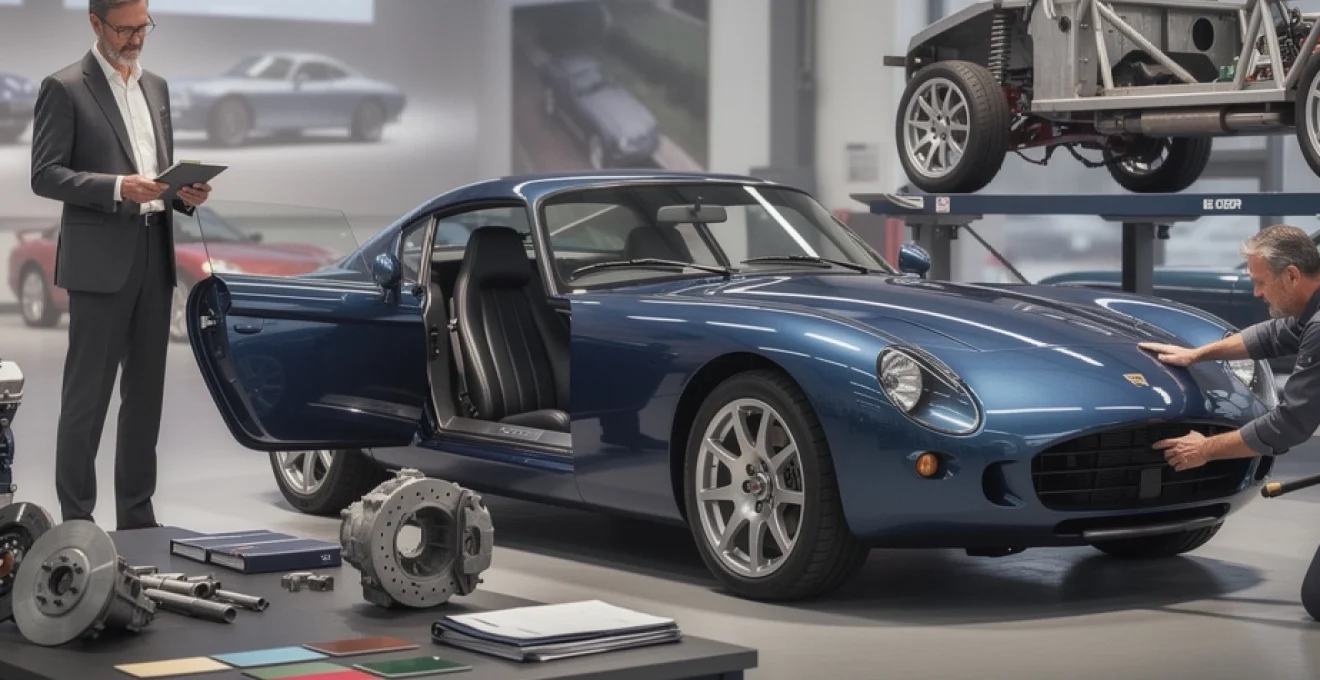
The TVR Griffith 500 remains one of the most charismatic British sports cars of the 1990s, combining brutal performance with hand-built charm and a shape that still stops traffic. For many enthusiasts, a well-sorted Griffith 500 offers the purest expression of the TVR ethos: light weight, a huge naturally aspirated V8 and minimal electronic interference between you and the road. As values rise and good cars become harder to find, understanding the market, technical specification and inspection pitfalls becomes essential if you want to buy the right Griffith 500, keep it reliable and protect your investment.
Whether you are searching for a TVR Griffith 500 for sale in the UK, importing one into Europe or looking at left-hand drive conversions further afield, the difference between a cherished example and a tired project can be tens of thousands of pounds. Approached with the right knowledge, though, a Griffith 500 is not only a thrilling weekend toy but also a highly usable modern classic that can be maintained sensibly and enjoyed on road trips, track days and classic rallies.
Market overview for TVR griffith 500 for sale in the UK and europe
Current UK TVR griffith 500 asking prices on PistonHeads, auto trader and car & classic
Market data for the wider TVR Griffith range indicates a median price of around £17,800 since 2020, with the cheapest recorded at approximately £11,800 and the most expensive public sale just above £41,000. The dedicated Griffith 500 models, being the range-topping variant, typically sit in the upper half of that spectrum. On enthusiast classifieds such as PistonHeads, Auto Trader and Car & Classic, asking prices for a TVR Griffith 500 for sale in 2025 generally fall between £22,000 and £40,000 depending on mileage, chassis condition and history.
Entry-level, higher-mileage cars with evidence of past chassis repairs and average cosmetic condition tend to sit around £22,000–£26,000. Nicely maintained, sub-60k mile examples with strong service history and recent suspension or cooling upgrades normally command £28,000–£35,000. The rarest cars – low-mileage, low-owner Griffith 500s with impeccable history, special-order colours or late-build features – can edge past £40,000, especially when marketed by recognised TVR specialists. A sell-through rate of roughly 70% across Griffith sales shows that realistically priced cars still find homes quickly.
Right-hand drive vs left-hand drive TVR griffith 500 availability in the UK, EU and US
Most TVR Griffith 500s are right-hand drive (`RHD`), built primarily for the UK market. A small number of cars were converted to left-hand drive (`LHD`) either by the factory or by reputable specialists to satisfy European demand, particularly in markets such as Germany, the Netherlands and France. RHD cars imported into the EU remain more common than genuine factory LHD examples, so if you are based in Europe and considering a Griffith 500 for sale, expect to see mostly RHD listings with varying degrees of conversion quality.
In the United States, the Griffith 500 is rarer still. Importation tends to rely on the 25-year exemption rule, and most cars are RHD UK imports. Because of this scarcity, well-presented cars can attract a premium over equivalent UK prices, even after shipping and compliance costs. It is worth treating LHD conversions cautiously: professionally executed conversions will retain correct pedal spacing, steering geometry and column alignment, while cheaper jobs may compromise ergonomics and long-term reliability.
Price trends for TVR griffith 500 from 2010–2025: auction hammer data from silverstone auctions and historics
Hammer price data for Griffith models since 2010 shows a clear upward trend. During the early 2010s, it was possible to buy a usable TVR Griffith 500 at auction for under £15,000. As broader interest in analogue, manual V8 sports cars grew, so did the values. By the mid-2010s, typical auction prices at venues such as Silverstone Auctions and Historics were already nudging £20,000 for average examples and significantly more for collector-grade cars.
Between 2020 and 2025, the market became more stratified. Data since 2020 indicates that the very best Griffiths can touch and occasionally exceed the £40,000 mark, while tired cars still languish around the mid-teens. The covid-era surge in classic car values, combined with low interest rates, pushed many enthusiasts towards rare analogue sports cars, and the Griffith 500 benefited noticeably from this shift. Even with some recent softening in the wider market, properly maintained 500s with strong documentation have generally held their value or appreciated modestly.
Comparing TVR griffith 500 values to griffith 400, chimaera 500 and cerbera 4.5
Within the TVR range, the Griffith 500 occupies an interesting position. Early 4.0-litre Griffith 400s sometimes attract a premium if they are launch-year cars from 1991–1992, thanks to their historical significance. However, among later cars, the 500’s extra power and torque normally result in higher demand. Chimaera 500s use a broadly similar Rover V8 but are pitched as more of a grand tourer, so prices typically sit 10–20% below an equivalent Griffith 500 despite offering similar performance.
The Cerbera 4.5, with its bespoke TVR AJP8 engine, often commands strong values among marque enthusiasts because of its performance and rarity. Yet the Cerbera’s more complex engine and reputation for higher running costs can deter some buyers. For you as a potential Griffith 500 buyer, the key advantage lies in the combination of relatively straightforward Rover V8 mechanicals, timeless styling and a market that still regards the 500 as one of the most desirable classic TVRs to own and drive.
TVR griffith 500 technical specification and model variations for collectors
5.0-litre rover V8 engine specs: power output, torque curve and camshaft variants
The heart of the Griffith 500 is a TVR-developed 5.0-litre version of the classic Rover V8. In standard form it produces around 340 bhp with a broad plateau of torque that makes the car feel effortlessly fast from low revs. The engine is based on aluminium block architecture dating back decades, but TVR’s modifications – larger capacity, high-lift camshaft, revised cylinder heads and bespoke mapping – turn it into something far more aggressive than its Range Rover origins suggest.
Power delivery is old-school and linear: the torque curve swells from low rpm, hurls the car towards the horizon and only really tails off near the red line. Various camshaft specifications exist, including uprated aftermarket profiles aimed at fast-road or track use. These more aggressive cams can sharpen throttle response but may compromise idle quality and low-speed drivability. For a road-focused Griffith 500, a healthy standard or mild uprated cam, combined with good `ECU` mapping and a free-flowing exhaust, strikes an excellent balance between civility and performance.
Borgwarner T5 gearbox, final drive ratios and limited-slip differential configurations
Later Griffiths, including the 500, use the BorgWarner `T5` gearbox, a robust five-speed unit also found in various performance Fords and American muscle cars. The T5’s shorter throw and stronger internals make it well suited to the Griffith 500’s torque. Earlier cars used the Rover/Land Rover LT77, which is still tough but not quite as slick in operation. When test driving a car, concentrate on synchromesh quality: baulking into second or third under quick shifts may signal impending rebuild costs.
Final drive is via a limited-slip differential, initially supplied by GKN and later by Salisbury with a Quaife `LSD` used on some cars. Ratios are chosen to give a blend of rapid acceleration and relaxed cruising, but the Griffith 500 remains quite short-legged compared with modern GTs. Listen for whining or grumbling from the rear at constant speed, which can indicate worn diff bearings. A correctly set-up drivetrain transforms the car, giving precise throttle adjustability mid-corner and a playful but predictable rear end.
Chassis design, tubular backbone construction and galvanised vs non-galvanised frames
Under the fibreglass body, the Griffith 500 uses a tubular steel chassis with a backbone-style central structure and tubular outriggers supporting the sills and body mounts. The chassis is made from mild steel and finished originally with powder coating, which can trap moisture and allow corrosion to creep along the tubes unseen. Unlike some contemporaries, the Griffith did not start life with galvanised frames, although later replacement chassis and outrigger kits are often zinc-coated or improved over the factory finish.
From a collector’s perspective, chassis condition is more important than almost any other factor. A seemingly pristine TVR Griffith 500 for sale can hide serious corrosion beneath its glossy paint. Evidence of a body-off restoration, with photographic records and detailed invoices, is a major plus. Look especially at the outriggers, wishbone mounts and steering rack area. A sound chassis not only preserves safety but also ensures the car continues to track straight, handle with precision and feel tight rather than baggy or vague.
Pre-cat vs later griffith 500 exhaust layouts, catalyst configurations and sound characteristics
Earlier Griffith models – often known as pre-cat cars – used different exhaust routing and catalyst arrangements compared with later, emissions-compliant versions. By the time of the Griffith 500, most cars were equipped with catalytic converters, but layouts and silencer designs still varied over the production run and via aftermarket modifications. Some owners choose to fit sports cats or decat pipes for track use, dramatically increasing volume and sharpening throttle response.
The Griffith 500’s soundtrack is a huge part of its appeal. A healthy 5.0-litre Rover V8 with a free-flowing system produces a deep, muscular idle, hard-edged mid-range bark and an almost NASCAR-style roar near the red line. However, excessively loud systems can be tiring on long journeys and may cause problems at stricter track days. If you want regular circuit use, researching decibel limits and perhaps opting for a repackable silencer system is a sensible compromise between drama and practicality.
Factory options and special editions: PAS, air-con, halfords specials and “500 SE” style upgrades
Factory options on the Griffith 500 included power-assisted steering (`PAS`), air-conditioning, various interior trims and audio choices. Early cars did not always feature PAS, which arrived around 1995 and dramatically improved low-speed manoeuvrability. Many earlier Griffiths have had PAS retrofitted, often using factory-type components, so absence of assistance is now the exception rather than the rule. Air-con, when installed and properly maintained, adds useful comfort for continental touring, although it is not essential for weekend use in the UK.
Near the end of production, TVR produced 100 Special Edition cars with distinctive rear lights, mirrors and interior detailing, often referred to as Griffith SE models. Separately, many owners have later added “500 SE style” upgrades such as different alloys or cosmetic tweaks. Period quirks like “Halfords specials” – aftermarket stereos, steering wheels or gearknobs – are common on used examples. For collector value, originality generally matters, but tasteful, reversible upgrades that enhance usability can be an advantage if you intend to use the car regularly.
Identifying a genuine TVR griffith 500: chassis numbers, build years and originality
Decoding TVR VINs: locating the chassis plate and confirming a true 500 specification
Verifying that a car is a genuine Griffith 500 rather than a lesser model with a badge or engine swap is crucial. The Vehicle Identification Number (`VIN`) plate is normally found in the engine bay and is mirrored by a stamping on the chassis. The VIN structure and engine code allow confirmation of original engine capacity and build specification. Factory build records and marque clubs can often cross-check chassis numbers against production logs for extra assurance.
A proper pre-purchase check should involve comparing the VIN on the plate, chassis and V5C registration document, ensuring everything matches and that the engine number is present and legible. Be suspicious of missing plates, restamped numbers or vague explanations about engine changes with no paperwork. A genuine Griffith 500 with its original engine block, or at least a correctly documented replacement, is normally more desirable for long-term collectability than a car with uncertain mechanical history.
Model year differences 1993–2002: fascia design, switchgear and lighting updates
Production of the Griffith spanned roughly from 1990/1991 to the early 2000s, with the Griffith 500 introduced in 1993. Over that period, the cabin layout, switchgear and lighting evolved. Early cars feature more minimalist dashboards with simpler fascia designs, while later 500s often have updated dials, different dash veneers and revised switch locations. Exterior changes include variations in front indicators, rear lamps and door mirrors, particularly on late Special Edition cars.
Identifying these model year differences helps you assess whether a car’s claimed build date tallies with its appearance. For instance, an early-1993 Griffith 500 with SE-style rear lights and late switchgear might have undergone cosmetic updating. That is not automatically negative, but transparency in the history file is important. Buyers focused on originality usually gravitate towards cars that present consistently with period photographs and factory documentation.
Original vs retrofitted components: OZ racing wheels, estoril alloys and correct interior trim
Wheels and interior trim are two of the most commonly modified areas on a Griffith 500. Factory cars were supplied with several designs over the years, including OZ Racing and later Estoril-style alloys. Aftermarket wheels can look attractive, but collectors normally prefer original designs in the correct size and offset, refurbished rather than replaced. When viewing a TVR Griffith 500 for sale, note whether the wheels match the build year and brochure imagery for that period.
Inside, variations in leather colour, seat pattern and dashboard finish are common. Hand-built construction means that even factory-original cars may differ slightly from each other. The key is overall coherence: a 1990s TVR interior should not look like a modern kit car with mismatched stitching and out-of-place seats.
A car that has been lightly updated with sympathetic trim work can still be desirable, but the highest values usually follow originality and period-correct detailing.
Factory paint codes and popular colours: starmist green, moonraker black, imperial blue and rosso pearl
TVR was renowned for bold, sometimes outrageous paint colours, and the Griffith 500 is no exception. Popular hues include Starmist Green, Moonraker Black, Imperial Blue, Rosso Pearl and a variety of flip and mica finishes. Factory paint codes are normally recorded on original documentation and can be cross-referenced with specialist paint suppliers. Matching the existing finish to a known code and verifying with invoices for previous resprays helps distinguish between a factory shade and a later approximation.
Some colours, particularly deep pearls and chameleons, are more complex and expensive to repair, so factor this into ownership plans. For investment potential, factory-correct colours in good condition tend to carry a premium. However, if you value driving above concours judging, choosing the colour that excites you most, combined with solid structural health, is often the wiser strategy than chasing a rare shade on a mediocre car.
Pre-purchase inspection checklist for a TVR griffith 500
Chassis and outriggers: corrosion hotspots, body-off inspection and repair cost benchmarks
The single most important inspection area on any Griffith 500 is the chassis. Outriggers, which run beneath the sills, are particularly prone to corrosion where dirt and moisture collect. Powder coating can flake off from inside out, leaving apparently solid tubes that are actually wafer-thin. A professional inspection often involves lifting the car, poking with a screwdriver and even using a borescope in suspect areas. Some specialists recommend periodic body-off checks once cars reach a certain age.
Replacement outriggers typically cost around £1,000 per side for parts and labour, though full body-off chassis restorations can exceed £6,000–£10,000 depending on extent of corrosion and additional work (brake lines, bushes, fuel lines).
Documentation of past chassis work, with clear photographs and itemised invoices, is one of the strongest indicators that a Griffith 500 has been cared for properly rather than cosmetically patched.
Rover V8 health checks: oil pressure, tappet noise, head gasket integrity and camshaft wear
The Rover V8 is fundamentally robust, but neglect or abuse will eventually show. On a warm engine, oil pressure should sit around 10–15 psi at idle and closer to 30 psi when driving. Lower readings can indicate bearing or bore wear, potentially leading to an expensive bottom-end rebuild. Listen for excessive tappet noise or knocking from cold, which may suggest the need for new lifters or more substantial internal work.
Head gasket issues are less common than on some other performance engines, but coolant contamination or unexplained fluid loss still merit investigation. Camshaft wear is a known weakness on high-mileage or poorly serviced engines, often manifesting as lumpy idle, loss of top-end power and metallic particles in the oil. A compression test and borescope inspection, combined with a review of service intervals and oil type, provide a useful picture of engine health before you commit to a purchase.
Electrical system diagnostics: fuse box, immobiliser, loom degradation and dashboard instruments
Electrics on 1990s TVRs have a reputation for eccentricity, largely due to the combination of a Lucas-based loom, hand-built dashboards and age-related wear. The main fuse and relay box, often packed behind the glovebox, should be dry, clean and free from melted connectors. Moisture ingress can cause intermittent faults, especially when combined with older immobiliser systems that fail unpredictably and can leave you stranded at the worst moment.
During an inspection, check every function: lights, fans, gauges, wipers, indicators and especially the thermostat-controlled cooling fan which should cut in around 90°C. Inoperative or flickering instruments are often down to poor earths or corroded contacts on the dash circuit board rather than failed gauges, but diagnosis still takes time. Preventive rewiring or partial loom replacements are increasingly common upgrades to improve reliability for long-distance touring.
Suspension, steering and braking: wishbone bushes, dampers, geometry and AP racing upgrades
The Griffith 500’s suspension is relatively simple but needs to be in good condition to deliver the famous TVR handling balance. Rear suspension bushes and anti-roll bar drop links wear out and cause clunks, uneven tyre wear and vague steering feel. Front ball joints can also develop play. Early cars ran Koni dampers, later ones Bilsteins; both are straightforward to replace, and many owners opt for modern adjustable coilovers for improved control and comfort.
Uneven tyre wear or a steering wheel that shudders at speed can indicate tired bushes, warped discs or poor geometry. Brake systems are generally adequate for fast road use, though spirited track-day driving often prompts upgrades to larger discs and AP Racing calipers. A car that already has a well-documented brake upgrade, combined with fresh hoses and quality pads, is a strong candidate if your plans include occasional circuit work.
Bodywork and hood condition: GRP stress cracks, panel alignment and mohair roof assessment
Fibreglass (`GRP`) bodywork means rust is not an issue on the panels themselves, but accident damage and poor repairs are real risks. Look carefully for stress cracks near door handles, bonnet corners and around the boot aperture. Localised star-cracking can be cosmetic, but widespread crazing may indicate underlying structural movement or past impacts. Panel gaps should be reasonably consistent, bearing in mind hand-built tolerances, and doors should shut cleanly without dragging.
The fabric roof is a two-part affair, with a targa-style centre section that stows in the boot and a rear section that folds down. Check for tears, shrunk fabric, misty rear screens and failed seals. Damp carpets can stem from leaky roof seals, door membranes or bulkhead grommets and may point to hidden corrosion on metal components inside the cabin. A quality mohair replacement roof is not cheap, but it transforms both appearance and weather protection, especially for year-round use.
Running, maintaining and upgrading a TVR griffith 500 as a usable classic
Recommended TVR specialists in the UK: fernhurst, str8six, TVR power and central TVR
Working with an experienced specialist is one of the best ways to enjoy reliable Griffith 500 ownership. Long-established TVR garages such as Fernhurst, Str8six, TVR Power and Central TVR have decades of experience with Rover V8-powered Blackpool cars. They understand common weaknesses, know which upgrades genuinely help and can source parts that general garages may struggle to find. Using such a specialist for a pre-purchase inspection is money very well spent.
Specialist support is also valuable when planning modifications. For example, decisions around suspension spring rates, geometry settings or cooling system alterations are best made with input from people who have seen hundreds of these cars. In many cases, a Griffith 500 maintained by a respected name in the TVR community is worth paying a premium for, because you inherit not just invoices but also a known baseline for future work.
Service schedule, fluids and preventive maintenance for reliable touring and track use
A sensible service schedule is essential to keep a Griffith 500 both enjoyable and durable. Oil and filter changes every 3,000–6,000 miles or annually, using high-quality fully or semi-synthetic oil, help preserve camshaft and bearing life. Coolant should be changed regularly and the system bled correctly to avoid airlocks, especially important in the Griffith’s compact engine bay. Gearbox and diff oils are sometimes neglected but should not be overlooked if you plan long-distance touring or occasional track days.
Preventive checks before each season – inspecting belts, hoses, brake fluid, pad thickness and tyre condition – make a huge difference to reliability. For more spirited use, upgrading to higher boiling-point brake fluid and monitoring pad wear closely is wise. Think of the Griffith like a lightweight aircraft: simple, strong, but happiest when inspected methodically and fettled before small issues grow into major repairs.
Cooling system improvements: aluminium radiators, upgraded fans and coolant routing mods
Heat management is a recurring theme with performance TVRs. Many owners choose to fit aluminium radiators, which dissipate heat more effectively than original items and resist corrosion better. Stainless or silicone coolant pipes, combined with fresh thermostats and high-quality coolant, further improve resilience. Ensuring that the thermostatically controlled fan cuts in around 90°C is critical; if it does not, the issue may be as simple as a sensor or as serious as damage from past overheating.
Some specialists offer revised coolant routing or additional vents and ducting to help hot air escape the engine bay, particularly useful in slow traffic or hot climates. For you as a prospective buyer, evidence of thoughtful cooling upgrades and recent radiator or fan replacement should count in a car’s favour. A TVR Griffith 500 for sale with unexplained hot-running behaviour, on the other hand, is best treated with caution.
Common reliability upgrades: ignition systems, fuel pumps, ECU mapping and immobiliser replacements
Targeted reliability upgrades can transform a Griffith from temperamental toy into a confidence-inspiring GT. Modern uprated ignition coils, high-quality leads and fresh plugs reduce misfires and make hot starting more reliable. Replacement fuel pumps and filters guard against lean running at high load. Refreshed or upgraded `ECU` mapping, often carried out by recognised TVR tuners, can improve drivability, cold starting and even fuel economy when combined with a healthy engine and exhaust.
Immobilisers and alarm systems of 1990s vintage are now a headache on many cars. Replacing an ageing, failure-prone system with a modern Thatcham-approved unit not only reduces the risk of non-start situations but can also help with insurance acceptance. Upgrading for reliability does not detract from the car’s character; instead, it allows you to enjoy the V8 soundtrack and agile chassis with fewer concerns about whether the car will start at the end of a long lunch stop.
Tyre selection, wheel alignment and geometry setups for fast road vs track-day griffith 500s
Tyres and geometry tuning have a massive impact on how any Griffith 500 behaves. Modern high-performance tyres in the correct sizes provide far better grip and wet-weather performance than period rubber, but avoid extreme track compounds on a mainly road-driven car, as they may tramline and flat-spot. A reputable specialist can advise on brands that suit the Griffith’s weight and suspension characteristics, often preferring slightly softer road-biased compounds for mixed use.
Proper four-wheel alignment, with toe, camber and caster set to tried-and-tested TVR settings, sharpens steering and stabilises the car at speed. For a fast-road setup, modest negative camber and a touch of toe-in at the rear work well. Dedicated track-day cars might run more aggressive camber and stiffer anti-roll bars, but such settings can make the car more nervous on bumpy B-roads. Choosing a geometry that matches how you actually drive will reward you every time you take the Griffith out.
Investment potential and future collectability of the TVR griffith 500
Low-mileage, low-owner and fully documented examples vs high-mileage drivers’ cars
As the years pass, the gap between top-tier collector-grade Griffith 500s and everyday drivers’ cars is widening. Low-mileage examples with two or three owners from new, complete service books and thick folders of receipts already sit at the top of the value tree and are likely to remain there. These cars typically show minimal chassis corrosion, unmolested interiors and original paint or high-quality resprays in factory colours. For investors, such cars often hold the most appeal, especially if they can be stored carefully and used sparingly.
However, well-maintained higher-mileage cars should not be ignored. A Griffith 500 with 80,000 miles but full documentation of an engine refresh, new outriggers and recent suspension work may offer better long-term enjoyment than a fragile low-mileage garage queen. If you intend to drive your TVR regularly, focusing on structural integrity and recent mechanical work can provide better value than chasing the lowest odometer reading.
Impact of TVR brand resurgence and the gordon murray–designed new griffith on 500 values
The announcement of a new TVR Griffith, with engineering input from Gordon Murray, generated considerable excitement in the enthusiast community. Although production progress has been slower than initially hoped, the renewed attention on the TVR name has helped shine a spotlight on earlier models like the Griffith 500. Industry events such as major UK classic car shows and high-profile auctions frequently feature TVRs, reinforcing their status among collectors of analogue sports machinery.
If the new Griffith eventually reaches series production in meaningful numbers, it is reasonable to expect another wave of interest in classic TVRs. Even without that, the combination of limited production, manual V8 powertrains and distinctly analogue driving experiences positions the Griffith 500 favourably in a market that increasingly values cars free from digital filters. From an informed buyer’s perspective, the car already sits firmly in the “modern classic” category rather than merely an old used sports car.
Provenance, history files and originality as value drivers in the TVR griffith 500 market
Across the classic car world, provenance is becoming more important each year, and the Griffith 500 is no exception. A detailed history file – MOT records, invoices, photographs of restoration work and correspondence with recognised specialists – adds confidence and, by extension, value. Cars with incomplete or patchy records are harder to sell and usually need to be priced accordingly, no matter how glossy they appear on the surface.
Originality remains a key value driver, but the TVR scene is pragmatic: sensible upgrades that improve safety and reliability are widely accepted.
Collectors typically reward cars that retain their fundamental factory character while benefiting from discreet, reversible improvements carried out by known experts.
If you are buying with one eye on future values, aim for originality in paint, interior and core specification, combined with documented mechanical enhancements rather than radical customisation.
Insurance considerations: agreed value, classic policies and track day cover for griffith 500 owners
Insuring a TVR Griffith 500 effectively is as much about policy structure as it is about price. Specialist classic car insurers often offer agreed value policies, where an independent valuation and supporting photographs fix the payout figure in the event of a total loss. This is vital for a model whose values have risen significantly over the last decade, as standard market-value policies may underestimate a well-presented example.
Many owners also opt for limited-mileage classic policies, which can be more economical if the car is used mainly for weekend drives and shows. If you plan to participate in track days, check whether your insurer offers bolt-on track cover or if you need a separate policy. Some events insist on proof of suitable insurance, and given the potential repair costs of a fibreglass-bodied V8 sports car, specialist track-day cover is a sensible safety net rather than an optional extra.