
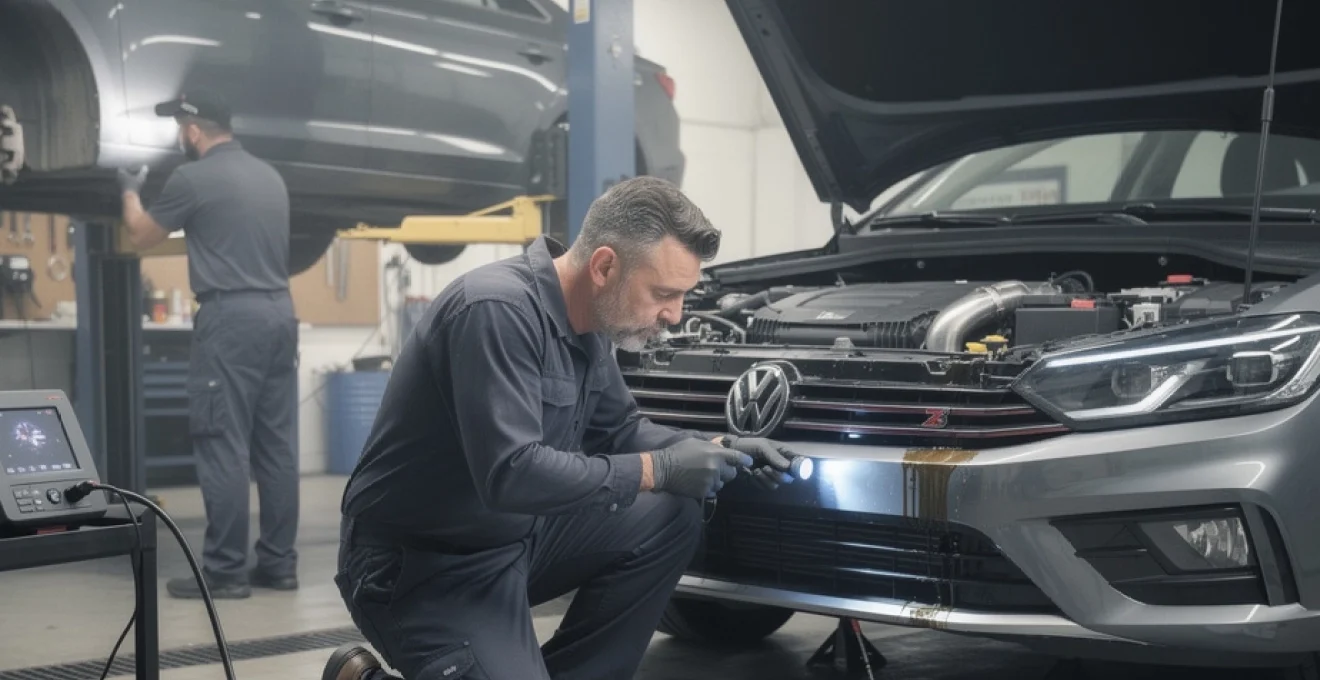
If you have seen an MOT advisory saying “oil leak, but not excessive” or noticed a light film of oil under your car, it can be hard to judge whether you are looking at harmless age‑related seepage or the start of a serious engine failure. Oil leaks range from a barely damp gasket that never worsens, through to a pressurised turbo feed line that can empty the sump in minutes and seize the engine. Understanding the difference is essential if you want to stay safe, keep repair bills under control and avoid falling foul of roadworthiness rules. With a methodical approach, you can work out what type of leak you have, how urgent it is, and whether you should monitor, reseal or plan more extensive work.
Common causes of minor engine oil leaks and how they differ from critical failures
Age‑related gasket seepage at cam cover, rocker cover and sump pan
On most engines over 8–10 years old, light seepage around the cam or rocker cover is almost expected. The rubber or silicone gasket hardens with heat cycles and loses flexibility, so oil can weep out where the cover meets the cylinder head. You might see a damp, sticky band of grime but no obvious dripping. The same happens at the sump pan, especially on aluminium sumps sealed with liquid gasket from the factory. As long as oil consumption stays low and there is no spray pattern on the exhaust or belts, this kind of age‑related rocker cover leak is usually more of a cosmetic issue than an immediate threat to engine health.
The key difference compared to a critical failure is pressure. Rocker cover areas are low‑pressure return paths; failures here usually leak slowly. By contrast, a failed main bearing gallery plug or high‑pressure gallery crack can dump oil very quickly. If your “oil leak but not excessive” advisory relates only to a slightly sweaty cam cover, regular level checks and planned gasket replacement are often all you need, rather than urgent engine work.
Oil weeping from crankshaft seals, camshaft seals and auxiliary shaft seals
Front and rear crankshaft seals, as well as camshaft and auxiliary shaft seals, live where rotating shafts exit the block. These rotary seals wear over time and start to weep. The leak will often appear at the bottom of the bellhousing, or behind the main pulley, as an oily mist mixed with dust. Many cars go for years with a slight crank seal leak that never progresses beyond a few drops between services. However, the location means this type of leak is more sensitive than a simple rocker cover weep, because the oil can spread over the timing belt, clutch friction plate or auxiliary drive belts if left unchecked.
If you notice a growing arc of oil on the under‑tray or a widening spread around the crank pulley area, that is a sign the seal wear is advancing. On modern engines with long timing belt intervals, oil contamination can dramatically shorten belt life and increase the risk of sudden failure, so a “not excessive” note is still worth taking seriously if it mentions crank or cam seals.
Degraded oil filter housing seals and oil cooler unions on engines like VW TDI and BMW N47
Many modern diesels use complex oil filter housings combined with an integrated oil cooler. Notable examples include VW EA189 TDI engines and BMW N47/N57 units. These housings rely on several O‑rings and flat seals to keep oil and coolant separate and to seal the housing to the block. As the seals age, they harden and shrink, leading to leaks that often start as a minor “mist” and escalate into substantial drips. A common pattern is a dark, sticky trail down the front of the engine and onto the subframe or driveshafts.
Because these housings can carry both oil and coolant, a deteriorated seal can also lead to cross‑contamination. If you ever see milky residue in the coolant bottle or foamy oil on the dipstick, that moves the issue from a simple leak to a potential internal failure. Addressing an oil filter housing leak early is far cheaper than dealing with polluted cooling systems or a seized engine due to low oil level.
Loose sump plug, damaged crush washer and stripped threads on alloy sumps
One of the simplest causes of a minor oil leak is a poorly sealed sump plug. Garages sometimes reuse crush washers, under‑tighten the plug, or worse, over‑tighten it and damage threads in a soft alloy sump. The result is a gentle drip from the plug after an oil change. You may see a small, regular spot on the driveway directly under the plug area. If you have had recent servicing and then spot a leak, the sump plug and washer are always worth checking first.
Ignoring a compromised sump plug can be risky: a plug that gradually backs off or fails due to stripped threads can lead to rapid oil loss. Fortunately, most cases only require a new washer and correct torque. More serious thread damage in aluminium sumps may need an insert repair or replacement sump. Either way, this is one situation where resolving a “small” leak promptly prevents a much larger bill later on.
How to identify an oil leak that is not yet excessive: visual and quantitative checks
Interpreting oil spots on the driveway: size, frequency and position under the vehicle
The easiest way to judge a minor engine oil leak is to look at what lands on the ground. Position a clean piece of cardboard under the car after parking overnight. An occasional 10–20 mm spot from the same area once a week usually points to light seepage. Multiple fresh spots every time you park, especially larger than a £2 coin, suggest something more active. The location matters too: drips under the front centre are often sump or crank areas, while patches further back can be from a rear main seal or gearbox.
Colour and texture help differentiate between fluids. Engine oil is usually dark brown or black and slick; fresh leaks on newer cars may be honey‑coloured. Gear oil has a very strong sulphur smell, while coolant feels slightly sticky and may be bright pink, green or orange. Taking a photo of the pattern every few days gives you a simple yet effective “leak diary” to show a mechanic if needed.
Reading the dipstick accurately and tracking oil consumption per 1,000 miles
Visual signs only tell half the story. The other half is how quickly the oil level drops. Most manufacturers consider consumption of up to 0.5–1.0 litre per 1,000 miles technically acceptable, although real‑world engines in good health often use far less. Check the dipstick every 300–500 miles. Always park on level ground, wait a few minutes after switching off, and wipe and reinsert the dipstick for a reliable reading. Note the mileage each time to build a picture of consumption.
If your leak is classed as “not excessive” yet you are adding more than a litre between services on a modest mileage, the problem may be bigger than it looks underneath. On the other hand, if the level barely moves between annual services, slight dampness on the block or a small driveway spot is usually manageable with monitoring rather than urgent repair.
Locating seepage using UV tracer dye, talc powder and degreasing procedures
Oil is notorious for travelling along surfaces and dripping far from the true source. For accurate diagnosis of a minor leak, professionals combine cleaning and tracing. A common method is to degrease the area thoroughly with brake cleaner, then add a UV dye to the engine oil. After a few days of driving, shining a UV lamp on the engine bay reveals a bright trail from the origin of the leak. This technique works especially well where multiple components are stacked closely together.
For very small seeps, dusting suspect areas lightly with talc or chalk powder after cleaning can be effective. Any new oil will darken the powder and draw a visible track, helping you distinguish between rocker cover, timing cover, and sump pan leaks. Using these simple tools brings a level of diagnostic clarity that often saves guessing and wasted parts replacement.
Distinguishing engine oil leaks from gearbox, power steering and brake fluid leaks
Not every dark patch under a vehicle is engine oil. Gearbox oil is typically thicker and has a strong, pungent smell; automatic transmission fluid is usually red or amber and more fluid. Power steering fluid may look similar to engine oil but tends to be lighter and is often associated with damp steering rack boots or pipe unions. Brake fluid is pale, almost clear when fresh, and aggressively strips paint; any suspected brake fluid leak needs immediate professional attention.
Checking the levels in the engine, gearbox, power steering reservoir and brake fluid reservoir will quickly indicate which system is losing fluid. If you find a “not excessive” oil leak advisory on an MOT and are unsure which system is involved, correlating under‑bonnet fluid levels with under‑car stains is a straightforward, logical first step.
Using OBD data and warning lights (oil pressure, low oil level) to corroborate a leak
Modern cars use sensors to detect low oil level, low oil pressure, or both. If a leak is genuinely small, you should not see repeated warnings between services. An intermittent low oil level message suggests the system is right on the threshold, often due to a combination of a slow leak and natural consumption. If a red oil pressure warning appears while driving, that is critical: pull over and shut the engine down immediately. A red pressure light can indicate that the engine is being starved of oil, not just that the level is a little low.
Some vehicles allow live oil temperature and pressure readings via OBD diagnostics. If you have access to this data, monitoring it during longer journeys can confirm that the lubrication system remains healthy despite a minor external leak. Any sudden drop in hot idle pressure or abnormally high temperature alongside a known leak is a clear sign that the issue has moved beyond “not excessive”.
When a “small” oil leak becomes dangerous: thresholds for concern and legal roadworthiness
Oil loss rates that indicate imminent lubrication failure and bearing damage
Engines depend on a stable oil film to protect bearings, cam lobes and cylinder walls. If a leak is severe enough that you are adding a litre of oil every few hundred miles, that engine is operating on a knife‑edge. Statistics from fleet operators show that vehicles running with oil consistently below the mid‑mark on the dipstick suffer bearing failures up to 30–40% more often than those maintained at optimal levels. As a rule of thumb, if your car needs topping up more than once between standard 10,000–12,500‑mile service intervals, the leak or consumption rate deserves investigation.
Once oil level drops to the point that the pump begins to draw in air, pressure collapses and metal‑to‑metal contact starts within seconds. You may not always get clear audible warning before serious damage occurs. Treat any combination of visibly increasing leak, rising oil consumption, and occasional pressure warnings as the point where a previously minor issue has become urgent.
Leak patterns that risk spraying the exhaust or turbocharger and causing fire
An oil leak is not just about lubrication; it is also a fire safety issue. Oil that drips directly onto a hot exhaust manifold, catalytic converter or turbocharger can ignite. Fire service data indicates that fluid leaks are implicated in around 10–15% of non‑collision car fires, with engine oil a significant contributor. The risk is higher on modern turbocharged engines, where exhaust temperatures can exceed 900°C under load. If you ever notice oil burning smells combined with wisps of smoke from the engine bay after a drive, that is a serious warning sign.
Particular attention is needed where rocker cover leaks run down the back of transverse engines onto the exhaust, or where turbo oil feed and return lines pass close to hot components. Even if the leak is classed as “not excessive” from a volume standpoint, any evidence of oil on the exhaust or turbo housing demands prompt rectification to reduce fire risk.
MOT test and DVSA guidance in the UK on oil leaks, contamination and environmental impact
In the UK, MOT testers work to DVSA guidelines that distinguish between minor seepage and significant leaks. Light misting or dampness that does not form drops is generally recorded as an advisory, often using wording like “oil leak, but not excessive (8.4.1 (a) (i))”. A more substantial leak that forms drops but is not actively dripping at the time of test may still pass but attract a stronger advisory. However, if oil is actively dripping to the extent that it poses a safety or environmental risk, the vehicle can fail.
Under DVSA rules, a vehicle should not pass if fluid leaks create a significant risk to road safety or to the environment, especially where it could contaminate brakes or tyres.
Excessive oil leaking onto brake pipes, discs or pads is particularly serious because it directly affects stopping performance. In addition, local authorities are increasingly strict about environmental contamination from oil reaching drains and waterways. Even if a tester marks your leak as “not excessive” today, tightening MOT standards in recent years mean that leaving it to worsen could result in a surprise failure at the next inspection.
Hydraulic lock risks from oil contamination in timing belts on 1.2 PureTech and similar engines
Certain modern engines, such as PSA’s 1.2 PureTech, use a timing belt that runs in oil. In these designs, any contamination or breakdown of oil quality can affect belt integrity. But even on traditional “dry” belts, oil contamination is hazardous. A small leak from a cam cover or timing cover seal can soak the belt over time, softening the material and causing teeth to shear. Industry data from belt manufacturers suggests that belts exposed to oil can lose more than 50% of their design life.
On wet‑belt engines, degraded oil combined with belt wear debris can thicken and block oil pick‑up strainers, starving the engine of lubrication and potentially leading to hydraulic lock in oil control components. If your engine is from a family known for belt‑in‑oil issues and you suspect a leak near the timing system, early intervention is essential to avoid catastrophic and expensive failures.
High‑risk leak locations that demand immediate attention even when loss is minor
Pressurised oil feed lines to turbos on ford EcoBoost, VW TSI and similar units
Turbocharged engines such as Ford EcoBoost and VW TSI rely on pressurised oil feed lines to lubricate the turbocharger bearings. These lines can develop small leaks at banjo fittings or along rigid pipes due to thermal cycling and vibration. Even a pinhole leak under full pressure can spray a fine mist of oil, leading to rapid loss without leaving large puddles. In addition, the oil often lands directly on very hot turbine housings or catalytic converters, significantly raising fire risk.
If you own a turbocharged engine and notice any dampness around the turbo oil feed or return, treat it as a high‑priority repair. Anecdotal reports from independent workshops suggest that neglected turbo feed leaks are a common precursor to complete turbo failure, as bearing lubrication suffers even before the driver notices obvious symptoms.
Oil cooler and oil filter housing interfaces on BMW N47, N57 and VW EA189 engines
As noted earlier, BMW N47/N57 and VW EA189 engines frequently develop leaks at the oil cooler and filter housing interfaces. The risk here goes beyond a simple stain on the driveway. Oil can drip onto drive belts, alternators and high‑current wiring, causing secondary failures such as alternator ruin or belt derailment. Some cases have been documented where a degraded belt, soaked in oil, shredded and became trapped behind the crank pulley, leading to severe timing issues.
Even when actual oil loss appears minor, any leak above auxillary belts or electrical junctions can create hidden knock‑on damage that far exceeds the cost of the original gasket.
If your pre‑purchase inspection or MOT history notes an advisory about oil around the filter housing on one of these engines, budgeting for a full gasket and seal refresh is wise. This proactive repair often restores long‑term reliability and helps avoid unexpected breakdowns.
Front and rear crankshaft seals near clutch assemblies and dual‑mass flywheels
Rear main oil seals, located between the engine and gearbox, are notorious for causing elusive leaks. Oil tends to accumulate inside the bellhousing before escaping through drain holes at the bottom, so the first sign may be a smear at the gearbox‑engine join. Even relatively small leaks can contaminate clutch friction material and dual‑mass flywheels over time, leading to judder, slip or strange noises. Because replacement involves separating engine and gearbox, labour costs are significant.
If you are facing a clutch change on a higher‑mileage car and there is any evidence of rear main seal seepage, most specialists recommend replacing the seal at the same time. Dealing with a “not excessive” rear main leak early, while the gearbox is already out, is far cheaper than repeating the job later when the smell of burning clutch lining or visible drips appear.
Timing chain cover and VVT solenoid housings on VAG, PSA and honda i‑VTEC engines
Timing chain covers and variable valve timing (VVT) solenoid housings often carry oil under moderate pressure, and their gaskets or O‑rings age like any other rubber component. On many VAG TSI engines, PSA petrols and Honda i‑VTEC units, small leaks at these joints will initially manifest as “sweating” around the cover edges and down the block. Ignoring them can allow oil to saturate engine mounts, wiring looms and, in some cases, timing chains themselves.
Oil‑soaked engine mounts soften and collapse, leading to increased vibration and misalignment of ancillary components. In VVT systems, low oil pressure caused by leaks or partially blocked oil control passages can trigger diagnostic trouble codes and limp‑home modes. If your scan tool reports VVT performance codes alongside a known gasket leak in this area, the two are often related and should be addressed together rather than in isolation.
DIY diagnosis workflow for small oil leaks using professional workshop techniques
Initial inspection: under‑tray removal, torch examination and photographic logging
A structured workflow helps you approach a small oil leak logically. Start by removing any plastic under‑trays or guards, as they tend to catch and redistribute oil, hiding the true source. With the car safely supported, use a bright LED torch to inspect from the lowest point of the leak upward, remembering that gravity pulls oil downwards and backwards. Look for the highest, clean break in the dirt pattern; that is usually close to the origin.
Taking clear photos from multiple angles at this stage serves two purposes. First, it provides a reference to show how far the leak spreads over time. Second, it allows you to compare against workshop manuals or online guides to identify exactly which joint or component is affected. Many owners are surprised how much clarity this simple photographic log adds when discussing options with a professional mechanic.
Cleaning and re‑inspection protocol with brake cleaner and UV dye kits
Once you have a general sense of where the leak lies, the next step is a cleaning and re‑inspection cycle. Use an appropriate brake cleaner or engine degreaser to remove as much old oil and grime as possible from the suspected area. Allow everything to dry thoroughly. For very small or confusing leaks, add a suitable UV dye to the engine oil following the manufacturer’s instructions, then drive the vehicle for a few days under varied conditions.
Reinspect the engine bay with a UV torch. The dye will fluoresce brightly, making the fresh leak path stand out against the cleaned surfaces. This method mirrors professional workshop practice and significantly reduces misdiagnosis, especially in cramped modern engine bays where multiple potential leak points sit close together.
Using borescopes and inspection mirrors to trace leaks behind engine mounts and subframes
Some leaks hide behind engine mounts, subframes or intake manifolds where direct line‑of‑sight is impossible. An inexpensive USB borescope or endoscope camera can be invaluable here. By feeding the camera behind obstructing components, you can spot fresh oil where the naked eye cannot reach. Small angled inspection mirrors on telescopic handles also help for checking the back of the engine or the top of the gearbox.
This approach is particularly useful when chasing rear main seal leaks, oil cooler unions tucked behind the block, or upper timing cover joints on transverse engines. Think of it like keyhole surgery for your engine bay: a slightly fiddly setup that often reveals the precise source with far less disassembly than guessing would require.
Safe jacking, axle stands and PPE procedures when working under a vehicle
Any DIY inspection of oil leaks under a car comes with safety responsibilities. Always use a solid, level surface and the correct jacking points specified in the owner’s manual. Once raised, support the vehicle with appropriately rated axle stands; never rely solely on a jack. Chock the wheels that remain on the ground to prevent rolling, and avoid working under the car when the engine is running unless absolutely necessary and with extreme caution.
Personal protective equipment matters too. Oil and brake cleaner can irritate skin and eyes, so use gloves and safety glasses. Allow hot exhaust components to cool before touching nearby areas. A safe diagnostic session under the car should feel slow and methodical, not rushed. If at any point you feel unsure about the stability of the vehicle or your ability to reach a component safely, handing the task to a professional workshop is the wiser decision.
Repair strategies: when to monitor, when to reseal and when to rebuild or replace
Choosing the right repair strategy for a “not excessive” oil leak is about balancing risk, cost and long‑term plans for the vehicle. Light, age‑related seepage from rocker covers or minor sump pan dampness on older cars that use almost no oil between services can often be monitored rather than fixed immediately. In such cases, cleaning the area, checking levels regularly and keeping an eye on MOT advisories may be sufficient, especially if you intend to keep the car only for a short time. However, if the same advisory appears year after year and signs of spreading increase, scheduling a gasket replacement helps maintain resale value and reduces the chance of escalation.
Intermediate leaks that require occasional top‑ups, or those in higher‑risk areas such as timing covers, oil filter housings or turbo feed lines, usually justify a proper reseal. This may involve replacing gaskets, O‑rings, seals or even entire housings. While the upfront bill can look high, it almost always beats the financial shock of an engine, turbo or clutch failure later. For severely neglected engines dripping from multiple points, burning oil, and suffering low compression or noise, a rebuild or replacement unit may be the most rational option. In such scenarios, viewing the leak pattern alongside overall condition, mileage and intended usage will help you decide whether to invest in major work, source a known‑good replacement engine, or ultimately retire the vehicle before costs snowball further.