
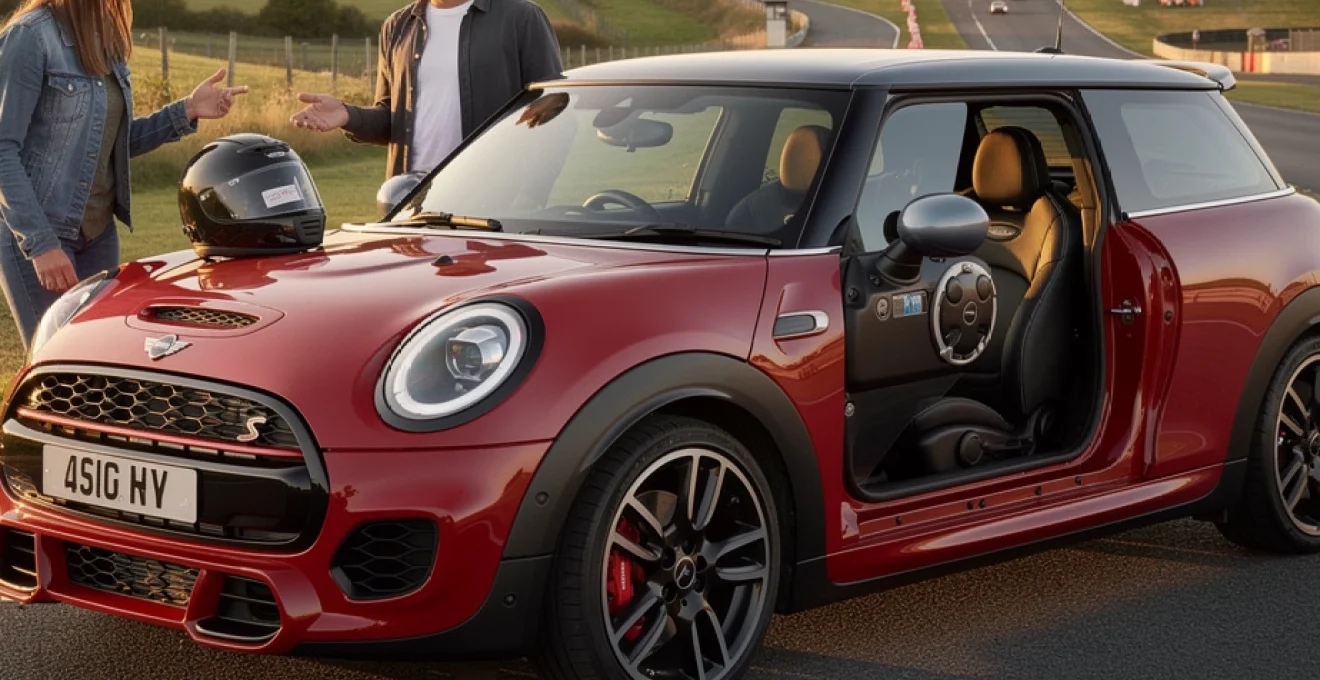
The Mini Cooper S F56 occupies a sweet spot in the hot hatch world: quick enough to be exciting, refined enough for long commutes, and compact enough to feel alive on a British B-road. For many drivers it has become the last truly characterful small petrol performance car still within reach. With the end of the manual Mini and the move toward electric models, the F56 Cooper S is also a milestone in the brand’s history. Understanding its specs, quirks, options and running costs helps you decide whether this turbocharged Mini fits the way you drive every day and the kind of fun you want at the weekend.
Mini cooper S F56 overview: model years, facelifts (2014–2021 LCI), and key specs
The F56 Mini Cooper S launched in 2014 as the third-generation three-door hatch, later joined by the five-door F55 in the same year and the Convertible F57 in 2015. Early cars (2014–2017) are often called pre-LCI; a mid-life facelift (LCI) arrived in 2018 and ran through to 2021 with subtle styling tweaks, new LED light signatures and updated infotainment. A minor update in 2021 added further trim reshuffles and styling edits, but underneath, the formula remained familiar: a compact, front-drive hot hatch with a BMW-developed turbo engine.
From launch, the Cooper S sat above the 1.5-litre three-cylinder Cooper and below the John Cooper Works (JCW) range-topper. Power started at 189 bhp (192 PS) with 280 Nm of torque, enough for 0–62 mph in 6.8 seconds and a top speed around 146–146 mph depending on exact model year and gearbox. Post-2018 cars kept very similar outputs, with minor efficiency improvements and WLTP-tested figures. Across the range, kerb weight typically sits between 1,200 and 1,300 kg, depending on doors, gearbox and equipment, so you get brisk real-world pace without supercar fuel bills.
Engine and drivetrain summary: 2.0-litre TwinPower turbo B48, front-wheel drive and transmissions
Under the bonnet of every F56 Mini Cooper S is BMW’s 2.0-litre TwinPower turbo four-cylinder, known internally as the B48. This all-aluminium, direct-injection engine uses a single twin-scroll turbo, variable valve timing and high-pressure fuel injection to balance torque and efficiency. Power is sent exclusively to the front wheels, which keeps weight and complexity down, but also means tyre choice and suspension setup matter more than in some all-wheel drive rivals.
Early cars used a six-speed manual Getrag gearbox or a six-speed Aisin torque-converter automatic. Later LCI models adopted a slicker seven-speed dual‑clutch Steptronic DCT on some variants. All transmissions integrate with the driving modes, changing shift behaviour and throttle response. If you enjoy feeling mechanically connected to the car, the manual Mini Cooper S F56 is especially appealing, not least because it became the final Mini generation to offer three pedals in mainstream numbers.
Cooper S F56 vs cooper, JCW and previous R56: power, torque and performance benchmarks
In the F56 family, the Cooper S sits in the middle of the performance ladder. The standard Cooper’s 1.5 three‑cylinder puts out around 134–136 bhp and 220 Nm, with 0–62 mph in roughly 7.9 seconds. It feels eager but less muscular when overtaking. By contrast, the JCW upgrades the B48 to 228–231 bhp and up to 320 Nm, dropping 0–62 mph to 6.1 seconds and boosting top speed to over 150 mph. That difference becomes obvious once you push beyond legal speeds or start taking the car on track.
Compared with the older R56 Cooper S, the F56 has grown into a more mature hot hatch. The R56 used a 1.6-litre turbo (the often-criticised PSA “Prince” engine) with around 181 bhp. It was lighter and felt more frenetic, but also brought timing chain and carbon build-up concerns. The F56’s 2.0-litre B48 delivers broader torque, improved emissions and better refinement. For everyday driving, especially on motorways, you will notice the extra low‑down shove more than the headline power figure.
Dimensions, kerb weight and platform: UKL1 architecture shared with BMW 1 series and X1
The F56 rides on BMW’s UKL1 front‑wheel‑drive platform, which also underpins the 1 Series (F40) and X1/X2 crossovers. This shared architecture allowed Mini to introduce more sophisticated suspension and safety systems than earlier generations. Compared with its R56 predecessor, the F56 is 98 mm longer, 44 mm wider and 7 mm taller, with a 28 mm longer wheelbase and significantly wider tracks front and rear. Those changes improve stability at speed and create more space in the cabin and boot.
Typical kerb weight for a three‑door Cooper S manual hovers around 1,230–1,250 kg, rising slightly for the five‑door and automatic variants. On paper that sounds heavy for a “Mini”, but the body feels noticeably stiffer and more crash‑resistant than the original BMW R50 launched in 2001. That added rigidity also helps the suspension work more precisely, which you will sense as cleaner responses over rough roads and less creaking or flexing through the body at higher cornering loads.
Fuel economy, CO₂ emissions and UK road tax bands across manual and automatic variants
Fuel economy for the Mini Cooper S F56 is respectable for a performance hatch. Official combined figures for early manuals hover around 49–51 mpg, while automatics sit closer to 45–48 mpg on the NEDC cycle. Under stricter WLTP testing, realistic combined consumption tends to fall in the 38–44 mpg range depending on wheel size, driving style and transmission. For many owners, high‑30s mpg on mixed UK driving is entirely achievable if you resist full‑throttle antics.
CO₂ emissions start in the low 120s g/km for pre‑WLTP manuals and rise into the mid‑130s for higher‑spec cars on larger wheels or with an automatic gearbox. That places most Cooper S models in mid‑range UK road‑tax (VED) bands, rather than the premium brackets typically seen on high‑output hot hatches and performance SUVs. Over three to five years, that moderate road tax, plus relatively strong fuel economy, helps keep total cost of ownership competitive even compared with some smaller turbo superminis.
Turbocharged B48 engine in the mini cooper S F56: performance, tuning potential and reliability
Stock performance data: horsepower, torque curves and 0–62 mph figures for pre-LCI and LCI
From the factory, the B48‑powered Mini Cooper S F56 produces around 189–192 bhp between 4,700 and 6,000 rpm, with 280 Nm of torque available from as low as 1,250 rpm through to roughly 4,750 rpm. That broad plateau is what gives the car its strong mid‑range punch. The engine feels eager from 2,000 rpm, pulling cleanly to the red line without the breathlessness some smaller‑capacity rivals suffer.
Pre‑LCI cars record 0–62 mph in 6.8 seconds for the manual and around 6.7 seconds for the automatic. LCI updates did not dramatically alter performance, though some trims quote marginally different numbers due to gear ratios, emissions tweaks and DCT shift logic. Top speed is just over 145 mph, making fast autobahn-style cruising easy if you regularly travel on unrestricted European motorways, yet the car still feels playful and responsive below 60 mph on tight British roads.
Driving modes and throttle mapping: green, mid and sport calibration on the B48 powertrain
Most Cooper S models were specced with MINI Driving Modes, controlled by a rotary ring at the base of the gear lever. These modes adjust throttle mapping, steering weight, gearshift behaviour on autos and, where fitted, Dynamic Damper Control. In Green mode, throttle response softens considerably and the gearbox upshifts early, encouraging the engine to stay around 1,500–2,000 rpm to save fuel. Coasting is even enabled on some automatic versions, decoupling the drivetrain when you lift off.
Mid mode is the default setting and offers a natural balance between response and economy. For enthusiastic driving, Sport mode sharpens throttle response, brings earlier turbo boost and, on the autobox, holds lower gears for longer. Steering assistance also reduces, giving a slightly weightier feel. The effect is not as dramatic as some rival systems, but you will notice more immediate reactions when overtaking or powering out of slower bends. Green for the commute, Sport for the back‑roads makes daily life with the F56 remarkably adaptable.
Common reliability topics: timing chain, high-pressure fuel pump and turbo cooling on the B48
The B48 has proved markedly more robust than the older Prince engine used in the R56. Timing chain failures, once a notorious talking point, are far less common. That said, regular oil changes are crucial; the long condition-based intervals specified by the factory can be harsh on components if mostly used for short journeys. Many specialists recommend oil changes every 8,000–10,000 miles rather than stretching to 18,000 miles or two years.
A small number of owners have reported high-pressure fuel pump (HPFP) issues and occasional turbo coolant leaks, particularly on higher‑mileage or heavily tuned cars. Symptoms usually involve misfires, hesitation under boost or coolant loss. Catching these early and using a reputable specialist makes a big difference to repair costs. Compared with many direct‑injection turbo engines, however, the B48’s track record remains solid, with good examples happily covering 100,000+ miles when serviced correctly.
The B48 in the Mini Cooper S F56 offers an unusually strong blend of performance, refinement and durability for a compact turbo engine, provided maintenance is taken seriously.
Stage 1 and stage 2 ECU remaps: gains with tuners such as lohen, 1320MINI and ECU remapping specialists
If you are considering performance tuning, the F56 Cooper S responds very well to a Stage 1 ECU remap. Many UK MINI specialists and ECU tuners quote outputs around 235–250 bhp and 350–380 Nm on an otherwise stock car. That transforms the power‑to‑weight ratio and mid‑range acceleration while remaining within the mechanical limits of the standard internals, clutch and turbo on a well‑maintained example.
Moving to a Stage 2 setup with a sports cat or decat downpipe, intake and intercooler can push figures towards 260–280 bhp, edging close to stock JCW GP3 power levels. At this stage, you should treat the car as a serious performance machine: uprated brakes and tyres become important, and you must consider thermal management if you plan frequent track days. Insurance disclosure is also essential; many UK insurers tolerate mild remaps, but always declare modifications to avoid unpleasant surprises.
Intake, intercooler and exhaust upgrades: scorpion, milltek, wagner and airtec examples
Supporting hardware for a tuned Mini Cooper S F56 is widely available. Aftermarket intakes from brands such as Eventuri or ITG improve induction noise and, on higher‑power setups, may reduce restriction. For most lightly tuned cars, the stock airbox flows adequately, so intake changes are more about sound and aesthetics than big peak power gains.
Upgraded intercoolers from companies like Wagner and Airtec help maintain intake air temperatures during repeated acceleration or hard track use. On a hot day at Silverstone or Donington Park, this can make the difference between consistent lap times and power dropping off. Popular exhaust systems from Scorpion and Milltek offer freer flow and a more characterful soundtrack; some systems also shed weight compared with the OE backbox. When choosing hardware, consider local noise limits and MOT legality, particularly with sports cats vs decats.
Transmission and chassis dynamics: manual vs automatic, suspension, steering and brakes
6-speed manual getrag gearbox vs aisin 6/7-speed automatic and steptronic dual-clutch (DCT)
The six‑speed manual Getrag gearbox is a highlight of the Cooper S F56. It offers a short, precise throw and pairs well with the engine’s wide torque band. Rev‑matching on downshifts (via software blips) makes spirited driving smoother and reduces drivetrain shock, especially if you are still perfecting traditional heel‑and‑toe techniques. A healthy clutch should engage cleanly with no judder and resist slipping even when the car is remapped to a mild Stage 1.
Automatic options evolved over the F56’s life. Early cars used a six‑speed Aisin torque‑converter unit, while later versions adopted a seven‑speed Steptronic DCT. The DCT brings quicker shifts and a more direct connection in manual mode, making it a strong choice if you frequently drive in heavy traffic but still want involvement on back‑roads. For maximum long‑term simplicity, the manual remains appealing; for urban daily use, the DCT offers excellent convenience without dulling the engine’s character.
Dynamic damper control and passive suspension: ride quality on 16″, 17″ and 18″ wheels
All Cooper S F56 models use MacPherson struts at the front and a sophisticated multi‑link rear axle. Passive dampers are quite firm, especially when combined with 18-inch wheels. On scarred city tarmac, you will feel potholes and sharp ridges more than in a softer supermini, but that firmness pays dividends in body control and precision at speed. If you value comfort above all, 16‑ or 17‑inch wheels with higher‑profile tyres are a sensible choice.
Dynamic Damper Control (DDC), where fitted, adds electronically adjustable dampers. In Green and Mid modes the car rides marginally softer, while Sport mode tightens vertical control for track use or enthusiastic driving. The difference is noticeable but not night‑and‑day; think subtle refinement rather than a transformation. For a daily driver regularly tackling mixed surfaces, DDC provides useful extra bandwidth, helping you tailor the F56 to both motorway cruising and Sunday blasts.
Steering calibration and front axle grip: torque steer, LSD retrofits and track-day geometry
The electric power steering in the Mini Cooper S F56 is quick‑ratio and relatively direct, contributing to the brand’s “go‑kart” reputation. Turn‑in is sharp and the car feels eager to change direction, particularly in Sport mode where steering assistance is dialled back slightly. On bumpy roads, some drivers notice a little kickback, but overall the system provides predictable feedback once you get used to the weighting.
From the factory, the Cooper S relies on an electronic differential lock control (EDLC) that uses brake inputs to mimic a limited‑slip differential. For fast road and occasional track driving, many enthusiasts retrofit a mechanical LSD from Quaife or similar. Combined with a more aggressive track‑day geometry (slightly more front camber and toe‑out), this significantly improves traction when powering out of tight bends and makes the car feel more stable under hard braking, especially at circuits like Brands Hatch where elevation changes test front‑axle grip.
Braking system: single-piston front calipers, pad compounds and big brake kits (brembo, AP racing)
Standard Cooper S F56 brakes use single‑piston sliding front calipers and solid or vented discs, depending on specification. For normal road driving they are powerful and easy to modulate, with ABS calibration that remains unobtrusive unless the surface is particularly slippery. Brake feel is progressive, which helps when driving quickly on rural roads where grip levels vary.
If you plan regular track days, upgraded pads and fluid should be high on the priority list. Performance pad compounds from reputable brands dramatically reduce fade and shorten stopping distances. For more serious use, big brake kits from Brembo or AP Racing bring larger multi‑piston calipers and bigger discs, improving both heat management and pedal feel. As with power upgrades, matching braking performance to engine output keeps the car enjoyable as pace increases.
Go-kart handling characteristics: how the mini cooper S F56 delivers its trademark fun
Short wheelbase dynamics: turn-in response, body control and weight transfer on b-roads
The Cooper S F56 sits on a short wheelbase with relatively wide tracks, an inherently playful layout. On a typical narrow British B‑road, the car feels like it shrinks around you, darting from corner to corner with minimal hesitation. Body roll is well contained, so quick direction changes feel crisp rather than messy, and the car quickly settles after crests or compressions.
Weight transfer is predictable, which encourages confident driving as you learn how the Mini reacts. Lift off gently mid‑corner and the rear will tuck in, tightening your line without drama. Push harder and the chassis remains neutral until very high speeds, when mild understeer starts to appear as a safety net. Compared with some rivals that feel aloof or overly soft, the F56 maintains that essential sense of connection many drivers seek in a fun hatchback.
Electronic aids: traction control, DSC and electronic differential lock control (EDLC) behaviour
Electronic aids in the F56 are well tuned for both safety and enjoyment. Dynamic Stability Control (DSC) monitors yaw, steering angle and wheel speeds, gently trimming power or applying individual brakes if the car begins to slide. For spirited driving on dry roads, leaving DSC in its standard setting often allows enough slip to feel alive without compromising safety.
Traction control can be partially or fully disabled if you want more freedom, for example on track or in very low‑grip conditions such as snow. EDLC works in the background by braking the inside front wheel when it starts spinning, effectively pushing torque across the axle. While not a substitute for a true mechanical LSD in hard circuit use, EDLC does a good job of maximising traction during everyday driving and spirited road runs, particularly when exiting slower junctions or hairpins.
Set up correctly, the Cooper S F56 lets the electronics fade into the background, intervening only when grip really runs out rather than smothering your inputs.
Tyre choices and setups: michelin pilot sport 4, goodyear eagle F1 and all-season alternatives
Tyres have a huge impact on how any Mini Cooper S F56 feels. Many owners consider Michelin Pilot Sport 4 the benchmark for a fast road‑biased setup, thanks to strong wet‑weather grip, progressive breakaway and decent wear rates. Goodyear Eagle F1 Asymmetric tyres offer a similarly high‑grip option with slightly different steering feel; some drivers prefer their feedback on UK surfaces.
If you use the car year‑round, especially in rural or hilly areas, an all‑season tyre can make sense. Options from Michelin and Goodyear provide improved cold‑weather traction and snow capability, though ultimate dry‑grip and steering precision falls a little compared with dedicated summer tyres. Whatever you choose, matching high‑quality tyres across all four corners and maintaining correct pressures is crucial to unlocking the F56’s chassis potential.
Track driving in a cooper S F56: cooling considerations at brands hatch, silverstone and donington park
Take a Mini Cooper S F56 to circuits such as Brands Hatch, Silverstone or Donington Park and the strengths of the chassis become obvious. The car feels stable at high speed yet agile enough for tight complexes, and the B48 pulls strongly out of corners even in standard form. However, extended track use reveals some limitations in stock cooling hardware and consumables.
On a hot summer day, oil and coolant temperatures can climb during long sessions, particularly on tuned cars. Upgraded intercoolers, high‑quality synthetic oil and occasionally an auxiliary radiator help manage heat. Brake fade is another consideration; as mentioned, performance pads and high‑boiling‑point fluid are strongly recommended if you intend to run more than a couple of fast laps at a time. Think of the standard setup as ideal for occasional taster days, with modest upgrades turning the Cooper S into a very capable track tool.
Interior tech and ergonomics: idrive-based infotainment, driver aids and everyday usability
MINI connected and navigation: circular central display, apple CarPlay and bluetooth integration
The F56 cabin blends classic Mini design cues with modern technology. The large circular central display now houses infotainment rather than a speedometer, using an interface derived from BMW’s excellent iDrive system. Depending on trim and year, screens range from a basic 6.5‑inch display to a larger, high‑resolution 8.8‑inch unit with navigation and connected services. A rotary controller on the centre console makes navigation through menus quick and intuitive, even on the move.
Bluetooth connectivity is standard on most UK Cooper S models, allowing hands‑free calling and audio streaming. Later cars also support Apple CarPlay for seamless integration of navigation, music and messaging apps. MINI Connected services add online features such as real‑time traffic information and app‑based car status checks. For daily commuting, this blend of classic layout and contemporary tech keeps the cabin feeling up to date despite the F56’s age.
Digital and analogue instrumentation: LED ring, head-up display and toggle switch controls
In front of the driver, a compact instrument cluster houses analogue‑style dials with digital inserts for trip data and fuel information. Earlier models used a separate pod fixed to the steering column, while later versions incorporate a more integrated display. Some higher‑spec cars feature a head‑up display that projects speed and navigation prompts onto a small retractable screen, helping you keep eyes on the road.
The LED ring surrounding the central display responds to driving modes, volume changes and climate adjustments, adding an element of theatre. Classic Mini toggle switches line the centre console, including a prominent red engine start/stop switch. It is a clever mix of retro and modern; once familiar with the layout, you can operate most functions without distraction, though some may find the lighting effects a little playful for longer night journeys.
Advanced driver assistance systems: parking sensors, reversing camera, cruise control and lane tech
Driver assistance systems in the Cooper S F56 evolved over its lifecycle. Many UK cars include rear parking sensors as standard, with front sensors and a reversing camera available as options, particularly on later trims and packs. These make tight multi‑storey car parks and parallel spaces less stressful, especially if you opt for the three‑door with slightly limited rear visibility.
Cruise control with brake function appears on most examples, and some cars feature a more advanced camera‑based Driving Assistant. This can add forward collision warning, pedestrian detection and, on certain models, active cruise control for motorway use. Lane‑keeping assistance is less common and generally less intrusive than in newer platforms. In practice, the F56 strikes a good balance: enough assistance to ease daily commuting, without so much automation that you feel disconnected from the driving experience.
Cabin practicality: rear-seat space, ISOFIX, boot capacity and everyday commuting comfort
Although the F56 Cooper S remains a small car, it is noticeably more practical than earlier generations. Rear access in the three‑door still requires some agility, but once seated, adults benefit from better headroom and slightly improved knee space compared with the R56. The five‑door F55 variant adds two extra doors and a marginally longer wheelbase, making rear entry and exit much easier if you regularly carry passengers.
Boot capacity in the three‑door Cooper S is around 211 litres with the rear seats up, rising to over 700 litres with them folded. That is enough for a weekly shop or a couple of small suitcases. ISOFIX anchor points on the rear bench allow secure fitting of child seats, and the cabin’s solid build quality stands up well to everyday use. For commuting, supportive sports seats and a good driving position make longer journeys comfortable, though very tall drivers may want to test whether the roofline and steering wheel adjustment suit their preferred posture.
Trim levels, factory options and special editions: chili pack, sport pack and limited-series models
Core UK trims and option packs: chili pack, pepper pack, sport pack and their equipment differences
UK‑market Mini Cooper S F56 models were typically sold with a menu of option packs that dramatically change the equipment level. Pepper Pack on earlier cars often added air conditioning upgrades, interior lighting and basic cosmetic enhancements, while Chili Pack bundled popular features such as climate control, upgraded alloy wheels, sports seats and MINI Driving Modes. From late 2018, the range simplified into Classic, Sport and Exclusive trims, with Sport mirroring many JCW styling cues.
When shopping used, you will notice that Chili Pack cars feel significantly better specified inside, with nicer upholstery, more tech and extra convenience features. Sport Pack or later Sport trim typically brings larger wheels, more aggressive bumpers and sports suspension. For many buyers, a Chili‑equipped Cooper S in Sport trim delivers the best mix of value, style and equipment without venturing into full JCW pricing territory.
Factory options: LED headlights, harman kardon audio, panoramic sunroof and JCW exterior kit
Desirable factory options on the F56 Cooper S include LED headlights with adaptive function, which provide a cleaner, whiter beam and improved visibility in poor weather. Many owners view this as one of the most worthwhile upgrades, particularly if they regularly drive on unlit rural roads. The Harman Kardon audio system is another coveted option, adding more powerful amplification and additional speakers for a richer soundstage.
The panoramic glass sunroof brightens the cabin and enhances the sense of space, though it adds a little weight high up and can slightly reduce headroom. A JCW exterior kit, often combined with the Sport trim, includes more aggressive bumpers, side skirts and spoilers, giving the Cooper S the visual drama of the JCW without the full running costs. When browsing used listings, spotting these options can help you identify particularly well‑specced examples that hold their value better.
Special editions and collabs: mini cooper S F56 resolute, paddy hopkirk and 60 years edition
Over its long production run, the Mini Cooper S F56 spawned several special editions in the UK. The 60 Years Edition celebrated six decades of Mini with unique badging, Heritage‑inspired colour schemes and high standard equipment. The Paddy Hopkirk Edition paid tribute to Mini’s rally history, with styling cues referencing the iconic 1964 Monte Carlo Rally‑winning car, including specific decals and trim details.
The Resolute Edition appeared near the end of the F56 lifecycle, combining dark bronze exterior highlights, Resolute Green paintwork and extensive equipment. These special editions usually pack in popular options and distinctive aesthetics, meaning they can be attractive buys if you like to stand out. Prices on the used market tend to sit slightly above equivalent standard trims, but residuals may also be stronger due to limited numbers and enthusiast appeal.
Running costs, reliability data and used-buying checklist for the mini cooper S F56
Service intervals, condition-based servicing and MINI/BMW dealer vs independent specialist care
The Mini Cooper S F56 uses BMW’s condition‑based servicing regime, which tailors oil changes and inspections to driving style, mileage and sensor data. In practice, the car may suggest oil services at intervals of up to 18,000 miles or two years. For long‑term reliability, especially on a performance‑oriented engine like the B48, many specialists recommend more frequent oil and filter changes, roughly every 8,000–10,000 miles.
Main dealer servicing offers software updates, MINI‑specific diagnostic tools and a full dealer history, which can help resale value. However, labour rates are higher than at independent BMW/MINI specialists. A good independent garage familiar with the F56 platform often provides an excellent balance of expertise and cost, particularly after the manufacturer warranty has expired. Keeping a neatly documented service history with invoices and stamped records gives future buyers confidence and protects the car’s value.
Known issues and recalls: timing chain, EGR, thermostat housing and electronic glitches
While the F56 Cooper S is generally reliable, there are a few known issues and recall items to be aware of. Occasional timing chain tensioner concerns have been reported on early cars, though nowhere near as frequently as on the previous generation. Listening for rattles on cold start and checking for regular oil changes reduces the risk of expensive timing hardware problems.
Some cars have experienced coolant leaks from the thermostat housing or associated pipework, typically appearing as low coolant warnings or visible drips under the front of the car. EGR and emissions‑related recalls have occurred across various BMW/MINI models; confirming recall work with a MINI dealer via the VIN is straightforward and worthwhile. Minor electrical niggles such as non‑functioning horn buttons on the steering wheel or infotainment glitches occasionally appear, but these are usually resolved with replacement components or software updates.
Insurance groups, depreciation trends and typical UK used prices by model year and mileage
In the UK, the Mini Cooper S F56 typically falls into insurance groups in the low‑to‑mid 20s, depending on year, trim and optional security features. That positions it similarly to rivals such as the Ford Fiesta ST and Hyundai i20 N, though exact premiums depend heavily on driver profile and postcode. For younger drivers, shopping around specialist performance‑friendly insurers often yields better results.
Depreciation has been relatively gentle compared with many mainstream hot hatches. Early 2014–2015 Cooper S F56 examples now often sit in the low‑teens price bracket, assuming reasonable mileage and good history. 2018–2020 LCI cars usually command prices in the high‑teens to low‑20s, with very late, low‑mileage, high‑spec models edging towards the mid‑20s. Special editions and well‑specced Sport trims tend to hold values best, reflecting ongoing demand for characterful small petrol performance cars as new models increasingly shift towards electrification.
| Model year | Typical mileage | Indicative UK price range* |
|---|---|---|
| 2014–2015 (pre-LCI) | 60k–90k miles | £10,000–£13,000 |
| 2016–2018 (late pre-LCI) | 40k–70k miles | £13,000–£17,000 |
| 2018–2020 (LCI) | 20k–50k miles | £17,000–£23,000 |
*Approximate figures; condition, spec and history can move values significantly.
Inspection checklist: bodywork, alloys, clutch, suspension bushes and modded cars assessment
When inspecting a used Mini Cooper S F56, a structured approach helps you avoid costly surprises. Start with the exterior: check for mismatched paint, gaps and overspray that might indicate accident repairs. Look closely at black plastic trim around arches and grilles; heavy fading is common but mostly cosmetic, while cracks and poor fit may hint at previous damage. The front bumper and bonnet are prone to stone‑chipping, especially on motorway‑driven cars.
Alloys deserve careful inspection. The larger 17‑ and 18‑inch wheels are easily kerbed, and repeated damage can suggest careless parking or more serious suspension knocks. On the test drive, listen for knocks or creaks over bumps, which could point to tired suspension bushes or drop links. The clutch in manuals should bite positively without slip during full‑throttle acceleration in a high gear. Modified cars need extra scrutiny: ask for receipts for remaps, hardware and servicing, ensure the ECU calibration comes from a reputable source, and confirm that braking and cooling upgrades match any power increases so you can enjoy the Cooper S F56’s performance and handling with confidence.