
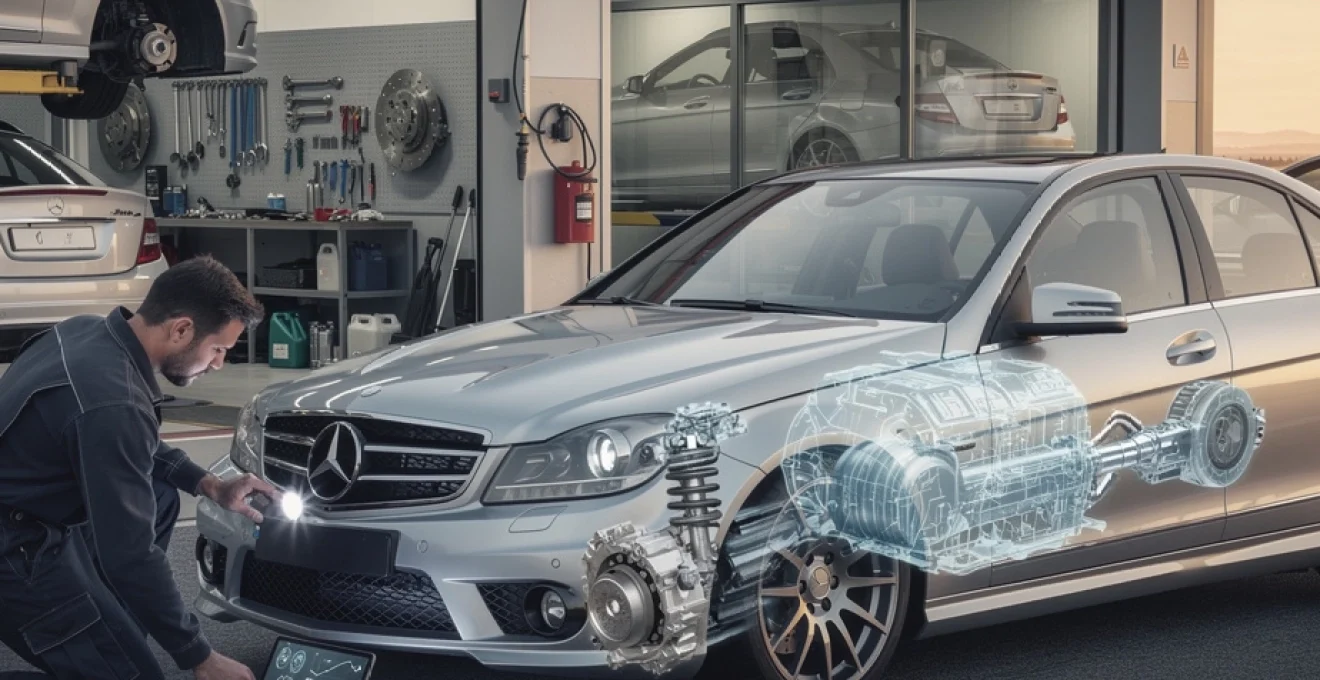
The Mercedes C63 AMG W204 has become a modern cult classic. A compact executive saloon with a hand‑built 6.2‑litre V8, hydraulic steering and rear‑wheel drive is unlikely to appear again in a world of downsizing and WLTP emissions cycles. For many enthusiasts, it represents a sweet spot between old‑school AMG muscle and everyday usability, with enough space for family duties and enough noise to turn every tunnel into an event. Understanding its strengths, weaknesses and running costs is essential if you want to enjoy that character without being surprised by four‑figure repair bills.
Values have stabilised in recent years, and the best examples are already starting to creep upwards as buyers realise how rare a naturally aspirated V8 C‑Class has become. At the same time, age‑related issues are beginning to appear across the fleet, from M156 engine quirks to infotainment glitches and suspension wear. Approach the W204 C63 AMG with open eyes, good information and a realistic budget, and you gain one of the most charismatic performance cars of the last two decades.
Mercedes C63 AMG W204 overview: variants, model years and factory specifications
Saloon, estate and coupé body styles: C63 AMG W204 production timeline 2008–2015
The C63 AMG W204 range launched for the 2008 model year as a saloon (W204) and quickly established itself as the hooligan of the compact performance class. An estate (S204) followed soon after, particularly popular in Europe for its blend of pace and practicality. The C63 Coupé (C204) arrived later, around 2011, giving buyers a more overtly sporting option with a slightly shorter roofline and a more aggressive stance.
Production ran from 2008 to 2015, overlapping the introduction of the W205 chassis. Early cars (2008–2011) are typically cheaper but come with the well‑known early M156 head bolt concern covered later. Later cars (2012–2015) benefit from the facelift, updated interior tech and a number of small but useful engineering revisions. Across the whole period, power ranged broadly from 451 hp to around 507 hp in the final Edition 507 models, with torque figures centred around 443 lb ft, making every version brisk enough for Autobahn or fast‑lane duty.
Pre-facelift vs facelift (MOPF) W204: visual cues, equipment changes and chassis revisions
Pre‑facelift W204 C63s (up to 2011) are easy to spot by their simpler front bumper design, older‑style headlights and more conservative interior user interface. The facelift, frequently referred to as MOPF (model update), brought LED running lights, sharper bumpers and a slightly more modern COMAND infotainment layout. Inside, materials were subtly improved and some of the previously optional toys, such as more advanced driver assistance features, became more widely available.
Chassis tuning also evolved. Facelift cars received tweaks to the suspension geometry and damping that helped reduce the nose‑heavy feel some drivers noticed in early cars when pushing hard on tight, twisting roads. Several owners who have owned both generations report that the later W204 feels more agile and composed, even if kerb weights are largely similar. If you value sharper handling and slightly more contemporary tech, the facelift models make a compelling case.
Standard C63 vs performance package (P30, P31) and edition 507 power upgrades
Standard C63 AMG W204 models left the factory with about 451 hp from the 6.2‑litre M156 V8. The Performance Package, offered in several iterations (often coded P30 and later P31), lifted power up to ~480 hp, sharpened the chassis and, crucially for keen drivers, often added an uprated limited‑slip differential and larger brakes. In 2010, the AMG P31 Development Package went a step further by borrowing engine internals from the SLS AMG, including forged components and a raised limiter, and raised the top speed to roughly 174 mph.
Towards the end of the run, the Edition 507 arrived as a final flourish, so named after its 507 PS rating (around 500 hp). These cars are now among the most sought‑after W204s, combining the most powerful factory engine calibration with distinctive cosmetic touches and, in many cases, lower mileage. If long‑term collectability is a priority, targeting a Performance Package Plus or Edition 507 car is a logical strategy, provided the mechanical condition justifies the price premium.
Key factory specifications: kerb weight, power-to-weight ratio, gearbox codes and differential types
Typical kerb weights for the C63 AMG W204 sit in the 1,720–1,820 kg range, depending on body style and equipment. Saloon models are usually the lightest, followed by the Coupé, with the Estate carrying a modest penalty for its extended rear and extra glass. With 451–507 hp, this equates to a power‑to‑weight ratio of roughly 260–290 hp per tonne, placing the C63 firmly in serious performance car territory even by modern standards.
Most cars use the 722.9 7G‑Tronic automatic, with AMG‑specific Speedshift software. Early cars use a conventional torque converter arrangement; later W204s (especially in some markets) move towards the Speedshift MCT variant with a wet multi‑plate clutch pack instead of a torque converter. At the rear, basic cars in many markets left the factory with an open differential, while Performance Package and certain market configurations gained a mechanical limited‑slip differential, transforming traction and corner‑exit behaviour under hard acceleration.
6.2-litre M156 V8 engine: design, real-world performance and tuning potential
High-rev naturally aspirated architecture: bore, stroke, compression ratio and valvetrain layout
The heart of every W204 C63 AMG is the M156 V8, a 6.2‑litre naturally aspirated unit with a race‑inspired layout. Using a large bore and relatively short stroke, the engine is designed to rev freely to around 7,200 rpm while still generating huge mid‑range torque. Compression ratio sits around 11.3:1, relatively high for a road‑going V8, which helps deliver both efficiency and response when combined with precise fuel injection and ignition control.
Each cylinder head features double overhead camshafts and four valves per cylinder, with variable camshaft adjustment for both intake and exhaust. In practice, that means strong pulling power from low revs and a savage surge as the needle sweeps towards the red line. Compared with turbocharged rivals, the throttle response feels almost instantaneous, which is why so many owners describe the M156 as one of the most characterful V8s ever fitted to a compact executive car.
Acceleration and in-gear performance: 0–60 mph, 0–100 mph and autobahn roll-on figures
Factory figures quote 0–60 mph in the low four‑second bracket for standard C63 AMG W204 saloons, with many independent tests recording 4.1–4.3 seconds on dry tarmac. 0–100 mph typically arrives in roughly 9 seconds, depending on tyre condition and ambient temperature. On a derestricted Autobahn, stock cars limited to 155 mph reach that figure with ease, while Performance Package and Edition 507 models with raised limiters can see an indicated 174 mph when conditions permit.
More impressive is the in‑gear acceleration. A 50–70 mph roll‑on in third or fourth gear feels ferocious, particularly in later models with the more aggressive AMG Speedshift mapping. For real‑world overtakes on B‑roads or motorways, the surge from 2,500 rpm upwards makes the C63 AMG W204 feel closer to a muscle car than a traditional German sports saloon, yet the underlying C‑Class chassis keeps it just about civilised for daily use.
ECU mapping, intake and exhaust upgrades: stage 1–3 tuning, dyno results and reliability impact
The naturally aspirated nature of the 6.2‑litre V8 means that huge gains without forced induction are harder than on turbocharged engines, but careful tuning still yields worthwhile improvements. A typical Stage 1 ECU remap on a healthy engine, combined with a freer‑flowing panel filter, often produces 20–30 hp at the top end and crisper throttle response, with dyno plots frequently showing around 470–480 hp at the crank on 99 RON fuel.
Moving to Stage 2 usually involves high‑flow primary or secondary cats, a performance exhaust and more aggressive ignition and fuel mapping. At this level, 490–500+ hp is realistic. More extreme Stage 3 builds can involve long‑tube headers, ported heads or even supercharging, pushing output well beyond 550 hp. At that point, the question becomes: how far should you go without compromising reliability or drivability? For most owners, a mild map and exhaust upgrade hits the sweet spot between pace, sound and long‑term durability.
Track and drag strip performance: nürburgring, quarter mile times and heat management
On circuit, the W204 C63 AMG can be extremely fast in the right hands, but it is not a lightweight track special. Lap times at venues like the Nürburgring Nordschleife sit in the low‑8‑minute to high‑7‑minute BTG range for well‑driven, mildly modified cars with good tyres and upgraded pads. Quarter‑mile times for stock examples typically fall in the mid‑12‑second range at around 115–118 mph, with tuned cars dipping into the 11s on sticky rubber.
Heat management is a critical topic for repeated hot laps or drag runs. The M156 is robust but generates significant thermal load, especially in warm climates. Overheating automatic transmission fluid, brake fade and rising intake air temperatures can all limit consistent performance. Upgraded coolers, higher‑boiling brake fluid and careful cooldown laps are sensible measures if you plan to use a C63 W204 as a regular track toy. Repeated launch control starts and burnouts might look good on social media, but they also accelerate wear on drivetrain components.
M156 V8 reliability: head bolt, camshaft adjuster and head gasket failure modes
Early M156 head bolt defect: affected engine numbers, symptoms and permanent repair procedures
The most widely discussed reliability concern with the M156 in the C63 AMG W204 is the early cylinder head bolt issue. Engines built roughly between 2008 and 2011 used head bolts that were susceptible to corrosion and stretching under thermal cycling. Over time, this could lead to loss of clamping force between the head and block, causing coolant leaks into the combustion chamber or externally around the block/head interface.
Typical symptoms include unexplained coolant loss, sweet‑smelling exhaust smoke on cold start, or emulsified oil resembling mayonnaise under the filler cap. A proper permanent repair involves removing the cylinder heads, replacing all the suspect bolts with upgraded items and fitting new head gaskets. Labour time is substantial, and total bills can easily exceed several thousand pounds. For peace of mind, many buyers favour later 2012–2015 cars or look specifically for invoices proving that the head bolt job has already been completed by a reputable AMG specialist.
Camshaft adjuster and camshaft lobe wear: cold-start rattle diagnosis and timing gear inspection
Another known M156 topic is premature wear of camshaft adjusters and, in more serious cases, camshaft lobes and lifters. A characteristic cold‑start rattle, particularly if it lasts more than a second or two, can point towards tired adjusters or chain tensioners. Left unchecked, mis‑timed camshafts can lead to poor performance, increased emissions and in extreme cases mechanical damage if valve timing strays too far.
Diagnosis usually involves listening carefully at cold start, using Star Diagnosis to check for camshaft timing correlation errors and, where necessary, removing covers to inspect the valvetrain. Replacing adjusters, chains and guides is not inexpensive, but catching issues early is far cheaper than dealing with a full valvetrain rebuild. Regular oil changes with the correct spec and avoiding extended idle conditions helps preserve the delicate interfaces between cam lobes and followers.
Head gasket leaks and cylinder head porosity: pressure testing, coolant loss and oil contamination
Beyond the specific head bolt problem, high‑mileage or neglected M156 engines can suffer from more general head gasket deterioration. Persistent coolant loss without external leaks, misfires on start‑up or oil contamination can all suggest that combustion gases are entering the cooling system, or that coolant is getting into the oil. In some rare cases, casting porosity in the cylinder heads themselves has been documented, although this is far from common.
Proper diagnosis requires pressure testing the cooling system, chemical testing for combustion gases in the coolant and, if necessary, a leak‑down test on individual cylinders. A borescope can also reveal steam‑cleaned pistons or evidence of coolant ingress. If head removal is required, choosing a workshop familiar with AMG engines is vital. Correct torque procedures, surface preparation and replacement of one‑time‑use fasteners all contribute to long‑term reliability once the repair is complete.
Preventive maintenance schedule: oil change intervals, valve cover leaks and PCV system servicing
Preventive maintenance goes a long way towards keeping a C63 AMG W204 healthy. While factory oil intervals can be as long as 10,000–12,000 miles, many specialists recommend 5,000–6,000‑mile changes with high‑quality 229.5‑approved synthetic oil, especially if the car sees hard use. Fresh oil protects the camshafts, lifters and timing components, and helps keep the complex lubrication system free from sludge.
Common small leaks include valve cover gaskets and the PCV (positive crankcase ventilation) system. Oil mist around the top of the engine, or a slight burning smell after a spirited drive, often points to tired gaskets. Servicing the PCV system reduces crankcase pressure and oil consumption, and also helps prevent contamination of the intake tract. Treating engine maintenance as an investment rather than a cost is one of the best ways to preserve both performance and resale value.
7g‑tronic (722.9) transmission and rear differential durability in the C63 AMG W204
Speedshift MCT vs conventional torque converter: internal design and known issues
The W204 C63 AMG uses the 7G‑Tronic 722.9 transmission with AMG‑specific Speedshift programming. Early examples employ a traditional torque converter, while later models in some regions adopt the Speedshift MCT concept that replaces the converter with a wet multi‑plate clutch. The latter allows faster shift times and more direct connection, particularly during manual operation via the paddles.
In everyday driving, both versions are generally robust, but hard track use or repeated drag launches can induce heat‑related issues or accelerate internal clutch wear. Rough or jerky shifts, particularly when cold, can indicate fluid degradation or problems within the mechatronics unit. Regular servicing using the correct ATF and respecting warm‑up phases before full‑throttle use significantly improve the lifespan of this complex gearbox.
Transmission control unit (TCU) software, mechatronics failures and fluid service intervals
The Transmission Control Unit (TCU) plays a vital role in how the C63 behaves under throttle. Software updates have been released over the W204’s life, refining shift patterns and sometimes addressing complaints about hesitant or harsh behaviour. On higher‑mileage cars, the mechatronics unit – the electronic and hydraulic brain of the gearbox – can develop faults, leading to limp‑home modes or erratic gear selection.
Manufacturers often claimed “sealed for life” transmissions, but experience with performance applications suggests otherwise. Many specialists suggest fluid and filter changes every 40,000–50,000 miles. Such proactive servicing helps avoid overheating, maintains crisp shift quality and reduces the chance of premature internal wear. As with the engine, relatively modest preventative spend on the 7G‑Tronic can avert much larger bills later on.
Limited-slip differential options: factory LSD, aftermarket Wavetrac/Quaife and clutch pack wear
Not all W204 C63s left the factory with a mechanical limited‑slip differential. In the UK and Europe, many non‑Performance Package cars rely on electronic brake‑based traction control, which is effective but can feel less natural in fast corner exits. Factory LSD‑equipped cars offer more predictable power delivery and are favoured for track days and spirited driving.
Where a car lacks a mechanical LSD, aftermarket options such as Wavetrac or Quaife ATB units have become popular. These torsen‑style or helical gear differentials provide smooth torque biasing without clutches, reducing maintenance demands. For cars with clutch‑type LSDs, clutch pack wear over time can reduce effectiveness, producing one‑tyre‑fire antics rather than controlled two‑wheel traction. Rebuilding or upgrading the diff is one of the most rewarding handling improvements you can make to a W204 C63.
Launch control, burnouts and track use: impact on gearbox, propshaft and driveshaft longevity
AMG engineered the W204 C63 to tolerate enthusiastic driving, but like any 500‑hp rear‑drive saloon, it has mechanical limits. Repeated launch control runs, standing burnouts and aggressive drag‑style starts put significant shock loads through the gearbox, propshaft, differential and driveshafts. Over time, this can manifest as clunks, whining noises or, in worst‑case scenarios, outright component failure.
For occasional fun, the drivetrain can cope, but using the car as a regular drag weapon carries clear consequences. Heat cycles in the transmission fluid, impact loads on the diff mounts and increased stress on universal joints all combine to shorten service life. If you plan regular strip visits, budgeting for more frequent fluid changes and periodic inspections of driveline hardware is a sensible precaution.
Chassis, suspension and braking performance: W204 C63 AMG on road and track
Front and rear suspension layout: multi-link geometry, bushings and subframe mounts
The W204 C63 AMG shares its basic multi‑link suspension architecture with the regular C‑Class but receives stiffer springs, bespoke dampers and revised geometry. At the front, a three‑link MacPherson strut setup manages camber control and steering precision, while the rear employs a sophisticated multi‑link arrangement that balances ride comfort with lateral grip. Compared with lighter rivals, the heavier V8 over the front axle gives the car its trademark nose‑heavy feel when pushed hard.
Over time, rubber bushings in control arms and subframe mounts degrade, leading to vague steering, tramlining or imprecise mid‑corner feedback. Refreshing tired bushes with OEM or uprated polyurethane items can transform the way the car feels. If a test drive reveals clunks over bumps or instability under braking, budget for a thorough suspension check; at this age, many W204 C63s benefit from a partial or full suspension overhaul.
AMG brake packages: steel vs AMG performance package composite discs and pad life
Standard C63 W204s use large steel brake discs with multi‑piston calipers that deliver strong stopping power for fast‑road driving. Performance Package cars often feature larger front discs and, in some cases, composite or two‑piece discs designed to shed heat more effectively. For occasional track days, the stock system is adequate, but high‑temperature pads and fluid upgrades are strongly recommended.
Pad life varies widely based on use. Gentle commuting can see pads last 25,000 miles or more, while spirited driving or repeated track sessions can consume a set in a matter of days. When budgeting, remember that AMG‑spec discs and pads are significantly more expensive than standard C‑Class items. Considering the braking system as a consumable, especially if you enjoy fast driving, is part of realistic W204 C63 ownership.
Tyre choices and alignment setups: michelin pilot sport 4S, cup 2 and track-focused geometry
Tyres have a dramatic effect on how a C63 AMG W204 behaves. Many owners favour Michelin Pilot Sport 4S as an excellent all‑round performance road tyre, providing strong wet grip, decent wear rates and comfort that suits daily use. For more track‑focused drivers, Michelin Pilot Sport Cup 2 or similar semi‑slick tyres can deliver substantial lap‑time gains but demand caution in the wet and generate more noise and tramlining on rough roads.
Alignment also deserves attention. A modest increase in negative camber and slight toe‑out at the front can sharpen turn‑in and reduce understeer, particularly on the heavier V8 nose. At the rear, a stable but not overly aggressive toe setting preserves traction without making the car too lively. Treating alignment as a tuning tool, rather than a set‑and‑forget service job, allows the chassis to be tailored to your preferred balance between road comfort and track agility.
Common wear items: control arms, ball joints, wheel bearings and anti-roll bar links
Like any 10‑ to 17‑year‑old performance car, the C63 AMG W204 accumulates wear across its chassis components. Control arms and their integrated ball joints are frequent replacement items, particularly on cars that have spent time on poor‑quality roads. Worn ball joints can cause knocks over bumps and imprecise steering, while tired anti‑roll bar links contribute to creaks and rattles.
Wheel bearings, especially on cars running wider aftermarket wheels or aggressive offsets, can also suffer. A humming noise that rises with speed, or play detected during a wheel shake test, suggests attention is needed. Replacing worn items restores the planted, confident feel that sets a good W204 C63 apart from a tired example and can dramatically improve driver confidence in both wet and dry conditions.
Electrical systems, interior wear and known W204 C63 AMG age-related issues
COMAND infotainment faults: screen failures, bluetooth issues and firmware updates
The COMAND infotainment system fitted to the W204 shows its age compared with modern touchscreens, but when working correctly it still provides essential navigation, Bluetooth and audio functionality. Over time, some cars develop pixelated or failed screens, intermittent Bluetooth connectivity or frozen menus. Software glitches can sometimes be resolved via firmware updates; more serious failures may require head unit repair or replacement.
Compared with the cost of major mechanical work, COMAND repairs are modest, but the system’s behaviour during a test drive still matters. If you value streaming audio, hands‑free calls and reliable navigation, factor in potential upgrades such as modern retrofit head units that retain steering wheel controls while adding contemporary smartphone integration. Many owners find that updating the infotainment brings the cabin experience up to date far more effectively than chasing minor trim tweaks.
Instrument cluster, parking sensors and airbag system diagnostics on older W204 platforms
Instrument clusters on the W204 platform are generally reliable, but dead pixels, failed backlighting or intermittent warning lights do appear on higher‑mileage cars. Parking sensors can fail individually, leading to constant beeping or a deactivated system. Airbag and SRS warning lights should always be taken seriously; they may point to faulty seat occupancy sensors, clock springs in the steering wheel or issues with wiring connectors under the seats.
A full Star Diagnosis scan is invaluable for uncovering stored or intermittent fault codes. While some warning lights stem from simple, low‑cost issues, others can indicate problems that affect safety systems. Any persistent electrical fault deserves proper investigation, not just a code clear. For a prospective buyer, insisting on a diagnostic scan before purchase is a smart way to avoid unexpected electrical gremlins later.
Cabin durability: seat bolster wear, steering wheel peeling and dashboard creaks
Interior build quality on the W204 C63 AMG is generally solid, but two factors accelerate wear: firm bolsters that rub against clothing on entry and exit, and the extra mileage many cars accumulate as daily drivers. Driver’s seat side bolsters often show creasing, flattening or even splits in the leather, especially on lighter‑coloured interiors. Re‑trimming or professional leather repair can restore appearance, and regular conditioning helps slow further deterioration.
Steering wheels on earlier cars sometimes suffer from peeling or shiny finishes as the original coating wears away. Later AMG wheels use more durable materials, but even they can look tired after a decade of use. Cabin creaks from the dashboard or door cards frequently reflect aged clips or dried‑out trim interfaces rather than structural issues. Addressing these with felt tape or fresh clips can make a used C63 feel dramatically more refined on long journeys.
Corrosion hot spots: wheel arches, boot lid, subframes and underbody protection
Mercedes made significant strides in corrosion protection on the W204 compared with older models, but rust is not entirely absent. Front and rear wheel arches can pick up stone‑chip damage that, left untreated, leads to bubbling paint. The boot lid edge, especially around the number plate lights, is another area worth close inspection, as trapped moisture can start small rust patches that grow over time.
Underneath, rear subframes and suspension mounting points deserve scrutiny on UK cars exposed to winter road salt. Surface corrosion is common, but more advanced rust on load‑bearing structures should either be repaired professionally or used as a negotiating point. Applying fresh underbody protection after addressing any early rust helps extend the life of the chassis and preserves the car’s value in a market increasingly sensitive to structural condition.
Buying guide and ownership costs: inspecting a used mercedes C63 AMG W204
Service history evaluation: mercedes digital records, AMG specialist stamps and key invoices
A strong service history is arguably the most important factor when choosing a used C63 AMG W204. Mercedes’ digital service records provide a useful baseline, but many cars migrate to independent AMG specialists after the warranty period. Stamps from reputable workshops, supported by itemised invoices, give a far clearer picture of how the car has been looked after and which big jobs have already been completed.
Key items to look for include evidence of regular oil changes, ATF changes for the 7G‑Tronic, spark plug replacement at the recommended intervals and any major engine work such as head bolt replacement or camshaft adjuster repairs. Documentation for suspension refreshes, brake overhauls and differential servicing further indicates that previous owners treated the car as something to maintain, not just to exploit. A thin or patchy history on a complex V8 AMG should generally prompt caution, even if the car appears cosmetically clean.
Pre-purchase inspection checklist: compression tests, borescope, star diagnosis scan and road test
A structured pre‑purchase inspection can save thousands of pounds and considerable frustration. At a minimum, a thorough visual check, road test and Star Diagnosis scan are essential. For high‑mileage or early‑build cars, adding a compression test and, where indicated, a borescope inspection of cylinder walls provides extra reassurance about the health of the M156 V8. Coolant level, oil quality and any signs of cross‑contamination between the two deserve close attention.
On the road, listen for cold‑start rattles, transmission flare between gears, diff whine and suspension knocks. Check that all electrical systems work, from parking sensors to seat heaters. After the drive, re‑inspect for fluid leaks or smells from the engine bay or exhaust. Treat the inspection as an opportunity to understand the car’s story: how it has been used, how it has been maintained and what it will likely require over the next two to three years of ownership.
Fuel consumption, road tax, insurance and common big-ticket repair costs in the UK
The running costs of a Mercedes C63 AMG W204 reflect its performance. Real‑world fuel consumption for mixed driving typically falls in the 18–22 mpg range, dropping into the low teens during enthusiastic use or track days. UK road tax for high‑CO₂ vehicles like the C63 is currently in the most expensive band, so factor this into annual budgets. Insurance premiums are also firmly in performance car territory, particularly for younger drivers or those without a long no‑claims history.
Potential big‑ticket repairs include head bolt and head gasket work, transmission mechatronics replacement, differential rebuilds and full suspension refreshes. Each of these can run into the low to mid four figures. As a rule of thumb, allocating a contingency fund equivalent to at least 10–15% of the car’s purchase price for the first year is prudent. That way, if a surprise does appear, it becomes a manageable inconvenience rather than a financial crisis.
Resale trends and collectability: edition 507, performance package plus and low-mileage examples
Resale trends for the C63 AMG W204 have shifted markedly over the last five years. As naturally aspirated V8 performance cars disappear from new showrooms, demand for clean, well‑maintained W204s has strengthened. Average prices in enthusiast markets hover around the £20,000–£30,000 mark depending on mileage and specification, with Edition 507 and well‑optioned Performance Package Plus cars commanding notable premiums.
Low‑mileage, unmodified examples with impeccable histories are increasingly viewed as modern classics with long‑term collectability potential. That does not mean every C63 W204 will become an investment, but it does suggest that depreciation for the best cars has largely slowed. For an owner, that creates an interesting proposition: enjoy one of AMG’s most charismatic creations today, while the market quietly begins to recognise just how rare a 6.2‑litre rear‑drive compact saloon has become.