
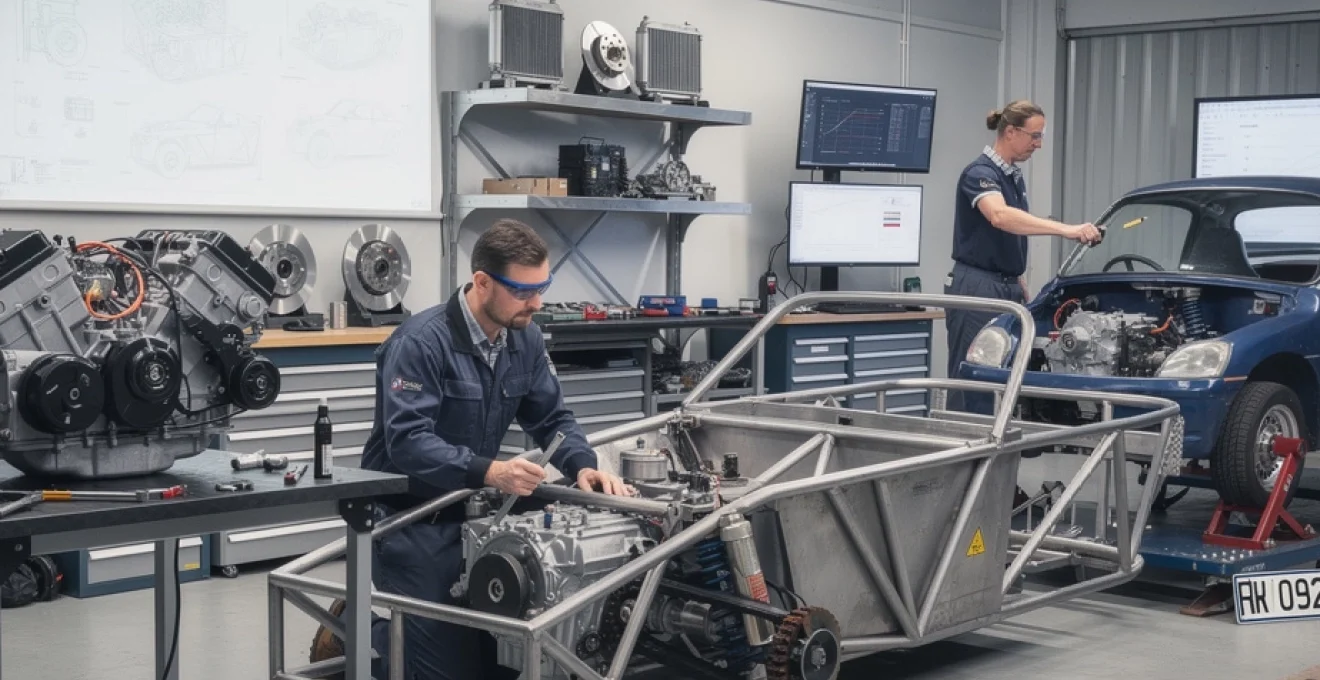
Fitting a motorcycle engine in a car shell sits right at the crossroads of ingenuity, engineering and sheer curiosity. The idea of a screaming 12,000 rpm superbike engine powering a lightweight car taps into the same appeal as race prototypes and hillclimb specials. For many enthusiasts, the question is not only whether it is possible, but whether it can be made reliable, road‑legal and genuinely quick in the real world. With modern bike engines producing 160–200 bhp from as little as 200 kg of donor machine, the power‑to‑weight potential in a car can be extraordinary, provided that the project is approached with clear goals and solid engineering discipline.
Assessing the feasibility of fitting a motorcycle engine in a car shell
Comparing motorcycle and car powertrains: RPM ranges, torque curves and duty cycles
A modern litre‑class motorcycle engine such as a Honda CBR1000RR or Yamaha R1 typically produces peak power above 11,000 rpm, with peak torque in the 9,000–10,000 rpm range. By contrast, common car engines are designed for peak torque around 3,000–4,500 rpm and sustained, lower‑rev running. That difference in operating range has huge implications for drivability, gearing and noise when you fit a motorcycle engine in a car. You gain a thrilling top‑end rush and rapid throttle response, but you lose low‑rpm grunt and lazy cruising capability.
Duty cycle also matters. A bike engine is designed to move 200–250 kg, not a 600–800 kg car. In a lightweight kit car or microcar shell, that high‑revving architecture can still work well if you design the final drive to keep the engine in its power band. However, for heavier shells the engine will spend more time at high load and moderate rpm, which stresses cooling and lubrication. If you want long‑term reliability from a motorcycle engine in a car, treating it as a motorsport‑grade component rather than a fit‑and‑forget road engine is essential.
At the feasibility stage, the single most important question is whether the target car weight and intended use truly suit a high‑revving, low‑torque motorcycle powerplant.
Identifying suitable donor motorcycle engines: hayabusa, honda CBR1000RR, yamaha R1 and BMW S1000RR
Certain engines have become favourites for bike‑engined car conversions because of their strength, aftermarket support and straightforward packaging. The 1,299–1,340 cc Suzuki Hayabusa engine dominates this niche; stock units produce around 175–190 bhp, and turbo builds exceeding 350 bhp are common in drag and track applications. For a naturally aspirated build, the Hayabusa’s broad torque curve and robust gearbox make it a very attractive choice.
The Honda CBR1000RR, Yamaha R1 and BMW S1000RR engines are lighter but often slightly more peaky. Stock outputs of 180–205 bhp mean that even in a 550 kg chassis, you are looking at supercar‑level power‑to‑weight ratios. The BMW S1000RR, in particular, has an advanced cylinder head and strong internals that respond very well to mapping and exhaust work. When selecting a donor, you should consider not only power, but parts availability, wiring complexity and how easily the sump and output shaft can be adapted to a propshaft‑driven car.
Selecting appropriate car platforms for bike‑engined conversions: kit cars, microcars and lightweight classics
The most successful projects that fit a motorcycle engine in a car tend to start with very light, simple shells. Seven‑style kit cars such as Westfield, Caterham and MK Indy often weigh 450–550 kg, allowing even a 150 bhp engine to deliver startling performance. Their front‑engine, rear‑drive layout and space for custom subframes also simplify packaging. At the extreme end, spaceframe hillclimb specials and track‑only prototypes push kerb weight down towards 400 kg, extracting every last benefit from a bike powertrain.
Lightweight classics and microcars such as the classic Mini, Fiat 500 or Smart Fortwo offer a different type of challenge. The shell may be heavier and less stiff than a bespoke kit chassis, but the character of the finished vehicle can be unique. A Mini Hayabusa or Smart Hayabusa conversion often involves extensive floorpan modification, custom rear subframes and serious reinforcement, yet the end result is a usable, compact hot rod with a power‑to‑weight ratio that rivals modern supercars. For heavier vehicles above about 800 kg, a single naturally aspirated motorcycle engine usually makes less sense unless the goal is purely experimental.
Evaluating project goals: track-only build, road‑legal conversion or experimental prototype
Defining the purpose of the car early on saves time and money later. A track‑only build gives the most freedom: noise restrictions are looser, emissions are less critical, and the car can use very aggressive gearing. That allows you to keep the engine in its sweet spot between 8,000 and 12,000 rpm and focus on lap time above all else. Sequential dog boxes, solid mounts and minimal silencers make sense in this context, even if they would be intolerable on the street.
A road‑legal bike‑engined car is a more complex proposition. You must consider IVA/SVA, DVSA and DVLA rules in the UK, as well as emissions, MOT testing and insurance classification. That changes decisions about catalytic converters, lighting, crash structures and even sharp‑edge regulations around exposed components. An experimental prototype, perhaps using a 1960s Austin Mini shell with a Honda CBR929 engine, sits somewhere in the middle: it can be used as a rolling test bed for ideas, accepting that refinement and legality may come later. Clarity about whether you want to commute, track‑day or simply experiment is vital before metal is cut.
Mechanical integration: mounting, drivetrain adaptation and chassis engineering
Designing engine mounts and subframes: vibration isolation, load paths and alignment
From a mechanical standpoint, the first major challenge of fitting a motorcycle engine in a car is creating proper mounts and subframes. Bike engines typically use the frame as a stressed member, so the original mounting points may not translate directly to a car chassis. Designing a tubular cradle or bolt‑in subframe allows you to pick up on the original engine lugs while transferring loads into the car’s structural members, not just thin sheet metal. Proper load path design ensures that acceleration and braking forces travel into sills, bulkheads and suspension turrets.
Vibration isolation matters more than many builders expect. Solidly mounting the engine gives razor‑sharp throttle response but also sends high‑frequency vibration into the shell, increasing fatigue and NVH. Using polyurethane or rubber mounts at strategic locations helps balance precision and comfort. Attention to crank centreline and output shaft alignment reduces stress on the chain or propshaft conversion. Laser alignment tools and simple string methods both work, as long as you verify angles and offsets to avoid premature drivetrain wear.
Adapting the drivetrain: chain‑to‑propshaft conversions, reversing boxes and limited‑slip differentials
Most motorcycle engines drive the rear wheel via a chain, so a car application requires a method to turn that output into a driveshaft or differential input. Common solutions include a chain‑drive differential, where the engine sprocket drives a larger sprocket bolted to a limited‑slip diff, or a chain‑to‑propshaft adapter, essentially a sprocket that drives a short shaft and conventional diff. Both systems need proper chain tensioning, alignment and lubrication to handle the higher inertia of car applications.
Bike boxes do not have reverse gear, so a reversing box or electric reverse system is usually required for a road‑going bike‑engined car. Mechanical reversing boxes slot into the propshaft line and add some weight and complexity but offer a familiar, positive reverse selection. Limited‑slip differentials are almost essential when combining a spiky torque delivery with low car weight, particularly on track. A plated LSD offers strong traction but can introduce chatter and understeer; a helical unit is more civilised, which matters if you plan to use the car in traffic.
Calculating gearing, final drive ratios and wheel speed for high‑revving motorcycle engines
Because a motorcycle engine runs so much higher in the rev range, correct gearing is the key to a usable car. Too tall a final drive, and the car crawls off the line while the engine sits below its power band; too short, and you will hit the rev limiter in top at modest motorway speeds. A useful approach is to calculate wheel speed at peak power rpm, aiming for realistic maximum speeds in 5th and 6th gears. Online gearing calculators and simple spreadsheets make it easy to model different sprocket and diff combinations.
As a rule of thumb, many Hayabusa‑engined Westfields target around 110–120 mph at peak power in top gear for track work, which keeps acceleration strong while allowing reasonable cruising. For road‑biased cars, slightly taller gearing helps reduce engine speed to around 6,000–7,000 rpm at 70 mph, improving noise and fuel consumption. Careful selection of tyre diameter also fine‑tunes effective gearing; a change from 195/50R15 to 205/60R15 can shift cruise rpm by several hundred revs, which may transform comfort on longer journeys.
| Engine | Typical Car Weight | Ideal Peak‑Power Speed in Top | Use Case |
|---|---|---|---|
| Suzuki Hayabusa | 500–600 kg | 110–130 mph | Track‑biased road car |
| Honda CBR1000RR | 450–550 kg | 100–115 mph | Sprint and hillclimb |
| BMW S1000RR | 450–550 kg | 115–135 mph | Fast road and circuit |
Reinforcing chassis and suspension pick‑up points for increased dynamic loads
A high‑revving motorcycle engine encourages aggressive driving, which dramatically increases the dynamic loads going through the shell. Even if the peak torque figure looks modest on paper, the combination of short gearing, sticky tyres and hard braking can reveal weaknesses in an older or lightly built chassis. Reinforcing suspension pick‑up points, rear subframes and bulkheads is therefore critical when you fit a motorcycle engine in a car that was never designed for that type of stress.
Seam welding key joints, adding gussets to wishbone mounts and tying roll cages into suspension turrets are all proven techniques. For classics such as the Austin Mini or Fiat 500, the original floor and rear valance may be completely replaced with a box‑section spaceframe structure that both supports the engine and carries the suspension loads. That kind of fabrication is not simply about stiffness; it also improves crash performance by providing controlled load paths in the event of an impact, which becomes more important as performance increases.
Managing cooling and lubrication: radiator sizing, oil surge control and dry‑sump options
Compared with a bike, a car traps more heat around the engine and often spends longer at part‑throttle, so cooling and lubrication need serious attention. A generously sized aluminium radiator with proper ducting and a thermostatically controlled fan avoids heat soak in traffic and after hard sessions. Mounting the radiator in the nose with a clear intake and a low‑pressure exit path under the car or through the bonnet can increase cooling efficiency by 20–30% compared with an unducted, cramped installation.
Oil surge is one of the biggest killers of motorcycle engines in cars. Long corners, high grip and sustained lateral g loads push oil away from the pickup, especially in wet‑sump engines. Baffled sumps, swinging pickups and accusump systems offer affordable protection. For heavy track or competition use, a full dry‑sump system virtually eliminates surge and often allows the engine to be mounted lower for a better centre of gravity. Treating oil control as mission‑critical rather than optional is one of the best reliability tips for any bike‑engined conversion.
On a sustained 1.2 g corner, a non‑baffled wet sump can uncover the pickup for several seconds, which is enough to destroy an otherwise healthy engine.
Control systems and electronics for motorcycle engines in automotive applications
Integrating OEM motorcycle ECUs into car electrical architectures
Using the original motorcycle ECU keeps factory reliability and proven fuel and ignition maps. However, transplanting that control unit into a car means recreating enough of the bike’s electrical architecture for it to function. That often includes the original immobiliser, throttle position, crank and cam sensors, as well as items such as tip‑over switches and clutch switches. In many builds, those safety devices are bypassed or emulated, but doing this cleanly requires accurate wiring diagrams and good soldering practices.
You will also need to interface the ECU with the car’s systems: power distribution, starter circuit, cooling fans and instrument cluster. Many builders create a dedicated bike‑engine loom and keep it separate from the car’s wiring, which reduces fault‑finding time. Mounting the ECU away from heat and vibration, usually inside the cockpit, further improves reliability. If you choose an engine with strong online community support, wiring pinouts and troubleshooting guides become much easier to access, shortening the build phase.
Using standalone ECUs (e.g. megasquirt, emerald, motec) for custom mapping and sensor integration
A standalone ECU opens up a great deal of flexibility for a motorcycle‑engined car, especially when the build includes turbocharging, individual throttle body modifications or non‑standard fuel systems. Systems such as Megasquirt, Emerald and Motec can run high‑revving four‑cylinder engines comfortably, and they make it easier to integrate car‑specific sensors like manifold pressure for boosted applications, advanced knock control or even flex‑fuel capability. For track‑focused drivers, the ability to store multiple maps for wet/dry conditions or different fuel grades is a practical advantage.
However, a standalone setup adds mapping cost and complexity. A professional dyno session is strongly recommended to avoid lean spots or over‑aggressive ignition advance that could damage the engine at 12,000 rpm. Some builders use hybrid approaches, retaining the OEM ECU for core control while adding piggyback units for logging or minor fuelling tweaks. The right choice depends on budget, target power level and how comfortable you are with tuning software and laptops in the garage.
Implementing drive‑by‑wire, quickshifters and paddle‑shift systems for sequential gearboxes
One of the greatest appeals of fitting a motorcycle engine in a car is the presence of a sequential gearbox. Up‑shifts can be lightning fast, especially when paired with an electronic quickshifter. Pneumatic or electric paddle‑shift systems mounted on the steering wheel give you fingertip control, much like a modern GT racing car. Properly set up, such a system can cut gear change times to well under 100 ms, making full‑throttle upshifts almost seamless.
Drive‑by‑wire throttles, increasingly common on modern bikes such as the BMW S1000RR, introduce more options. You can program throttle maps for smoother low‑speed control or aggressive track response, and integrate traction or launch control if the ECU supports it. Yet every extra electronic layer adds potential failure points, so robust wiring, high‑quality connectors and sensible fallback strategies are necessary. A well‑designed paddle‑shifted sequential system transforms the driving experience, but it should be engineered with the same care as the mechanical hardware.
Engineering instrument clusters and CAN‑bus interfaces for hybrid bike‑car platforms
Instrumentation in a bike‑engined car has two jobs: keeping you informed and making the car feel cohesive rather than cobbled together. Using the original bike clocks is often the quickest solution, but the styling may not suit the car, and integrating warning lights and indicators can be untidy. Modern digital dashboards that read sensor data directly from the ECU or a CAN‑bus bridge provide a cleaner solution, with configurable layouts for road, track or diagnostics screens.
On some late‑model engines, the OEM ECU communicates primarily over CAN, which complicates standalone cluster choice. CAN‑bus translators and configurable dash loggers can bridge this gap, translating bike messages into car‑friendly formats. Configuring alarms for oil pressure, coolant temperature and over‑rev protection is especially important for high‑revving builds; a prominently placed shift light at the correct rpm helps you avoid bouncing off the limiter repeatedly, prolonging engine life in demanding use.
Vehicle dynamics, performance characteristics and drivability
Analysing power‑to‑weight ratio, torque delivery and traction limits
The raw performance potential of a motorcycle‑engined car can be astonishing. A 190 bhp Hayabusa engine in a 550 kg Westfield yields around 345 bhp per tonne, rivaling serious supercars. For context, many modern hot hatches sit around 180–220 bhp per tonne. That power‑to‑weight ratio, combined with a sequential gearbox, allows 0–60 mph times in the low 3‑second region on road tyres and even faster on slicks, provided traction is available.
However, torque delivery is very different from a large‑capacity car engine. The mid‑range can feel thin below 6,000 rpm, and the surge often arrives in a narrow band at the top of the rev counter. On a dry, smooth surface with warm tyres, this rewards drivers who keep the engine singing. On a damp or bumpy road, that peaky character tests your throttle discipline. Suspension geometry, limited‑slip diff choice and tyre selection all influence how effectively the car can use this razor‑sharp powerband without simply spinning the rear wheels.
Addressing low‑speed drivability, clutch slip and start‑stop traffic behaviour
Road use exposes the main weakness of fitting a motorcycle engine in a car: low‑speed manners. Clutches designed to move a 200 kg bike may struggle with a 600 kg car, especially when creeping in traffic or reversing up slopes. Excessive clutch slip overheats the plates and rapidly shortens service life. To mitigate this, many builders select lower overall gearing in first gear, use stronger aftermarket clutch springs or even convert to multi‑plate racing clutches designed for higher loads.
Idle control and throttle mapping also influence drivability in stop‑start conditions. A slightly higher idle speed, say 1,500 rpm instead of 1,000 rpm, can smooth engagement and reduce the tendency to stall. Thoughtful pedal ratio design makes the throttle less sensitive at small openings, easing parking and low‑speed manoeuvres. Accepting that a bike‑engined car will never behave like a quiet diesel hatchback in rush‑hour traffic is part of the mental adjustment required before starting such a project.
Optimising suspension, tyres and brake systems for high‑revving, low‑torque engines
Chassis tuning has to complement the unique character of a motorcycle‑engined car. The engine mass is usually lower and lighter than a traditional car engine, allowing a lower centre of gravity and more favourable weight distribution. Spring and damper rates should reflect this; simply copying a heavier car’s setup risks an over‑stiff ride and poor grip. Corner‑weighting the car and aiming for neutral balance under load helps you exploit the engine’s appetite for revs without constant oversteer.
Tyre choice acts as the car’s only contact patch with reality. Semi‑slick tyres can transform lap times but may become tricky in the wet when combined with a sharp powerband. Brake systems can often be lighter than in conventional swaps, because the overall mass is low, but proper, fade‑resistant pads and cooling ducts remain important for repeated high‑speed stops. A well‑tuned bike‑engined chassis feels like a scaled‑down prototype racer, darting into corners and rewarding precise inputs.
Noise, vibration and harshness (NVH) considerations in bike‑engined cars
Noise is both part of the appeal and one of the major trade‑offs when you fit a motorcycle engine in a car. At 8,000–12,000 rpm, even a well‑silenced engine is vocal. For track‑only applications, that is usually a bonus, but on the road long‑distance comfort quickly suffers. Effective packaging of resonators, long primary exhausts and high‑quality silencers can cut cabin dB levels significantly without strangling performance, but this must be designed in from the outset rather than treated as an afterthought.
Vibration and harshness stem from solid or semi‑solid mounting, thin kit‑car panels and the engine’s firing frequency. Strategically placed sound‑deadening, rubber‑isolated mounting points for ancillary components and careful exhaust hanger design all reduce transmitted buzz. NVH tuning is often viewed as a luxury, yet it directly affects how often and how long you will actually drive the car. A project that shakes, drones and booms will spend far more time parked than a slightly heavier but more refined build.
Regulatory compliance, safety and road‑legality in the UK and europe
Navigating IVA/SVA testing, DVSA requirements and DVLA registration for engine‑swapped cars
Bringing a motorcycle‑engined car onto UK roads involves more than just a successful engineering exercise. Individual Vehicle Approval (IVA), or its predecessor SVA for older builds, sets standards for lighting, sharp edges, noise, emissions and construction that all kit cars and radically modified vehicles must meet. For engine‑swapped classics retaining more of the original structure, DVSA and DVLA apply a points‑based system to decide whether the vehicle keeps its original registration or receives a Q‑plate.
Preparing for IVA means thinking about seat belt anchorage strength, collapsible steering columns, correct speedometer calibration and dependable braking performance. For bike‑engined conversions, attention also turns to shielding hot exhaust components, secure fuel system design and ensuring that any protruding mechanical parts, such as chain drives or linkages, are safely enclosed. Studying recent test experiences from other builders and using checklists early in the design phase prevents unpleasant last‑minute failures at the test centre.
Meeting emissions standards and MOT test limits with high‑output motorcycle engines
Emissions compliance depends on the age of the engine and how DVLA classifies the vehicle. In many cases, the test limits are based on the engine’s original registration date, which means that a modern Euro‑compliant bike engine can actually help a project meet stricter standards, provided that the exhaust and catalyst system are designed correctly. High‑flow catalytic converters, accurate lambda feedback and well‑mapped fuelling keep CO, HC and NOx within MOT limits while preserving performance.
Engines originally equipped with secondary air injection or exhaust valves may require careful handling. Removing those systems risks pushing emissions outside acceptable ranges unless compensated for in the mapping. Wideband oxygen sensor logging during dyno sessions allows you to validate that mixtures remain stable across the rev range, not just at peak power. Treat exhaust gas cleanliness with the same seriousness as raw horsepower; a bike‑engined car that repeatedly fails MOT emissions will quickly become a static garage ornament.
Designing exhaust systems, catalytic converters and noise control for road use
An effective exhaust in a bike‑engined car must juggle conflicting priorities: flow, noise reduction, package constraints and ground clearance. Equal‑length primaries help maintain scavenging and preserve the engine’s high‑rpm character, but space in a small car shell is limited. Many builders compromise with slightly unequal lengths in order to route pipes around steering racks and subframes. Positioning at least one high‑quality catalytic converter near the engine aids light‑off, which is vital for emissions during cold starts.
For noise control, longer systems with multiple silencers usually beat short, straight‑through setups, even when using the same overall pipe diameter. Packing materials and chamber designs that withstand sustained 900–1,000 °C exhaust gas temperatures are essential for longevity. Side‑exit exhausts can ease routing but risk failing noise tests at IVA, so careful measurement and perhaps removable additional silencers for testing days may be sensible. Road‑legal performance does not have to mean dull sound, but it does demand thoughtful acoustic engineering.
Insurance, vehicle classification and documentation for motorcycle‑engined cars
Insurance companies view any engine swap as a material modification, and fitting a motorcycle engine in a car is about as radical as it gets. Specialist kit‑car and modified‑vehicle brokers understand the risk profile better than mainstream insurers and often ask detailed questions about power output, chassis reinforcements, brake upgrades and security measures. Expect premiums to reflect the performance potential and the relative rarity of such vehicles on the road.
Accurate documentation of the build, including receipts for the donor bike, engine numbers, photographs and engineering notes, helps both DVLA registration and insurance underwriting. Being transparent about modifications reduces the risk of claim disputes later. Some jurisdictions also have specific classifications for trikes or three‑wheelers, which opens alternative routes where a full car registration might be more challenging. Thinking about paperwork and classification alongside fabrication ensures that the finished machine can be used legally and confidently.
Real‑world examples, proven conversions and project planning
Case studies: suzuki hayabusa‑engined westfield, caterham, MK indy and radical SR series
Real‑world data from established projects provides valuable benchmarks when assessing whether fitting a motorcycle engine in a car will meet your expectations. Hayabusa‑engined Westfields and Caterhams commonly record 0–60 mph times between 3.0 and 3.5 seconds, with typical lap times at UK circuits rivalling far more expensive GT machinery. Many owners report annual mileages of 3,000–5,000 road miles plus multiple track days once the cars are properly sorted mechanically.
At the more extreme end, manufacturers such as Radical have built entire model ranges around superbike engines. The Radical SR series demonstrates what can be achieved with a purpose‑designed chassis, aerodynamic downforce and professional‑grade engineering. These cars frequently generate lateral acceleration figures of 2 g or more on slick tyres, showcasing the performance ceiling of the concept. Studying how such manufacturers address cooling, lubrication and safety offers direct lessons for any DIY builder aiming for durable, repeatable performance.
Lessons from DIY builds: mini hayabusa, smart hayabusa and classic fiat 500 bike‑engined swaps
DIY projects based on everyday shells show both the possibilities and pitfalls of this type of conversion. Mini Hayabusa and Smart Hayabusa builds, widely documented across enthusiast forums and video platforms, reveal recurring themes. Structurally, most require extensive rear‑end re‑engineering to accommodate the engine and drivetrain safely. Builders often underestimate the time and cost of custom fabrication, particularly when aligning chain drives and ensuring correct suspension geometry after cutting into the floorpan.
Classic Fiat 500 conversions demonstrate the packaging benefits of rear‑engine layouts. The compact shell accepts a bike powertrain in the rear with relatively minimal intrusion into the cabin, yet the wheelbase and track width demand careful handling tuning to avoid a twitchy, over‑powered feel. Across all these projects, common success factors emerge: realistic performance targets, robust cooling and oil systems, and a willingness to iterate based on testing rather than assuming the first layout will be perfect.
Budgeting and parts sourcing: donor bikes, kit components and custom fabrication costs
Financial planning is as crucial as mechanical planning. A rough budgeting rule for fitting a motorcycle engine in a car is that the donor bike and engine may represent only 20–30% of total project cost. A good‑condition Hayabusa or litre‑bike engine with loom, ECU and throttle bodies can cost £2,000–£4,000 depending on age and specification. To that, you must add a chain‑drive diff or reversing box, custom propshafts, engine mounts, exhaust fabrication, cooling system parts and a standalone or modified wiring loom.
Custom fabrication time, whether outsourced or valued at your own hourly rate, often exceeds expectations. Laser‑cut brackets, CNC‑machined sprocket carriers and bespoke sumps all add up. Sensible builders phase expenditure: buying the donor engine only after confirming that the chosen shell and layout will work on paper, and tackling the project in manageable stages. Markets for used race components, such as ex‑Radical diffs or dampers, can also reduce cost if you are comfortable adapting second‑hand parts.
Phased project planning: feasibility study, mock‑up, fabrication, testing and tuning
Approaching the build as a structured engineering programme increases the chances of finishing with a usable, enjoyable car. A sensible phased plan might look like this:
- Feasibility and layout study, including weight estimates, gearing calculations and IVA/MOT implications.
- Physical mock‑up of engine and drivetrain using cardboard templates, dummy blocks or even 3D models.
- Fabrication of subframes, mounts, suspension modifications and exhaust, followed by careful trial assembly.
- Initial testing for cooling, oil pressure and drivetrain robustness before full‑power runs.
- Final mapping, fine‑tuning of suspension and brakes, then regulatory inspection and registration.
Treating each phase as an opportunity to measure, refine and document your decisions turns the project from a risky experiment into a methodical, rewarding build. That mindset also makes future upgrades—such as moving from a CBR929 to a newer CBR1000RR, or adding forced induction—far simpler, because the underlying chassis and systems have been engineered with clear intent from the start.