
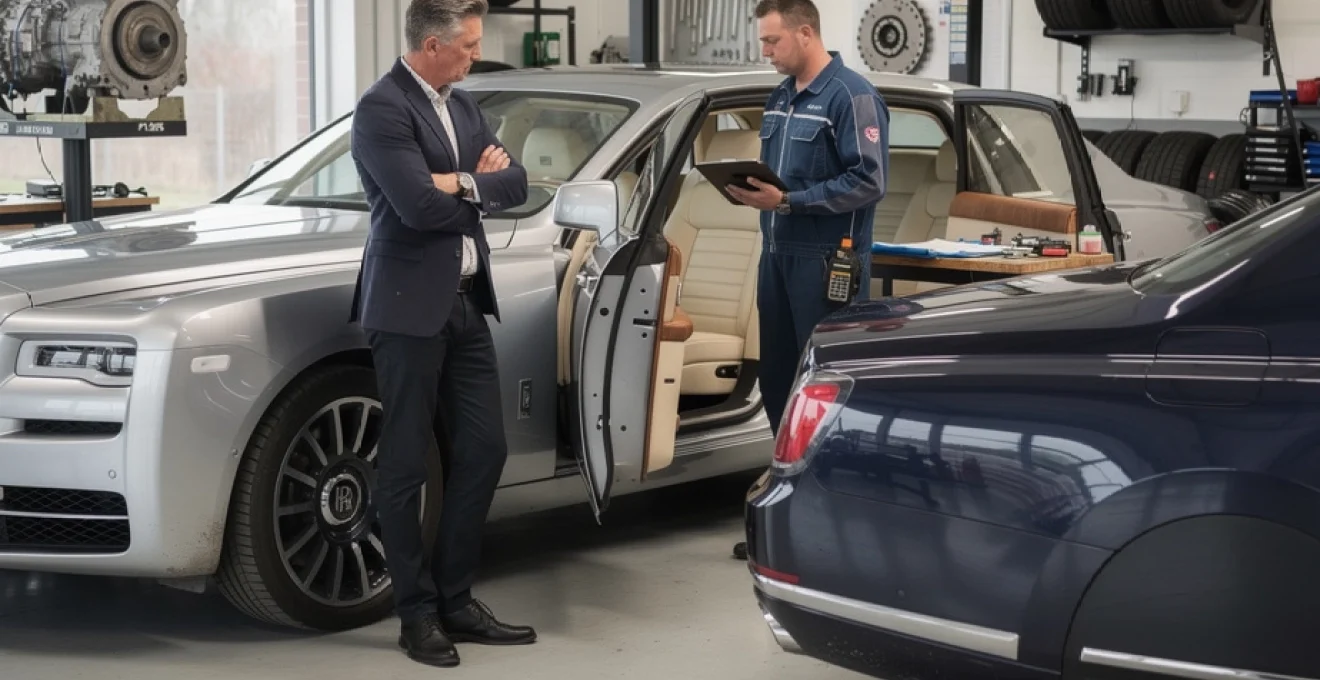
A Rolls‑Royce Phantom sits in a different universe from almost any other used luxury car. Even a 15‑year‑old Phantom VII that now shows £75,000 on the windscreen and 80,000 miles on the odometer was once a £250,000–£400,000 statement of intent. That contrast is exactly why you might be tempted: near‑supercar presence, old‑money image and that famous “Magic Carpet Ride” for less than a new mid‑range SUV. The question is whether a high‑mileage Rolls‑Royce Phantom is a clever buy or an exquisitely upholstered money pit. Understanding how mileage, usage and maintenance change the risk profile is essential before you sign anything.
Key buying question: what counts as “high mileage” on a Rolls‑Royce phantom (VII vs VIII vs extended wheelbase)
Mileage thresholds on phantom VII (2003–2017): 60k, 100k and 150k+ use cases
The BMW‑era Phantom VII has now been around long enough for patterns to emerge. In the UK market, many cars are still under 50,000 miles, but a growing number sit in the 70–100k band, with a handful over 150k. On a properly engineered, 6.75‑litre naturally aspirated V12, 70–80k miles is not inherently high; in powertrain terms it can be equivalent to 120k–150k on a normal executive saloon. The issue is not that the engine explodes at a given number, but that age‑ and mileage‑related consumables start to align: air struts, control arms, rubber bushings, complex electronics and trim.
Broadly, many specialists consider:
- Sub‑60k miles: prime retail, often with full dealer history and fewer age‑related faults.
- 60–100k miles: sweet spot for value if the service history is impeccable and usage was mostly long‑distance.
- 100–150k+ miles: specialist territory; buy only after an exhaustive inspection and with a realistic budget for remedial work.
There are documented Phantom VII examples comfortably past 150,000 miles still running strongly, but those tend to be chauffeur‑maintained cars with open cheque‑book servicing rather than neglected “bargain” purchases.
Mileage patterns on phantom VIII (2017–present): chauffeur‑driven vs owner‑driven usage
Phantom VIII is newer, so the average mileage is lower. Many UK cars sit between 10,000 and 40,000 miles, with a smaller pool now nudging past 60,000. Usage patterns matter more than the number itself. Chauffeur‑driven cars typically accrue steady motorway and A‑road miles, smooth throttle inputs and meticulous warm‑up routines. Owner‑driven Phantoms can see more stop‑start, heavier use of the V12’s torque and sometimes less disciplined servicing once the initial warranty period has ended.
High‑mileage Phantom VIII examples (say, 70–90k) often belong to hotel, VIP transfer or wedding fleets. That might sound alarming, but many such fleets follow strict maintenance schedules to avoid reputational damage. A well‑documented, high‑mileage Phantom VIII with continuous Rolls‑Royce or top specialist records can be less risky than a low‑mileage car that has seen long periods of inactivity and only sporadic servicing.
Short wheelbase vs extended wheelbase (EWB): different wear profiles and duty cycles
Short Wheelbase (SWB) and Extended Wheelbase (EWB) Phantoms share the same basic aluminium space‑frame, V12 engine and air suspension concept, but their duty cycles diverge. EWB cars are far more likely to have been chauffeur‑driven from day one, with a greater proportion of city work around London, Manchester or Birmingham hotel districts. That means more low‑speed manoeuvring, more idling and more multi‑storey car park ramp usage — all harder on steering, brakes, transmission and air suspension than gentle inter‑city cruising.
SWB cars are more frequently owner‑drivers’ toys, used for weekend trips and European tours. That kind of mileage is ideal for keeping a Phantom mechanically healthy. However, SWB cars are also more likely to have been personalised heavily (large aftermarket wheels, audio upgrades, body kits), which can affect alignment, ride comfort and long‑term component life. When assessing a high‑mileage Rolls‑Royce Phantom EWB versus SWB, the usage story is every bit as important as the odometer reading.
UK market benchmarks: auto trader, PistonHeads and specialist dealer mileage norms
Look at UK listings across Auto Trader, PistonHeads classifieds and high‑end independents and a pattern emerges. The bulk of Phantom VII stock is in the 30–70k‑mile range, with Series II cars (post‑2012) often at the lower end and early 2003–2006 cars forming the majority of high‑mileage examples. Typical asking prices for Phantom VII saloons currently span from around £75,000 for older, higher‑mileage cars to well over £200,000 for very late, low‑mileage and two‑door variants.
True “outliers” past 120,000 miles are fewer in number but not unheard of, especially among cars that have lived on the motorway. Those vehicles will usually sit at the bottom of the price curve, sometimes 25–30% cheaper than comparable age cars with moderate mileage. However, that discount is quickly eaten away if the next owner inherits £15,000–£20,000 worth of air suspension, brake, cooling and cosmetic work. Treat market norms as a guide but never as a substitute for a forensic individual inspection.
Engineering durability: how the BMW‑era Rolls‑Royce phantom powertrain handles high mileage
N73B68 6.75‑litre V12 longevity: common failure points beyond 80,000 miles
The Phantom VII’s 6.75‑litre V12 (internally coded N73B68) is a development of BMW’s 6.0‑litre V12 used in the 760i/Li. It was engineered from the outset for low‑stress, high‑torque operation. Running at 100 mph with only around 25% of its power reserve showing on the dashboard, it is barely working. That mechanical understressing is why, in principle, 100,000 miles on a Phantom V12 is entirely reasonable for an engine that has seen regular oil changes and correct warm‑up behaviour.
However, common high‑mileage Phantom engine issues are more about ancillaries than the core block. Owners and specialists regularly mention:
- Coolant transfer pipes running through the engine ‘V’, sometimes requiring expensive dismantling if corrosion sets in.
- Oil leaks from cam covers and the rear main seal between engine and gearbox, which are labour‑intensive to rectify.
- Ignition coils and spark plugs suffering from age and heat, leading to misfires and rough idle beyond 80k miles.
A major coolant pipe job on an N73 can be a four‑figure invoice simply because of the hours involved. That does not make the engine fragile, but it does mean a “cheap” high‑mileage Phantom without records of such work already done can quickly become very expensive.
ZF 6HP and 8HP automatic gearboxes: service intervals, fluid changes and high‑mileage behaviour
Early Phantom VII cars used the 6‑speed ZF 6HP automatic, with a switch to an 8‑speed ZF 8HP in the 2012 Series II update. Both units are capable of very high mileages, often 150,000+ miles, if transmission fluid and filter changes are carried out sensibly. Factory literature once spoke of “lifetime” fluid, but industry consensus — and ZF’s own guidance — now treats 60,000–80,000 miles as a sensible interval for an oil and filter change in a heavy, high‑torque application like the Phantom.
High‑mileage behaviour to look for includes:
- Slurred or hesitant shifts when cold, which may indicate old fluid, valve‑body wear or mechatronic issues.
- Noticeable clunks when selecting drive or reverse, especially on inclines, suggesting worn mounts or internal wear.
- Shuddering under light acceleration in higher gears, sometimes cured by fluid changes, sometimes not.
A full gearbox rebuild on a Phantom can run into several thousand pounds, but proactive fluid service massively reduces that risk. For a high‑mileage car, documented evidence of at least one, ideally two, transmission services is a meaningful reassurance.
Cooling system, ignition and fuel delivery components under UK stop‑start and motorway cycles
UK usage typically splits between London congestion and long motorway runs. Cooling systems hate the former and thrive on the latter. Repeated heat‑soak cycles in traffic can accelerate ageing in plastic expansion tanks, hoses, thermostats and electric water pumps. High‑mileage Phantoms that have lived primarily in cities often have records of replaced radiators, auxiliary pumps and fan assemblies by 70–90k miles.
Ignition and fuel delivery are broadly robust but not immune to age. Injectors on the N73 V12 are known to fail, and a full replacement set plus coils and plugs can cost several thousand pounds at dealer rates. Fuel pumps and filters, if left untouched for 100,000 miles, can contribute to hard starting or hesitation under load. For a car that cost more than many houses when new, a meticulous stack of receipts for such work is a positive sign rather than a reason to worry.
Impact of london and city driving vs inter‑city motorway cruising on phantom drivetrain wear
Think of city‑heavy mileage as “dog years” for a Rolls‑Royce Phantom. A 60,000‑mile car that has lived its life crawling between airports, hotels and West End venues may have wear equivalent to a 100,000‑mile motorway cruiser. Constant braking, full‑lock manoeuvres, repeated cold starts and frequent idling all accelerate wear on brake components, steering racks, torque converters and cooling systems.
By contrast, long‑distance inter‑city or cross‑continent usage keeps fluids hot, bearing loads stable and thermal cycles gentle. Many owner‑drivers report driving Phantoms regularly on six‑hour trips at 70–80 mph with near‑zero complaints. If usage is noted in the history — for example participation in classic tours, European road trips or chauffeur logs showing mostly motorway runs — it can make a high‑mileage example more attractive than a seldom‑used garage queen.
Chassis, suspension and ride quality degradation on high‑mileage phantom examples
Air suspension struts, compressors and height sensors: lifespan and replacement costs
The Magic Carpet Ride depends on complex air suspension components. Each Phantom rides on air struts, with a central compressor and a network of valves and ride‑height sensors. As mileage and years accumulate, rubber bellows dry out, seals fatigue and compressors lose efficiency. Around the 80–120k‑mile mark — sometimes earlier on heavily used city cars — front or rear struts may begin to leak or sag.
Replacement costs vary, but new OEM air struts can be several thousand pounds per axle supplied and fitted. Compressors and valve blocks are somewhat cheaper but still easily four‑figure jobs through main dealers. A car sitting visibly nose‑down or tail‑low after an overnight park is a red flag. Conversely, documented replacement of one or more struts under previous ownership is a significant plus for a high‑mileage buyer.
Magic carpet ride calibration: bushings, control arms and subframe mounts after 100k+ miles
A Phantom does not suddenly turn into a rattling relic at 100,000 miles, but the calibration that makes the ride so distinctive depends on dozens of rubber and hydraulic components working in harmony. Control arm bushes, anti‑roll bar links, subframe mounts and engine mounts all compress, harden and crack with age. The effect is incremental: slightly more thud over sharp ridges, faint shimmy through the steering wheel, a sense that the car “floats” rather than glides.
On a test drive, pay attention to how the car behaves over patched tarmac and speed humps at low speed. A fresh Phantom feels almost uncanny, as if the road surface has been re‑paved. A tired example may still feel comfortable in isolation but will compare poorly back‑to‑back. A suspension refresh — not just air struts, but arms and bushes — can restore much of that character, but for a high‑mileage car it is more realistic to budget several thousand pounds than a token alignment.
Steering components, wheel bearings and brake system wear on heavy, long‑wheelbase platforms
The Phantom is heavy: even short‑wheelbase cars exceed 2.5 tonnes, and Phantoms with EWB or extra equipment can be more. That mass places a constant burden on steering, hubs and brakes. High‑mileage cars commonly show play in track‑rod ends and front lower arms, as well as occasional steering rack seepage. Wheel bearings can exhibit humming at motorway speeds, exacerbated by large 21‑inch wheels and low‑profile tyres.
Brake pads on a Phantom wear quickly by normal standards, particularly in mixed driving. It is not unheard‑of for pads to last only 20,000 miles on cars that see a lot of urban work. While discs are long‑lived, the parts and labour costs are still high: four‑figure invoices for pads and discs all round are normal. A prospective owner who worries visibly about the cost of a set of brake pads on a car that was £300,000–£400,000 new may want to reconsider the whole proposition.
21‑inch wheel alloys, run‑flat tyres and alignment issues on UK roads and speed humps
Most Phantoms ride on large alloy wheels wrapped in run‑flat tyres. The combination looks magnificent but does the car no favours on cratered UK roads. Repeated pothole impacts and speed humps can bend wheel rims, knock alignment out of specification and bruise sidewalls. Tyres for a Phantom are wide, high‑load items and can cost £300–£500 per corner. That is before considering the impact on ride quality if cheap, non‑approved tyres have been fitted to save money.
Inspect alloy wheels closely for cracks, buckles and heavy kerb rash. A Phantom that has spent years parallel‑parked in tight city streets often tells its story through its wheels. A print‑out from a recent four‑wheel alignment is also a good sign; these cars are sensitive to geometry, and persistent pulling or tramlining at 70 mph can indicate deeper suspension issues rather than a mere tracking tweak.
Bodywork, corrosion and exterior trim issues specific to older, high‑mileage Rolls‑Royce phantoms
Rolls‑Royce invested heavily in corrosion protection for the Phantom’s aluminium space‑frame and body panels, so wholesale rust is rare. That said, early Phantom VII models have a known vulnerability: chrome trim pieces and grille surrounds that can corrode or pit over time, especially on cars that live outdoors or near the sea. Replacement of a front grille, for example, has been quoted at around £10,000, and chrome exterior detailing is not far behind. Corroded brightwork will not strand you, but it significantly affects both appearance and resale value.
Door edges, boot apertures and the lower extremities of the rear doors should be checked for paint bubbling or electrolytic reaction where aluminium meets steel fixings. Stone‑chipping on the vast frontal area and bonnet is common; smart repairs are acceptable if documented, but patchy resprays or mismatched paint on this scale are obvious in sunlight. The Spirit of Ecstasy mechanism on the bonnet can also suffer from moisture ingress over time, causing slow or hesitant retraction. Replacement or refurbishment is not cheap and will require specialist attention.
Interior wear, electronics and bespoke options on a high‑mileage Rolls‑Royce phantom
Connolly and Rolls‑Royce leather ageing: bolsters, piping and re‑trimming considerations
The Phantom’s interior is one of its defining features. Up to sixteen hides can be used in a single car, cut and stitched by hand. High‑mileage use inevitably leaves marks: driver’s seat bolsters show creasing and dye loss, piping can crack, and armrests may become shiny. Leather quality is extremely high, so patina is not a crime, but deep cracking or colour transfer from clothing can be harder to remedy inconspicuously.
Professional leather restoration can make a dramatic difference and is often more sensible than full re‑trimming. However, if previous owners have allowed damage to progress too far, sections may need replacement to maintain the cabin’s standards. That is not like re‑trimming a mass‑market saloon; matching grain, colour and stitching on a Rolls‑Royce requires a specialist and is priced accordingly. A high‑mileage Phantom with clean, gently worn leather often indicates careful chauffeur use rather than neglect.
Lambswool over‑mats, rear theatre configuration and picnic tables: intensive‑use cabin checks
Rear passengers define how a Phantom’s cabin ages. Lambswool over‑mats in the back can hide worn underlying carpets, so lift them and inspect thoroughly. In chauffeur‑driven cars, rear seats can actually look fresher than the front if passengers were careful and smoking was prohibited. In hire‑fleet or wedding cars, however, constant in‑and‑out traffic in formal shoes can flatten carpets and scuff door cards quickly.
Optional rear theatre screens, folding picnic tables and bespoke drinks cabinets introduce more moving parts and more potential failure points. Check that screens power up correctly, that controllers work and that no lines or dead pixels are present. Picnic tables should deploy and lock smoothly; misalignment or resistance can indicate previous rough handling. As with any luxury car, every gadget that fails is another three‑ or four‑figure line item on a future invoice.
Idrive‑based infotainment, MOST‑bus fibre optics and COMBOX failures in early phantom VII
Early Phantom VII models use an infotainment architecture derived from the first‑generation BMW iDrive system. That means a MOST‑bus fibre‑optic network connecting modules for navigation, audio, telephone and, in some cases, rear entertainment. Over time, moisture, minor pin damage or simple electronic ageing can cause intermittent fibre‑optic faults. Symptoms include random audio cut‑outs, dead navigation screens or whole subsystems dropping offline until the car is restarted.
Modules such as the COMBOX (for Bluetooth and connectivity) can also fail and are not inexpensive to replace. Software updates can help with some glitches, but physical module failure on a 15‑year‑old Phantom is not rare. Later cars, and certainly Phantom VIII, benefit from newer electronics and improved robustness, but any high‑mileage buyer should budget for the occasional electronic mystery requiring both diagnostic time and parts.
Soft‑close doors, power bootlid and spirit of ecstasy mechanism reliability over time
Soft‑close “coach” doors and the power bootlid are part of what makes a Phantom feel special. On high‑mileage cars, the motors, latches and sensors involved can lose calibration or fail. A door that refuses to latch softly or a bootlid that bounces back open can be as irritating as any mechanical fault. Most issues are solvable with adjustment or replacement of individual actuators, but labour access can be time‑consuming.
The retractable Spirit of Ecstasy emblem also has its own motorised mechanism and anti‑theft function. High‑pressure jet washes, winter road salt and repeated operation all contribute to eventual stiffness or failure. Like many aspects of the Phantom, these systems are over‑engineered rather than flimsy, but once age and mileage combine, the cost of restoration sits in a different league from a typical executive saloon.
Service history, provenance and inspection protocol for assessing a high‑mileage phantom
Rolls‑royce main dealer vs independent specialist stamps: RRMC, H.R. owen, P&A wood examples
With high‑mileage luxury cars, paperwork is often more revealing than the odometer. A Phantom with continuous main dealer stamps from RRMC London, H.R. Owen, P&A Wood or another recognised Rolls‑Royce partner is inherently more reassuring than one with gaps or generic garage names. However, a strong history from a respected independent Rolls‑Royce specialist is just as valid, and sometimes more so, because those businesses often see older cars more frequently and know their weak points intimately.
Ideally, the service book is present, leather‑bound and backed up by a folder of invoices detailing not only routine servicing but also major jobs: coolant pipes, suspension components, brake overhauls, electronic module replacements. A lost or missing service book is a negative on a £75,000 “entry‑level” Phantom in the same way that missing history on a mainstream car would be; replacement books can cost hundreds of pounds and never tell the full story.
Verifying scheduled maintenance: oil services, brake fluid, coolant and ancillary belts
A Rolls‑Royce Phantom follows a time‑ and mileage‑based maintenance regime. Oil services are typically annual or every 10,000–12,000 miles; brake fluid should be changed every two years; coolant and ancillary belts follow longer intervals but are equally important. High‑mileage cars that have been serviced strictly by the calendar, rather than by occasional mileage, tend to age far better. Look for consistent intervals, no multi‑year gaps, and entries for brake fluid, coolant and transmission fluid as the car ages.
For a 100,000‑mile Phantom, it is reasonable to expect at least eight to ten oil services logged, several brake fluid changes, one or two coolant services and some evidence of suspension and braking component replacement. Lack of evidence for these basic items should be treated as a warning that other maintenance may have been deferred. It is worth taking a forensic approach: reading line by line through invoices may feel tedious, but it often reveals both care and corner‑cutting decisions.
Pre‑purchase inspection (PPI) checklist by Rolls‑Royce specialist: diagnostic scan and road test
On a high‑mileage Rolls‑Royce Phantom, a full pre‑purchase inspection by a marque specialist is non‑negotiable. A competent inspector will perform a diagnostic scan using manufacturer‑level equipment, checking for stored and historic fault codes across all modules. That electronic snapshot can reveal intermittent issues with air suspension, gearbox, infotainment, lighting and security systems that may not be obvious on a brief test drive.
The road test should cover low‑speed manoeuvres, speed bumps, emergency stops, motorway cruising and full‑throttle acceleration. A detailed PPI report might run to several pages and will often identify a “shopping list” of advisories. Rather than being discouraged by a long list, focus on cost and priority. A £3,000–£5,000 snagging list on a high‑mileage Phantom is almost normal; a £15,000–£20,000 estimate to stabilise a neglected car is a strong sign to walk away unless the purchase price is adjusted accordingly.
Chauffeur, private owner and hire‑fleet histories: interpreting usage patterns from paperwork
A Phantom’s history reveals its lifestyle. Chauffeur‑driven cars may show company ownership, regular mileage increments and servicing at consistent annual intervals. Private owner cars might have fewer miles per year and occasional long gaps where the car was off the road. Hire‑fleet vehicles can show clusters of invoices around peak wedding seasons, bodywork repairs and frequent cosmetic detailing.
None of these patterns is inherently good or bad. A carefully run chauffeur company may lavish money on preventative maintenance, while a private owner might stretch intervals. The trick is to align what the paperwork suggests with what the car looks and feels like in reality. If a supposed “private owner, weekend use only” car shows heavy rear seat wear and tired rear door rubbers, then the story is inconsistent and further questions should be asked.
Running costs, depreciation and total cost of ownership of a high‑mileage Rolls‑Royce phantom in the UK
Total cost of ownership on a high‑mileage Phantom is where romance meets arithmetic. Depreciation from new is dramatic — a Phantom VII saloon that cost around £250,000–£300,000 in the mid‑2000s might now be £80,000 or less at six‑figure mileage — but from that point onwards values flatten. Provided mileage does not spiral and condition is maintained, annual depreciation at £75k–£100k purchase price can be modest in percentage terms, particularly compared with newer Phantoms. However, running costs remain anchored to the car’s original status, not its current value.
Insurance sits firmly in high‑end territory; servicing at main dealers is costed in four‑figure increments; fuel consumption in mixed UK driving hovers in the mid‑teens mpg; and consumables like 21‑inch tyres, brake components and batteries are all premium‑priced. Real‑world owner anecdotes confirm that a Phantom can be more expensive to own annually than a Ferrari 360, especially if used 2–3 times a week and for regular long trips. A single headlamp unit might cost £4,000, a rear‑view mirror £1,200, an emblem or clock part £800, all before labour.
From a planning perspective, it is prudent to put aside a contingency fund each year — many experienced owners suggest £3,000–£5,000 as a minimum for a high‑mileage, out‑of‑warranty Phantom, with the understanding that some years will be quieter and others may bring a major suspension or cooling overhaul. If such numbers feel disproportionate, a well‑specified 7 Series BMW or S‑Class Mercedes offers a broadly similar day‑to‑day capability with far lower exposure to five‑figure surprise bills.
Use‑case analysis: when a high‑mileage Rolls‑Royce phantom is worth buying — and when to walk away
Deciding whether a high‑mileage Rolls‑Royce Phantom is “worth it” depends entirely on how you intend to use the car. For an enthusiast who wants to drive the car regularly — say, once or twice a week, plus occasional six‑hour motorway journeys — and who accepts that annual running costs can rival those of a contemporary supercar, a well‑maintained 80,000‑mile Phantom VII or VIII can be deeply satisfying. In that scenario, the car is an experience and an indulgence, not a rational transport solution; value comes from effortless long‑distance comfort, theatre and the sense that no other car on the road quite compares.
By contrast, if the Phantom is envisioned as a low‑usage toy that will sit for months at a time, with a tight budget for maintenance, high mileage becomes a liability. Long periods of inactivity are harsh on batteries, air suspension seals, tyres and electronics, and the cost of waking a neglected Phantom can be eye‑watering. Similarly, buyers who are already nervous about the cost of individual wear items are unlikely to enjoy ownership once the first £2,000–£3,000 invoice appears for what, on a lesser car, would seem like routine work. Treat a high‑mileage Phantom with the seriousness of a small business purchase: assess usage, cash flow and risk tolerance honestly, and it can be a rewarding, if extravagant, way to enjoy one of the most remarkable luxury cars ever built.