
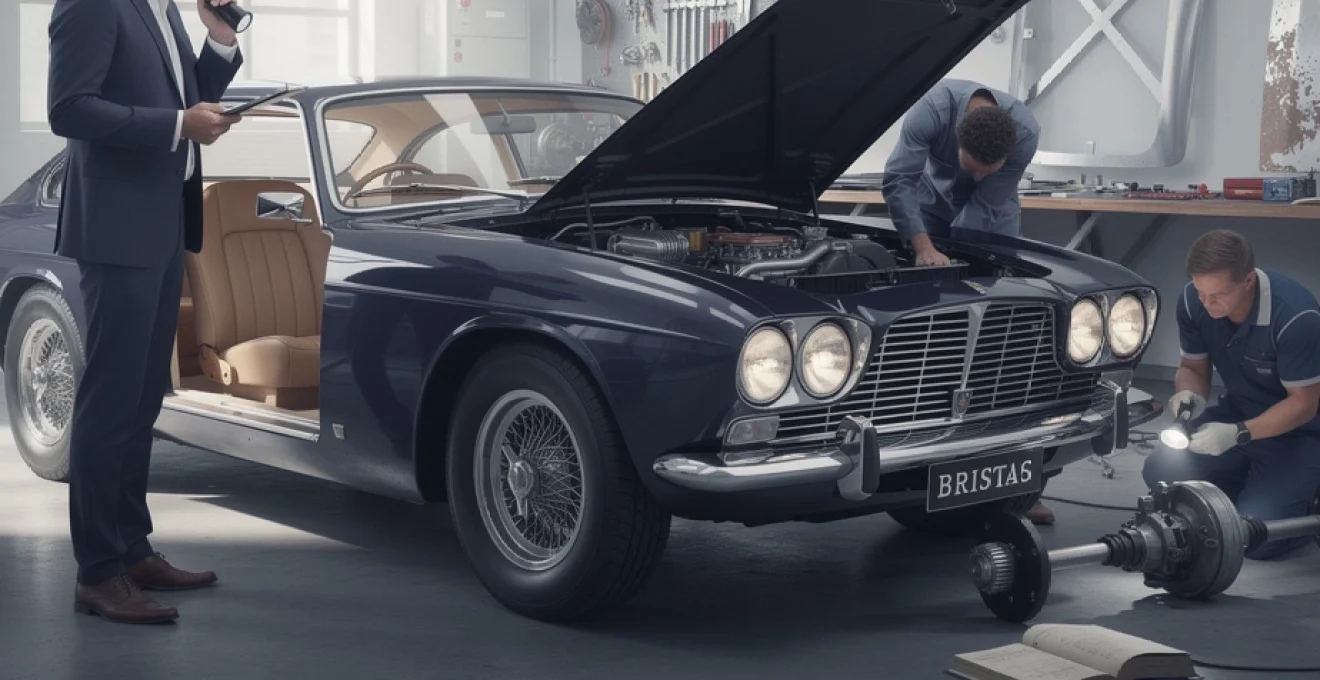
The Bristol 411 is one of those rare grand tourers that makes even seasoned classic car buyers pause. Hand-built, discreet and brutally fast for its era, it combines British coachbuilt charm with dependable American power. With only around 3000 Bristols of all types produced in total and just a fraction of those being 411s, each car is effectively a limited edition. Values have moved sharply in recent years, with average sale prices for the Bristol 411 now hovering around the mid-£30,000s and the best cars comfortably exceeding £90,000, so buying one demands more than a casual glance. If you are considering a Bristol 411 as a long-distance GT, a daily-driven “gentleman’s express” or a blue-chip addition to a collection, understanding the detail behind the model range, structure and mechanicals is essential.
Understanding the bristol 411 model range: series 1–6, engine evolution and key specification changes
Decoding bristol 411 series 1 and series 2: early chrysler 383ci V8, TorqueFlite gearbox and low-production quirks
The Bristol 411 arrived in 1969 as an evolution of the earlier 410, but under the skin it was a major step forward. Early Series 1 and Series 2 cars used the Chrysler 383ci V8 (around 6.3 litres), a torquey big-block unit that transformed the car’s long-distance ability. Power figures vary by source, but period tests and factory information place output at roughly 330–340bhp with substantial torque, enough for a 0–60mph time of around 7 seconds and a top speed close to 140mph. For a four-seat GT built in tiny numbers, that performance was remarkable in the late 1960s and early 1970s, easily matching German rivals and often beating contemporary Aston Martins in real-world pace.
Both Series 1 and 2 used Chrysler’s near-indestructible TorqueFlite 727 three‑speed automatic, chosen by Bristol first, with the engine selected afterward to match it. This gearbox is famed for its longevity when serviced correctly; mileages of 150,000–200,000 miles without major work are not unusual. Production numbers for the early 411s were very low by any standard – Bristol’s “never more than three cars a week” mantra meant that even during the 411’s most successful years output was roughly one car per week, dropping to just a handful per year later on. As a result, you will encounter chassis quirks, minor specification changes between seemingly identical cars and the occasional car that falls between official numbering sequences, especially among Series 2 examples built around 1971–72.
Identifying bristol 411 series 3, series 4 and series 5: 400ci and 440ci V8 upgrades, grille redesign and interior revisions
From the Series 3 onwards, the 411 moved with the times by adopting larger-capacity Chrysler V8s. Many Series 3 cars used the 400ci engine, while later Series 4 and Series 5 models transitioned to the 6.6‑litre 440ci big‑block. These engines were tuned by Bristol for improved mid‑range torque and refinement, and power outputs of around 264–275bhp are typical for UK-market cars, accompanied by torque figures in the 330–350lb ft range. Performance remained suitably brisk: 0–60mph in around 7.4 seconds and a top speed of about 140mph are often quoted for a standard Series 4, with real‑world fuel consumption between 14 and 18mpg if driven sensibly.
Visually, the Series 4 introduced the most obvious styling change in the 411 lineage: a cleaner, more modern front grille with rectangular headlamps and revised bumpers. Interiors also saw subtle updates, including revised switchgear and small ergonomic tweaks, but the fundamental layout remained pure Bristol: a seven‑dial instrument binnacle, slim‑rimmed three‑spoke steering wheel and a commanding driving position. Series 5 models are often regarded as the most refined of the original run, with further detail improvements, improved emissions control for some markets and better sound insulation, making them especially desirable for long-distance touring buyers.
Assessing bristol 411 S6 and later factory rebuilds: fuel-injected 5.9-litre V8, drivetrain modernisation and bespoke options
After official 411 production ended in 1976, Bristol continued to support and upgrade existing cars for decades. The so‑called 411 Series 6 is not a separate factory production run in the traditional sense but a comprehensive rebuild programme offered later, often from the 1990s onwards. In many cases, these cars received a modern 5.9‑litre Chrysler V8 (around 360ci), usually with fuel injection, mated to a more contemporary automatic gearbox and uprated cooling, brakes and suspension. The aim was to create a car that retained the classic 411 body and cabin ambience while behaving like a modern GT in today’s traffic.
Because the Series 6 was essentially a bespoke conversion, specification varies widely. Some cars received extensive structural refurbishment, new aluminium panels and re‑trimmed interiors, while others focused primarily on mechanical upgrades. This is why it is often said that no two Bristols are exactly the same. When shopping for a 411 S6 or similar upgraded car, you are effectively buying an individual build rather than a standardised model; the quality of work and parts used will have a direct impact on value and usability.
Original factory options and one-off commissions: air conditioning, power steering, sunroofs and special-order interiors
Part of the Bristol allure is the near‑coachbuilt approach to specification. Factory options on the 411 included air conditioning, electric windows, power‑assisted steering, various audio systems and steel or Webasto sunroofs. Many cars left Filton with bespoke Connolly leather and special wood veneers specified by first owners, often wealthy professionals or industry figures. It is not unusual to find unique colour combinations, custom switchgear layouts or even non-standard seating arrangements in one‑off commissions.
When evaluating a potential purchase, decide whether originality or usability is more important to you. A car with untouched, correctly patinated factory trim and period air conditioning can appeal strongly to collectors, while an example with upgraded air‑con, modern sound insulation and custom leather may suit someone who intends to use the 411 as a daily or continental tourer. In either case, documented evidence of factory options and later work is crucial in understanding what you are paying for.
Verifying provenance: chassis numbers, factory records and bristol owners club documentation
Locating and decoding bristol 411 chassis and engine numbers for authenticity checks
Authenticity matters greatly with a low‑volume car such as the Bristol 411, not only for resale but also for ensuring that the car’s configuration matches the story being told. Chassis numbers on 411s follow a pattern such as 411 S2 760498, where the first three digits denote the model and the sequence afterwards encodes series and production order. The first four numerical digits after the model code usually run sequentially, while the last three often increment in steps of three, a long‑standing Bristol quirk. Engine numbers for the Chrysler 383 appear as codes like E383-359, where the displacement in cubic inches is embedded in the number, and similar logic applies for 400 and 440ci units.
Chassis plates are typically located in the engine bay, and the same numbers should appear on the vehicle registration document. If a digit appears to be missing or inconsistent with known sequences, this does not automatically condemn the car, as some examples fall outside published registers. However, such anomalies should prompt further investigation via marque experts and historical records before you commit to purchase.
Using bristol cars factory archives and spencer Lane-Jones records to confirm build details
Although Bristol Cars as a manufacturer ceased trading in 2011, a substantial portion of its build records and technical files survived through independent specialists. Reputable firms with deep Bristol knowledge can often access copies of original build sheets, paint and trim codes, and notes relating to later factory modifications. These archive records can clarify whether a particular 411 left Filton as, for example, a Series 2 with a 383ci engine and certain options or has since been upgraded, re‑engined or converted to Series 6 specification.
Historical documentation can also reveal early ownership, especially when the first keeper was notable or when the car was exported shortly after delivery. Matching the chassis number, engine number and registration history with these archival notes provides a significantly more robust picture of the car than relying solely on what is stamped into the metal.
Cross-referencing history with bristol owners club (BOC) registries and previous ownership chains
The Bristol Owners Club (BOC) maintains a valuable register of known cars, including many 411s spanning Series 1 to 6. Although the register is not exhaustive, it often lists chassis numbers, original colours, known modifications and the approximate location of surviving cars. When you approach a potential purchase, checking whether the car appears in such a registry can indicate how well documented its past may be. Some cars re‑emerge after decades off the road, while others have long, well‑recorded lives in the hands of attentive enthusiasts.
Previous ownership chains are especially useful for 411s because many examples have been daily‑driven, upgraded and maintained more thoroughly than many other classics. If around 90% of 411s in use today are reported to serve as everyday cars at least at some stage, consistent names and addresses in the paperwork often signal proper use and regular maintenance rather than long periods of neglect.
Evaluating logbooks, old MOTs and period invoices to establish mileage and maintenance continuity
An impressive history file can be worth several thousand pounds in a Bristol 411 purchase. Original logbooks, a near‑continuous chain of MOT certificates, tax discs and detailed invoices provide a timeline of mileage, repair work and upgrades. When odometer readings align coherently across decades, claims of “58,000 miles from new” or “40,000 original miles” become far more credible. Conversely, large gaps in paperwork or confused mileage entries demand a cautious approach.
Study invoices for major structural and mechanical work: suspension overhauls, brake system rebuilds, carburettor refurbishments or engine rebuilds. The presence of work carried out by known Bristol specialists tends to increase confidence, while a patchwork of unknown garages and undocumented modifications may warrant a more thorough pre‑purchase inspection from a marque expert.
Bodywork and structural inspection: aluminium panels, tubular steel frame and corrosion hotspots
Assessing aluminium body integrity: electrolytic corrosion, panel galvanic reaction and previous accident repairs
The Bristol 411’s body is formed from aluminium panels mounted over a steel framework, a construction method that delivers light weight and strength but introduces unique corrosion risks. Electrolytic, or galvanic, corrosion occurs where aluminium and steel meet, especially when moisture and old paint systems are involved. On a 411, this often manifests as cracking or bubbling paint along the channel at the tops of the front wings, around the base of the A‑pillars and along sill edges. Original paint tends to crack over time, and repainted cars can suffer more pronounced issues if the preparation was poor or mechanical stripping damaged the aluminium. Chemical paint stripping is usually recommended to minimise panel distortion.
Look closely for evidence of past accident repairs: inconsistent panel gaps, distortion around the front valance or rear quarters and mismatched paint textures are all clues. Replacement panels can be extremely expensive to fabricate thanks to the hand‑built nature of the 411, and used panels rarely fit perfectly. Any car that appears to have substantial filler in structural areas should be costed as a major body restoration project, not as a quick tidy‑up.
Checking the tubular steel chassis and subframes: jacking points, suspension mounts and crossmember rust
Beneath the aluminium skin lies a box‑section and tubular steel chassis that is generally very strong but not immune to rust, especially in neglected or damp-stored cars. Critical inspection points include the chassis legs and outriggers, front and rear crossmembers, the area around rear shock absorber mountings and the steel uprights at the rear which can rot internally. Any visible bulging in these uprights is a serious warning sign. Also pay close attention to the areas around the fuel tank and suspension mounts, which can corrode from the inside out.
Putting the car on a proper lift is non‑negotiable. Jacking points and sill sections can look sound from the outside while hiding extensive decay between multiple layers of steel. If rust has progressed into these hidden structures, repair bills can quickly reach into five‑figure territory, easily overtaking the initial purchase price of a cheaper, “project” 411.
Doors, bonnet and boot fitment: hinge wear, door drop and evidence of poor-quality resprays
Panel fit on a Bristol 411 when in good fettle is surprisingly precise, reflecting its aircraft‑influenced engineering ethos. Doors should close with a firm, well‑damped action, and visible door drop often implies worn hinges, fatigued A‑pillar mounting points or prior accident damage. The bonnet and bootlid should sit flush with adjacent panels without excessive shimming or misalignment. Overspray on rubbers, glass edges or interior trim is a red flag for older, lower‑quality resprays.
Check the condition of the front wing compartments, which house the battery and brake servos on one side and the spare wheel on the other. Failed seals here allow water ingress, leading to rotted floors and corroded internal structures. This area is frequently overlooked by inexperienced restorers and can add significant cost if extensive metalwork is required.
Glass, brightwork and rubber seals: sourcing triplex glass, stainless trim and replacement weatherstrips
Original Triplex glass and stainless‑steel brightwork contribute strongly to the 411’s understated presence. Fortunately, stainless trim used on these cars does not pit like chrome, but it does dull and can pick up parking dings. Many minor dents can be carefully tapped out from behind and the shine restored with a dual‑action sander and polishing pad, preserving originality. Bumpers, light units (especially early cars) and certain trims, however, can be hard to source and expensive when available.
Rubber seals around doors, windows and the front wing compartments are consumables that age poorly. Perished seals allow water into the cabin and structural cavities, accelerating corrosion and electrical issues. Replacing these is neither cheap nor trivial due to the bespoke nature of some profiles, so factor this into negotiations if you see water staining, damp carpets or mould around the apertures.
Powertrain evaluation: chrysler big-block V8, TorqueFlite automatic and rear axle assembly
Inspecting the chrysler 383/400/440ci V8: oil pressure, bottom-end knock, camshaft wear and cooling system health
One of the great strengths of the Bristol 411 is its use of Chrysler-sourced big‑block V8 engines. These low‑stress units, whether 383, 400 or 440ci, are renowned for longevity when given regular oil and filter changes. With sensible maintenance, 200,000 miles is achievable before major work, and many engines will already have received partial refurbishments or full rebuilds. Warm oil pressure should be steady and healthy; a low reading at hot idle can signal wear in bearings or the oil pump. Listen carefully for bottom‑end knock or top‑end tapping, both of which suggest impending expense.
Cooling deserves close attention. An under‑maintained radiator, silted‑up block or tired water pump can lead to overheating, particularly in slow traffic or hot weather. Murky coolant, stains around hose joints or a weeping core plug are clues that the cooling system needs investment. A leak‑free, properly bled system is essential for a reliable grand touring Bristol, especially if you intend to use the car regularly on long trips.
Torqueflite 727 automatic gearbox: fluid condition, shift quality and kickdown linkage adjustment
The Chrysler TorqueFlite 727 automatic is a central part of the Bristol 411 driving experience. Smooth, near‑imperceptible shifts and robust internal components make it ideal for relaxed, high‑torque cruising. During a test drive, the gearbox should change gears without flare or harshness, and kickdown should engage promptly when the throttle is pressed firmly. Any hesitation, shuddering or banging into gear warrants further investigation. Fresh, clean ATF fluid without burnt odour is a good sign; dark or contaminated fluid suggests extended service intervals or internal wear.
Leaks from the bellhousing may indicate tired torque converter seals. Thankfully, parts for rebuilds are widely available via American suppliers, and costs remain sensible compared with many European automatics of the era. Some 411s have been upgraded to later four‑speed autos, which can improve economy and cruising refinement, but originality purists may prefer a well‑maintained three‑speed.
Rear axle, propshaft and differential: whine under load, universal joint play and oil leaks
A Salisbury rear axle completes the 411 driveline, and, like the engine and gearbox, it is generally tough when properly lubricated. On test, listen for whining or rumbling that varies with load and speed; noises on overrun often point to worn pinion bearings or gear wear. A slight background hum may be tolerable in an older car, but pronounced noise usually indicates that attention is due. Oil staining around diff seals or the propshaft flange suggests minor leaks that can become major if ignored.
Check the propshaft universal joints for play or binding by rotating the shaft by hand with the car safely raised. Vibration at specific speeds is a typical symptom of worn U‑joints or an out‑of‑balance shaft. Again, repairs are straightforward for any competent drivetrain specialist, but such issues can help you negotiate a lower price.
Fuel delivery and ignition systems: Carter/Holley carburettors, electronic ignition upgrades and ethanol-compatible hoses
Original 411s frequently used Carter or Holley carburettors, while some later or rebuilt cars received Edelbrock units. Poor hot‑starting is a known issue, often blamed on heat soak and fuel vaporisation at the carb. Common cures include ensuring proper fuel pressure, fitting an electric fuel pump with an inline pressure regulator and installing a modern, reduction‑gear starter motor that spins the engine briskly after long periods of standing. Ethanol content in modern fuels can accelerate deterioration of old rubber hoses and seals, so ethanol‑resistant lines are a prudent safety upgrade.
Ignition systems on Chrysler V8s are simple but can become unreliable with age. Coils that work when cold may misbehave when hot, causing misfires or stalling in traffic. Clean, correctly gapped spark plugs, sound HT leads and, ideally, an upgraded electronic ignition module improve reliability and drivability. These subtle modernisations do not detract from the Bristol’s authenticity but make a noticeable difference to day‑to‑day enjoyment.
Suspension, steering and braking systems: ride quality, girling hardware and reliability upgrades
Front and rear suspension: kingpins, wishbone bushes, leaf springs and damper performance
The 411’s suspension set‑up delivers a distinctive blend of supple ride and impressive body control for such a large GT. At the front, wear points include kingpins (on earlier cars), wishbone bushes and spring seats; corrosion at the spring seats can be serious if ignored. At the rear, leaf springs can sag with age, upsetting ride height and geometry, while dampers all round gradually lose effectiveness, leading to float or excessive roll through bends. A well‑sorted 411 rides with firm composure over poor surfaces, rather than wallowing or crashing.
Replacing tired bushes and dampers with quality components can completely transform a car’s behaviour, turning a seemingly worn‑out barge into the poised “sporting Rolls‑Royce” that period road testers praised. If a car feels loose or unsettled on a test drive, budget for a suspension refresh as part of the purchase equation.
Steering box, linkages and power-assisted systems: play at the wheel, leaks and alignment issues
Power‑assisted steering is standard on most 411s and, when healthy, offers light but precise control with around three turns lock‑to‑lock. Excess free play at the wheel, vague response or wandering at speed usually indicates a combination of worn steering box, tired linkages or poor alignment. Some seepage from steering box seals and hoses is common on older cars, but significant leaks must be addressed. Rebuilt boxes and new hoses are available through specialists and can restore the crisp feel that surprised many contemporary reviewers.
Alignment matters more than many buyers realise. Because the 411’s front end geometry is designed for stability at high speed, incorrect toe or camber settings can result in excessive tyre wear, pulling to one side or nervous reactions on poor roads. A post‑purchase alignment check by a classic‑savvy workshop is wise, especially if new suspension parts have just been fitted.
Girling disc brakes and handbrake mechanisms: calliper seizure, servo operation and brake bias
Bristol equipped the 411 with powerful Girling disc brakes and twin servos, providing strong stopping power appropriate for a 140mph GT. However, lack of use can lead to caliper pistons corroding in their bores, resulting in uneven braking, dragging or seized wheels. Cars that have sat for years almost always need a full brake system overhaul: caliper rebuilds, new flexible hoses, fresh pads and new or re‑sleeved master cylinders. Twin servos can leak brake fluid internally, so check the fluid level for unexplained drops and inspect servo units for contamination.
The handbrake mechanism is another area frequently neglected in light use. A properly adjusted system should hold the car firmly on a hill; if it barely restrains movement, cables may be stretched or linkages sticking. Rectifying the handbrake is not especially complex, but doing it correctly contributes significantly to both safety and MOT friendliness.
Recommended modern upgrades: braided brake hoses, improved pads and uprated dampers for touring
For drivers intending to use a Bristol 411 regularly on modern roads, subtle, reversible upgrades are worth considering. Braided stainless brake hoses improve pedal feel and long‑term durability, while modern pad compounds provide better cold bite and resistance to fade without excessive dust. Uprated dampers, tuned to complement the original spring rates, can sharpen body control over undulating roads while preserving the 411’s characteristic suppleness.
From a professional standpoint, such upgrades are best viewed as enhancements to the car’s original design rather than departures from authenticity. They reflect the reality that current traffic speeds, braking expectations and road surfaces differ significantly from those of the early 1970s, and they help ensure that the 411 remains a relaxed and confidence‑inspiring tourer rather than a museum piece.
Electrical system and instrumentation: lucas components, wiring looms and period accessories
The electrical architecture of a Bristol 411 mixes Lucas components with bespoke wiring looms and switchgear. Age‑related issues are inevitable: insulation hardens, connections corrode and previous owners may have introduced creative additions. Not all circuits on a 411 are fused from the factory, so a short can have surprisingly extensive consequences. Inspect the fusebox carefully, especially if housed in one of the front wing compartments where failed seals allow moisture ingress. Any sign of corrosion, green deposits or heat damage should be treated as a prompt for loom inspection or replacement.
Instrumentation, including the classic seven‑dial binnacle, should function smoothly and consistently. Inoperative gauges may indicate simple sender faults but can also signal deeper wiring problems. Period accessories such as original radios, electric windows and air‑conditioning controls should all be tested; non‑functioning items add up quickly in repair bills. From an expert’s perspective, a 411 that has already benefited from a sensitive re‑wiring using modern cable and proper fusing is a strong purchase candidate, as it removes one of the most time‑consuming weaknesses of the model while preserving the original look of the cabin.
Interior originality and trim quality: connolly leather, wilton carpets and dashboard veneers
Step inside a well‑kept Bristol 411 and the cabin quality becomes immediately apparent. Most interiors were trimmed in Connolly leather with Wilton carpets and rich wood veneers, delivering a level of tactile luxury that rivals Rolls‑Royce of the same era. The downside is that a full interior restoration can easily run into five‑figure sums. Leather that has gently creased and mellowed with age is both desirable and repairable, but cracked, torn or heavily stained hides may require extensive re‑trimming. Similarly, veneers that show light patina and minor hairline cracks can often be sympathetically refurbished; heavily delaminated or water‑damaged wood usually means stripping and re‑veneering several panels.
Completeness is crucial. Some interior trim pieces are extremely hard to find, and recreating missing parts to a high standard is labour‑intensive. Check under carpets and behind kick panels for rust, damp and DIY wiring. On 412‑based cars with targa or convertible roofs, inspect the folding mechanisms, seals and the rollover hoop structure for corrosion and misalignment, as rectification can be complex. When comparing two otherwise similar cars, the one with the more original, well‑preserved interior is often the wiser long‑term buy, even if it carries a higher initial price.
Market values, negotiation strategy and pre-purchase inspections for bristol 411 buyers
Bristol 411 values have risen steadily, reflecting growing appreciation of the marque and limited supply. Since 2020, publicly recorded sales show a lowest price of around £22,500, a median around £35,000 and a highest price just under £54,000, with concours‑level examples and extensively rebuilt cars advertised well into the £90,000+ bracket. A sensible rule of thumb is that a seemingly cheap 411 needing major rust and trim work can easily consume another £25,000–£40,000 in professional restoration costs, which is why informed buyers often pay more upfront for a well‑sorted example. Market data indicates a sell‑through rate of around 64%, suggesting that correctly priced cars do sell, while unrealistic sellers sit on stock.
From a negotiation standpoint, detailed evidence always trumps general impressions. Use chassis and engine number verification, structural inspections and service history to quantify future spending. Highlighting corrosion in chassis outriggers, tired cooling systems or decayed wiring looms provides objective grounds for price adjustment. A professional pre‑purchase inspection by a recognised Bristol specialist is money well spent, especially on a high‑value Series 5 or Series 6 car where hidden issues may not be obvious to a general classic specialist. Ultimately, the best strategy is to define your usage profile – daily driver, continental tourer or investment‑grade collector piece – and target a car whose condition, originality and upgrades align with how you genuinely intend to use it, rather than buying solely on colour, mythology or impulse.