
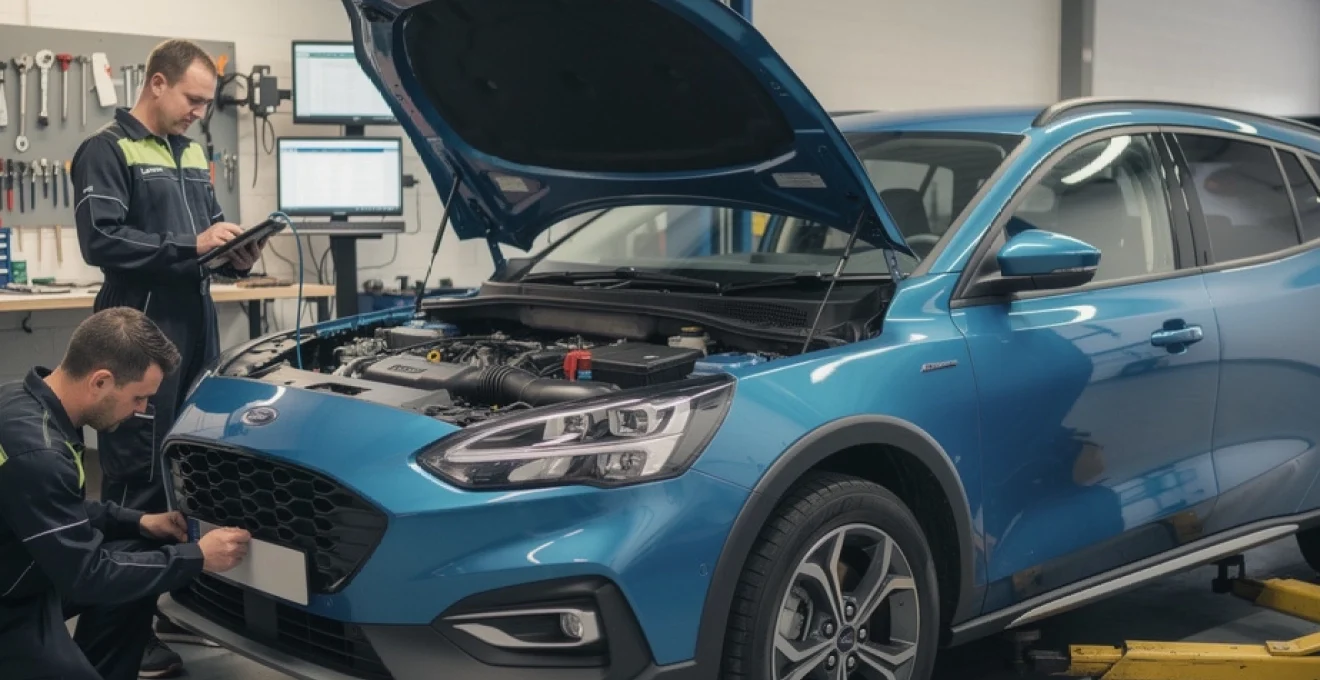
The Ford Focus Active X sits in a sweet spot between a regular hatchback and an SUV, offering raised suspension, chunky styling and very strong everyday usability. For a family car that is cheap to run, enjoyable to drive and packed with technology, it makes a lot of sense on paper. Yet, as with any modern car loaded with electronics, turbos and driver aids, there are patterns to the faults and failures that owners begin to report once mileage and age build up.
If you are considering a used Focus Active X, or already own one and want to stay ahead of potential issues, understanding those common problems is vital. Awareness allows you to budget realistically, maintain the car proactively and separate harmless quirks from warning signs that need prompt attention. Think of it as learning the car’s “medical history” before trusting it for school runs, long commutes or European road trips.
Ford focus active X overview: model years, engine variants and key specifications
The Ford Focus Active X is based on the Mk4 Focus (2018–2025), offered as both hatchback and estate. It uses the same basic platform and multi-link rear suspension found on higher-spec standard Focus trims, but adds a roughly 30mm suspension lift at the front and 34mm at the rear, SUV-style body cladding, and bespoke “Slippery” and “Trail” drive modes. Early cars could be specified with petrol EcoBoost and diesel EcoBlue engines; later examples move almost entirely to mild-hybrid EcoBoost petrol power.
Differences between mk4 focus active X (2018–2022) and facelift models from 2022
Pre-facelift Focus Active X models (2018–2022) feature the original front-end styling and an 8‑inch SYNC 3 infotainment screen, with more traditional physical climate controls and smaller digital driver displays. From late 2021/early 2022 the Focus range received a facelift, and the Active X gained a 13.2‑inch SYNC 4 screen and a 12.3‑inch digital instrument cluster as standard, alongside revised bumpers and updated LED lighting options. The facelift also simplified the engine range, focusing on 1.0 EcoBoost mild-hybrid petrols with 125PS or 155PS outputs, and phased out the older diesel units.
Ecoboost petrol vs EcoBlue diesel engines: 1.0, 1.5 and 2.0 powertrain configurations
Most Focus Active X models on the UK used market will use the 1.0‑litre three‑cylinder EcoBoost, in standard or mild‑hybrid form. Earlier cars could also be had with a 1.5‑litre EcoBoost petrol or 1.5 / 2.0 EcoBlue diesel, especially in estates. The petrol units are praised for their punchy performance and fuel economy, but carry concerns over timing belt-in-oil longevity and, for some early 1.5s, head gasket robustness. The diesels, meanwhile, trade extra torque and better long-distance economy for potential issues around DPF regeneration, EGR fouling and AdBlue system reliability.
Active X trim specifics: SUV-style suspension, driving modes and added equipment
Active X is the plusher variant of the Focus Active. It adds full leather upholstery, heated front seats, keyless entry, dual‑zone climate control and larger 18‑inch alloy wheels. The raised “Active” suspension gives more ground clearance than a normal Focus, which is ideal for rough car parks, speed humps and light tracks. Despite the crossover styling, the Focus Active X stays front‑wheel drive only, relying on Slippery and Trail modes to tweak traction control and throttle response on low‑grip surfaces rather than offering full AWD hardware.
Commonly affected production batches and VIN ranges to check before purchase
Several recalls and technical service bulletins (TSBs) have targeted specific production periods. Cars built between late 2018 and mid‑2019 feature in campaigns for brake pedal hinge bolts, child locks and front suspension bolts. Mild‑hybrid Focus Active X models with the 48V system, produced from 2020 onwards, have seen repeated checks for incorrectly torqued 48V battery connections. Before committing to a particular car, it is wise to have a dealer or specialist run a VIN check for outstanding recalls, and to confirm evidence of completed campaigns in the service history or printed documentation.
Engine reliability issues in the ford focus active X EcoBoost and EcoBlue ranges
Under the Ford Focus Active X bonnet sits some of the most widely used powertrains in the modern Ford line‑up. They are efficient and strong when looked after, yet a number of known patterns have emerged around timing components, cooling and emissions systems. Understanding those recurring EcoBoost and EcoBlue problems helps you spot trouble early and keep an otherwise excellent car from becoming an expensive liability.
1.0 EcoBoost timing belt-in-oil degradation, sludge build-up and oil starvation failures
The 1.0 EcoBoost uses a so‑called “wet belt” running in engine oil instead of a traditional dry cambelt or timing chain. Over time, degraded oil and higher temperatures can cause this belt to break down, shedding particles that turn the lubricant into sludge. That sludge can then block the oil pickup, starving the turbo and top end of oil. In severe cases, owners face turbocharger failure or complete engine seizure. Regular oil changes at or before the recommended interval, using only the specified Ford‑approved oil, are critical. For higher‑mileage cars, an inspection of the belt-in-oil condition during major servicing is sensible, even if not yet due by mileage.
Head gasket and overheating problems on early 1.5 EcoBoost units (focus mk4 2018–2019)
Some early 1.5 EcoBoost engines from the first years of the Mk4 Focus have attracted reports of head gasket problems and overheating under sustained load. Symptoms include pressurised cooling systems, unexplained coolant loss and white exhaust smoke. While not as widespread as the issues seen with older Mk3 1.0 EcoBoosts, the repair costs for a failed head gasket remain high, often involving head skim or replacement. If you are viewing an early 1.5‑litre Focus Active X, a cold start followed by a thorough test drive, careful monitoring of coolant level and a check for dried coolant traces around the thermostat housing are strongly advised.
Diesel EcoBlue DPF clogging, EGR valve fouling and AdBlue system malfunctions
EcoBlue 1.5 and 2.0 diesels used in the Focus Active X can run for huge mileages if driven regularly on longer journeys, but they are vulnerable to typical modern diesel issues. Diesel particulate filter (DPF) clogging is more common if the car sees repeated short trips where active regeneration cannot complete. EGR valves can foul, causing MIL lights and limp‑home behaviour. AdBlue tanks and injectors also have known failure rates, generating “No engine start in XXX miles” countdowns on the dash. Using the car for at least one regular motorway trip each week, and ensuring high‑quality diesel and AdBlue are used, helps considerably.
Turbocharger wastegate, boost control and intercooler hose leaks under real-world loads
Owners and independent specialists report occasional issues with boost control on both EcoBoost and EcoBlue engines. Sticking wastegates, cracked vacuum hoses and split intercooler pipes can all cause intermittent loss of power, over‑boost codes or whistling noises under load. Because the Focus Active X often ends up towing or carrying heavier loads than a normal Focus, these components can be stressed more frequently. If you sense fluctuating acceleration, jerky power delivery or hear a sudden whoosh, a smoke test and live data logging of boost pressure during a test drive can highlight the problem source before it worsens.
Ford service bulletin and recall campaigns related to engine calibration and hardware updates
In recent years Ford has issued multiple TSBs aimed at recalibrating engine control units for improved DPF regeneration, refined idle quality and better cold‑start behaviour on EcoBoost models. Mild‑hybrid versions gained software updates for their 48V systems to address battery charge management and warning light anomalies. Hardware‑related recalls around oil separators, turbo oil return pipes and 48V ground connections have also been published. Main dealers can apply these updates free of charge when part of an official recall or campaign, which is why checking the car’s digital service record and asking for a software level printout is more than just a formality.
Gearbox and drivetrain problems on manual and automatic ford focus active X models
Gearbox and drivetrain issues are less frequent than engine-related complaints, but when they arise they often carry significant repair bills. The Focus Active X uses robust hardware, yet the combination of turbocharged torque, UK stop‑start traffic and larger wheels can accelerate wear on clutches, dual-mass flywheels and drivetrain bearings. Automatic versions rely on the 8F35 torque‑converter gearbox rather than the older problematic PowerShift, but software tuning and fluid condition still play a major role in long‑term refinement.
6‑speed manual MTX75 and B6 clutch slip, dual-mass flywheel rattle and selector wear
Manual Focus Active X models use six‑speed transmissions that have a generally strong reputation. The weak points are usually the wear components around them. Higher‑mileage cars, especially diesels or the 155PS mild‑hybrid petrol, may show clutch slip in higher gears under full throttle. A rattling noise at idle that disappears when the clutch pedal is pressed often points to a tired dual‑mass flywheel. Long, vague gear changes can indicate worn selector cables or bushes. If you feel judder during take‑off, or notice difficulty selecting first and reverse from cold, budget for a full clutch and flywheel replacement rather than piecemeal fixes.
8‑speed automatic (8F35) harsh shifting, torque converter shudder and software re-flash fixes
The 8F35 eight‑speed automatic replaced Ford’s older PowerShift dual‑clutch unit, removing many of the previous generation’s reliability headaches. However, certain Focus Active X owners still report harsh upshifts, delayed engagement when selecting Drive, or a low‑speed “shudder” akin to a slipping clutch. Often, these symptoms improve dramatically after a software re‑flash and adaptive learning reset at a dealer. Fresh transmission fluid, even if not yet mandated by Ford’s official interval, also helps. Leaving a shuddering torque converter unaddressed can accelerate internal wear, so any used Focus Active X auto should be road‑tested carefully in stop‑start and motorway conditions.
Driveshaft CV joint noise, wheel bearing failure and vibration at motorway speeds
With its slightly raised ride height and 18‑inch wheels, the Focus Active X places more leverage and load on wheel bearings and CV joints than lower‑slung models. Clicking noises on full lock, or droning that increases with road speed, are common early clues. A vibration felt through the seat or steering wheel at 60–70mph can stem from worn driveshafts, buckled alloys or simply poor wheel balancing. Because the car’s chassis is otherwise very refined, these issues stand out clearly when present. Anyone buying used should insist on a sustained dual‑carriageway test drive to listen for such noises, rather than limiting the evaluation to town speeds.
Traction control, drive mode selector and electronic differential behaviour in slippery conditions
The Focus Active X uses electronic traction aids to compensate for the lack of four‑wheel drive. Slippery and Trail modes alter throttle mapping, gearbox behaviour (on automatics) and stability control thresholds to maximise grip. In heavy snow or on wet grass, the car remains fundamentally front‑drive, so traction still has limits. Some owners mistake normal wheelspin and intervention for a fault, but genuine issues can occur if wheel speed sensors are dirty or faulty, causing ABS and traction warning lights. Regular cleaning of sensors during brake work and ensuring correct tyre sizes and matching tread patterns on each axle supports consistent electronic differential behaviour.
Suspension, steering and ride-height related faults specific to the focus active X
The raised suspension and unique chassis tuning that make the Focus Active X so versatile also introduce a few distinctive wear patterns. Suspension components work through a slightly greater range of motion than on a standard Focus, and the extra height makes crosswinds and body roll feel different at motorway speeds. For most drivers the ride quality is a strong selling point, but it pays to know where knocks, clunks and alignment problems tend to appear first.
Raised “active” suspension: top mount knocking, drop link wear and bush deterioration
Front suspension top mounts on some Focus Mk4s, including Active X versions, have been known to knock over low‑speed bumps as mileage rises. Anti‑roll bar drop links can also wear faster thanks to the taller stance and bigger wheels. At the rear, trailing arm and control arm bushes eventually soften, leading to vague handling and squeaks. Think of these rubber components as the car’s joints: constant flexing degrades them over tens of thousands of miles. Replacing tired bushes and links restores the crisp, confidence‑inspiring feel the Focus is famed for, and prevents uneven tyre wear caused by wandering geometry.
Rear multi-link vs torsion beam setups: alignment drift, uneven tyre wear and camber issues
Unlike lower‑spec Focus models that use a simpler torsion beam, the Active X typically benefits from a more sophisticated multi‑link rear axle. This layout delivers better ride comfort and grip, but relies on precise alignment. Pot‑hole strikes, kerbing or towing can knock camber and toe out of tolerance, leading to inside‑edge tyre wear and a slight rear‑end “steer” as bumps are hit. A full four‑wheel alignment using the correct factory data is essential if you see strange tyre wear patterns. Regular checks every 20,000 miles, or after any big impact, minimise long‑term suspension headaches.
Electric power steering rack (EPAS) faults, steering angle sensor errors and pull to one side
The Focus Mk4’s electric power steering (EPAS) is usually reliable, but some owners report intermittent heavy steering, assistance that comes and goes, or warning messages related to the steering system. In certain cases, a faulty steering angle sensor or corrupted calibration data is to blame rather than the rack itself. A proper diagnostic scan will reveal stored codes. If the car persistently pulls to one side even after alignment, binding brake calipers or damaged suspension arms must be ruled out. Addressing these steering problems promptly keeps the Active X safe and predictable, especially in wet or windy conditions.
Crosswind sensitivity, body roll and chassis calibration compared with standard focus trims
The extra ride height of the Focus Active X naturally introduces a little more body roll in fast corners and slightly greater sensitivity to strong crosswinds than a standard Focus. On the motorway, sudden gusts can be felt more clearly through the steering wheel, particularly with roof boxes or bike racks fitted. That said, the underlying Focus chassis remains one of the best in the class. Fresh dampers, correct tyre pressures and high-quality tyres maintain composure. Treat the Active X as a hatchback‑based crossover rather than a full SUV, and you will appreciate its agile, faithful handling rather than chase unrealistic expectations of zero body movement.
Electrical, infotainment and connectivity issues in the focus active X
Electronics are both the Focus Active X’s biggest strength and one of its main headache sources. Large touchscreens, digital dials, connected services and complex body control modules make the car feel modern and high‑tech. Yet, as industry reliability surveys repeatedly show, more systems can mean more things that may glitch, freeze or draw current when parked. Understanding the most frequent electrical issues helps you separate simple software niggles from serious wiring faults.
SYNC 3 and SYNC 4 touchscreen freezing, black screen and over-the-air update failures
Owners of both SYNC 3 (pre‑facelift) and SYNC 4 (facelift) systems sometimes encounter frozen screens, laggy responses or complete blackouts upon start‑up. Over-the-air (OTA) updates can fail or loop, especially where mobile reception is weak. A soft reset often clears temporary glitches, but persistent failures may need a dealer‑installed software patch. In some cases, corrupted map data or a failing control module is diagnosed. Because the 13.2‑inch SYNC 4 screen also handles most climate functions, any unresponsive behaviour has a bigger day‑to‑day impact than in older cars with separate physical controls.
Digital instrument cluster glitches, warning light anomalies and CAN bus communication errors
The 12.3‑inch digital cluster introduced on facelift models adds clear graphics and customisable layouts, yet it depends heavily on stable communication across the car’s CAN bus network. Spurious warning lights, missing gauges or flickering displays can be caused by low battery voltage, poor earth connections or failing modules elsewhere on the network. Think of the CAN bus like a set of interlinked train lines: a disruption in one area can delay several routes. A good independent specialist with proper diagnostic tools can usually pinpoint the root cause more efficiently than guesswork part‑swapping.
Keyless entry, keyless start and immobiliser faults causing intermittent no‑start conditions
Keyless entry and start are standard on Active X models, but some owners experience intermittent no‑start situations where the car fails to recognise the key or displays immobiliser errors. Low fob battery voltage, radio interference or damaged door handle sensors can all contribute. In rare cases, the steering column lock module or body control module is at fault. Keeping a spare key fob battery in the glovebox, and testing both keys during any pre‑purchase inspection, provides a simple layer of security against being stranded unexpectedly.
Battery drain, smart charging system faults and stop‑start malfunction diagnostics
Modern Ford models employ smart charging systems and, on mild‑hybrid versions, 48V batteries in addition to the conventional 12V unit. Battery drain complaints arise when cars are left for long periods, or if modules such as the telematics unit fail to go to “sleep”. Stop‑start function is often the first casualty of a weak battery, accompanied by warning messages. Testing both 12V and 48V battery health, verifying alternator output and checking for relevant TSBs on battery management software are essential steps whenever diagnosing recurring flat battery or electrical gremlin issues on a Focus Active X.
Bodywork, trim and interior wear problems reported by focus active X owners
The Focus Active X is generally well built for its class, with a clear uplift in perceived quality compared with the previous generation. Soft‑touch plastics, improved seats and better sound insulation all make daily life more pleasant. Over time, however, certain patterns emerge around water ingress, wear on interior surfaces and cosmetic damage to the rugged exterior cladding. Proactive care here is as much about maintaining resale value as it is about day‑to‑day comfort.
Water ingress through door seals, tailgate grommets and panoramic roof drains
Water leaks are among the most frustrating issues any owner can face, and a subset of Focus Active and Active X models with panoramic roofs have been flagged for blocked drain channels. Leaves and debris clog the drains, leading to damp footwells or water dripping from the headlining. Tailgate wiring grommets and door seals can also allow minor seepage over time. Clearing roof drains as part of seasonal maintenance, and checking under-floor carpets for damp patches, keeps corrosion and musty smells at bay. Any sign of standing water should trigger a thorough inspection rather than a quick wipe‑up.
Premature wear of active X seats, upholstery stitching and soft-touch dashboard plastics
Leather seats in the Active X look upmarket, yet heavily used driver’s seats can show bolster wear and stretched stitching by 60,000–80,000 miles, especially if occupants frequently slide across the side bolsters rather than lifting themselves in. Soft‑touch dashboard plastics resist scratches better than the old Mk3 Focus, but families with child seats and pushchairs still manage to mark door cards and centre consoles. Regular cleaning with appropriate, gentle products and the use of tailored seat covers on high‑wear areas can dramatically slow this cosmetic ageing.
Paint chipping on wheel arches, sills and active body cladding in UK road conditions
The rugged cladding around the Focus Active X’s wheel arches and sills protects against light scrapes, yet UK grit, salt and stone chips still take their toll. Unpainted plastic fares better than painted arches, but transitional painted edges can chip, exposing primer or bare metal on the sills. Over several winters this can promote corrosion. A periodic application of protective film or clear wax on vulnerable lower panels provides a simple buffer, particularly for cars spending a lot of time on B‑roads or rural tracks.
Wind noise from door mirrors, roof rails and panoramic sunroof at higher speeds
Compared with a full‑height SUV, the Focus Active X remains relatively quiet on the motorway thanks to its aerodynamic hatchback shape. Nonetheless, some owners report wind noise from large door mirrors, roof rails or the edges of the panoramic roof at 70mph+. Misaligned door seals, loose roof rail trims or poorly seated glass panels are common culprits. A careful inspection of rubber seals for flattening or gaps, and listening closely on a motorway test drive, helps distinguish a quiet example from one that may require adjustment. Wind noise is subjective, but a car in top condition should feel calm and refined for long journeys.
Advanced driver assistance system (ADAS) faults and sensor calibration on focus active X
Advanced driver assistance systems are central to the Ford Focus Active X’s safety credentials, contributing to five‑star crash test performance and everyday convenience. Adaptive cruise control, lane‑keeping aids, automatic emergency braking and blind spot monitoring all rely on cameras, radar units and ultrasonic sensors around the vehicle. These systems significantly reduce accident risk when functioning correctly, yet they need careful calibration after certain repairs and can be upset by minor knocks or windscreen changes.
Adaptive cruise control, lane-keeping assist and traffic sign recognition malfunctions
Adaptive cruise control (ACC) and lane‑keeping assist use a combination of front radar and camera inputs to maintain distance and keep the car centred in its lane. Faults may manifest as warning messages, unavailability of ACC or steering assistance that switches off unpredictably. Traffic sign recognition can misread temporary signs or fail in heavy rain, which is largely a limitation of current technology rather than a defect. However, if these systems suddenly stop working after a service, software update or minor bump, a recalibration procedure using manufacturer‑approved equipment may be required.
Front camera, radar and parking sensor misalignment after windscreen or bumper replacement
Replacing a cracked windscreen or accident‑damaged bumper without subsequent ADAS calibration is increasingly risky. The Focus Active X relies on precise camera angles and radar alignment; even a millimetre of deviation can alter how early the car recognises obstacles. If you notice parking sensors beeping erratically, front assist warnings triggering too late, or lane‑keeping lines drifting unpredictably after bodywork repairs, a calibration check is warranted. Reputable repairers now treat this as standard procedure, but it is still worth confirming that the correct steps were taken.
Automatic emergency braking (AEB) false positives and software calibration updates
Automatic emergency braking has dramatically reduced low‑speed shunts across the industry, yet it can occasionally brake for shadows, parked vehicles on tight bends or overhanging foliage. The Focus Active X is no exception. While a small number of false positives are effectively the price paid for an otherwise protective system, excessively sensitive behaviour may indicate outdated software. Checking with a Ford dealer for the latest calibration updates is wise, especially as urban driving environments and signage continue to evolve.
Advanced driver assistance features are only as trustworthy as their latest calibration and software version; keeping them updated is as vital as changing oil in the engine.
Blind spot information system (BLIS) and rear cross-traffic alert sensor failures
Blind spot information system (BLIS) uses radar sensors in the rear bumper to monitor adjacent lanes and warn of vehicles in the driver’s blind spot. Rear cross‑traffic alert relies on the same hardware to detect cars when reversing out of parking spaces. These sensors can be damaged by even modest rear‑end impacts or corroded by road salt over time. False warnings, constant illumination of the warning lights or a complete absence of alerts may all signal a failing module. Because rear bumpers often hide previous repairs, paying close attention to BLIS behaviour on a test drive offers a useful clue to underlying damage.
Preventative maintenance, software updates and buying checklist for a used ford focus active X
A well‑maintained Ford Focus Active X can provide many years of reliable, enjoyable service. Preventative maintenance and informed buying decisions make the difference between a trouble‑free ownership experience and regular, costly workshop visits. Treating the car as a complex but manageable system – engine, drivetrain, electronics and body all requiring tailored care – brings the best out of Ford’s excellent underlying design.
Recommended service intervals, oil specifications and timing belt inspection for EcoBoost engines
For EcoBoost engines, especially the 1.0 with its belt-in-oil setup, strict adherence to service intervals is non‑negotiable. Many experts recommend oil changes every 10,000 miles or annually, even if the official schedule allows longer. Using the correct Ford‑approved low‑ash oil helps protect the wet belt and turbo bearings. Around 8–10 years or 100,000 miles, a discussion with a trusted garage about timing belt condition and potential replacement becomes increasingly sensible. Spending money on pre‑emptive belt and water pump work is far cheaper than dealing with an oil‑starvation engine failure.
How to check for outstanding ford recalls, TSBs and software updates at a UK main dealer
Before buying – or at the next service – it is worth asking a UK Ford main dealer to run a VIN check for outstanding recalls, field service actions and recommended software updates. Many will do this free of charge as part of a health check. You can also cross‑reference public recall databases with the vehicle’s build year to see if campaigns relating to 48V batteries, engine wiring looms, sunroofs or seatbelt anchor bolts may apply. Keeping documentation for completed recall work adds value when the time comes to sell, and assures you that known safety issues have been resolved.
Pre‑purchase inspection points: diagnostics scan, test drive procedure and corrosion check
When viewing a used Focus Active X, a structured approach helps uncover hidden problems:
- Plug in a professional diagnostics tool to scan for stored and historic fault codes across engine, gearbox, body and ADAS modules.
- Conduct a long test drive covering cold start, town speeds, rough roads and sustained motorway running to expose gearbox shudder, suspension knocks or wind noise.
- Inspect the underbody, sills and suspension mounting points for corrosion, paying close attention to areas near stone chips and previous jacking points.
Combining electronic checks with a thorough road assessment gives the clearest picture of the car’s true condition, beyond shiny paint and a stamped service book.
Extended warranty options, ford protect plans and typical out-of-warranty repair costs in the UK
Because modern Focus models bundle so much technology into a family hatchback, many owners opt for extended warranty cover once the standard three‑year/60,000‑mile warranty expires. Ford Protect plans and reputable independent warranties can cushion the impact of big‑ticket repairs such as automatic gearbox work, ADAS sensor replacement or turbocharger failures. Typical UK repair costs for these items can run into four figures, especially when dealer labour rates are involved. Carefully reading exclusions around wear‑and‑tear items, servicing requirements and diagnostic fees ensures that any policy chosen genuinely offers value rather than false reassurance.
Thinking of an extended warranty as insurance against the handful of very expensive failures – rather than routine maintenance – provides a more realistic sense of its true worth.
For you as a current or prospective Focus Active X owner, combining diligent maintenance with informed decisions on software, servicing and cover plans keeps the driving experience firmly on the enjoyable side of ownership, preserving the car’s strong points of comfort, efficiency and sharp handling for many years of daily use.