
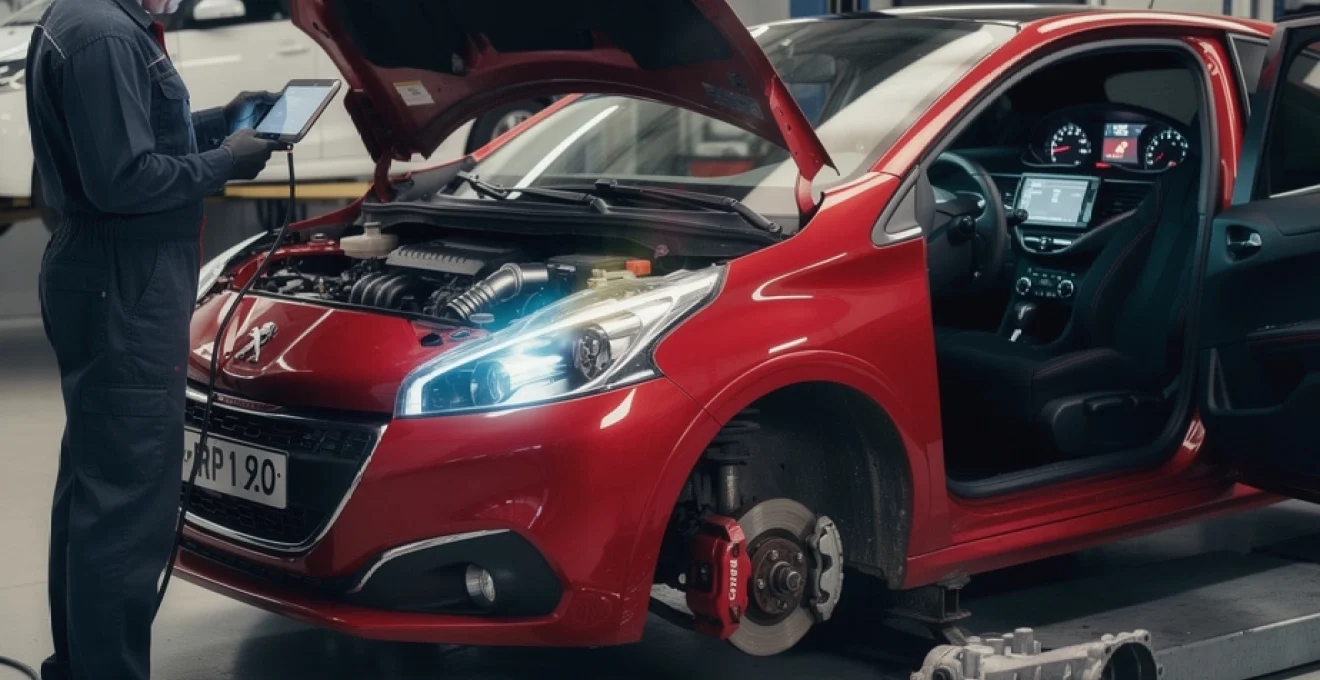
The Peugeot 208 GTi and 208 GTi by Peugeot Sport sit in an interesting place in the hot hatch world. They are quick, relatively affordable to buy and insure, and they slip under the radar far more than a Fiesta ST or MINI Cooper S. Yet if you are considering one as a daily driver or weekend toy, understanding the typical Peugeot 208 GTi problems and reliability weak points is essential before handing over any money.
The 1.6 EP6 turbo engine can deliver strong performance and 40mpg+ on a run, but it also carries some legacy issues from early BMW–PSA “Prince” units. The chassis is capable and comfortable, especially in GTi Prestige form, while the GTi by Peugeot Sport brings serious driver-focus to the table. Balancing those positives are known issues with timing systems, infotainment glitches and occasional electrical gremlins. If you want a hot hatch that feels like a bargain rather than a liability, a bit of homework now will save a lot of headaches later.
Peugeot 208 GTi engine issues: EP6 1.6 THP (THP 200 / THP 208) reliability, carbon build-up and timing system faults
The heart of every 208 GTi is the turbocharged 1.6 EP6CDTX four-cylinder, usually badged as THP 200 or later THP 208. This direct‑injection unit is shared in various forms with the MINI Cooper S and DS3 Performance. When healthy, it offers a broad torque band, strong mid‑range punch and decent fuel economy, especially in light urban use. However, early examples (2013–2015) have a reputation for high‑pressure fuel pump failures, timing chain stretch and carbon build‑up on the intake valves. These are the main Peugeot 208 GTi engine problems that you should investigate before purchase.
Industry surveys suggest that the first‑generation 208 (2012–2019) scored only around 87% for reliability in class, placing it near the bottom of small car rankings. While the GTi saw some improvements, it still inherits much of the platform’s electrical and infotainment fragility. The Euro 6 update introduced around 2015 improved the timing chain design and oil specification, so later cars (especially 2016‑onwards) tend to be more robust if serviced correctly. Full dealer or specialist history and frequent oil changes are far more important on the EP6 than on many rival engines.
High‑pressure fuel pump (HPFP) and injector failures on the EP6 1.6 THP in early peugeot 208 GTi models (2013–2015)
The high‑pressure fuel pump is one of the most talked‑about Peugeot 208 GTi faults, largely because it was such a notorious weak point on early MINI Cooper S models using the same base engine. On the 2013–2015 GTi, the HPFP can wear internally or suffer from sticking valves, leading to hard starting, misfires under load and fault codes related to fuel rail pressure. In some cases, drivers notice a pronounced flat spot when accelerating or an engine warning light combined with limp‑home mode.
Specialist rebuilders can overhaul a failing pump for under £200–£300, which is significantly cheaper than dealer replacement. Injectors can also cause rough running or a petrol smell from the exhaust if they leak. If you notice long cranking times from cold, uneven idle or a strong fuel odour, a diagnostic scan of the fuel system is wise. From a reliability point of view, many owners treat HPFP and injector issues as “once and done” repairs; once replaced with updated parts and supplied with clean fuel, the system tends to be stable for high mileages.
Timing chain stretch, tensioner wear and cold‑start rattle on the 1.6 THP EP6CDTX engine
Timing chain stretch and tensioner problems are the other big headline in Peugeot 208 GTi engine problems. Early EP6 engines used a marginal tensioner design, and if combined with infrequent oil changes or incorrect oil grade, the chain can stretch prematurely. Owners often report a metallic rattle on cold start that quietens after a few seconds. Left unresolved, the timing can drift enough to trigger camshaft correlation fault codes and poor running; in extreme cases, there is a risk of chain jump and engine damage.
As a rule of thumb, a healthy 1.6 THP should be quiet at idle with no significant rattle, even from cold. Anything more than a brief chatter on start‑up warrants closer inspection. The Euro 6 revision from around late 2014/2015 introduced improved tensioners and associated hardware; experienced specialists often recommend targeting 2016+ cars for this reason. More frequent oil changes (every 8–10k miles rather than stretching to the official interval) significantly reduce the likelihood of future timing issues and keep VVT components cleaner.
Intake valve carbon deposits and direct‑injection coking on peugeot 208 GTi THP 200 engines
Because the EP6 is a direct‑injection petrol engine, fuel is sprayed directly into the combustion chamber rather than onto the back of the intake valves. As a result, the valves do not benefit from the cleaning effect of petrol. Over time, especially in cars used mainly for short journeys or gentle driving, oil vapour and blow‑by deposits build up on the valve stems and ports. This carbon build‑up can cause rough idle, hesitation, misfires and a noticeable drop in fuel economy and performance. It is one of the more subtle Peugeot 208 GTi problems, as it often develops gradually.
Specialists typically address intake valve coking using “walnut blasting”, a process that involves blasting ground walnut shell media onto the valves to remove deposits without damaging metal surfaces. On a high‑mileage car, this can restore lost performance and improve throttle response dramatically. Driving style matters too: a car that has spent its life idling in traffic and never seeing the top half of the rev range is more likely to suffer. If you view a low‑mileage “one‑lady‑owner” example that has only done city trips, intake valve deposits may be more likely than on a higher‑mileage car that has seen regular motorway or spirited driving.
Turbocharger wastegate, boost control solenoid and overboost fault codes (P0299, P0234) on the 208 GTi
Turbocharger‑related issues on the 208 GTi generally manifest as underboost or overboost, detected by the engine control unit and logged with fault codes like P0299 (underboost) or P0234 (overboost). Common causes include a sticking wastegate mechanism, a tired boost control solenoid or vacuum leaks in the control hoses. Drivers might notice a sudden loss of power, limp‑home mode or inconsistent boost delivery. In tuned or remapped cars, these problems can be amplified by higher boost pressures and more aggressive mapping.
Fortunately, wastegate and boost solenoid issues are usually relatively inexpensive to address compared with a full turbocharger replacement. Regular oil changes with quality synthetic oil help protect the turbo bearings, especially on cars that see frequent high‑load use. Allowing the engine to idle briefly after hard driving also helps prolong turbo life by letting heat soak dissipate. If you are considering a tuned Peugeot 208 GTi, ask for proof of professional mapping and supporting hardware upgrades, rather than a generic plug‑in map that may push the turbo beyond its comfort zone.
Engine cooling system weaknesses: thermostat housing leaks, water pump failures and overheating risks
The cooling system on the 1.6 THP is generally adequate, but several known weak points can appear as mileage climbs. Plastic thermostat housings can warp or crack, leading to slow coolant leaks that may go unnoticed until the level drops significantly. Water pumps can also wear, particularly on cars that have spent time on track or been driven hard on hot days. Overheating can quickly spiral into head gasket issues, warped cylinder heads or turbo damage, so any temperature‑related warning signs deserve immediate attention.
Check for dried coolant residue around the thermostat housing, water pump and hose connections, as well as any sweet smell from the engine bay after a run. The dashboard temperature gauge should rise steadily to its normal position and stay there; any unexplained spikes or sudden drops suggest a thermostat or sensor issue. Regular coolant changes using the correct spec fluid and periodic inspection of plastic cooling components are sensible preventative measures, especially as the fleet of 208 GTi models continues to age.
Manual gearbox and driveline problems on the peugeot 208 GTi: BE4 / ML6C transmission, clutch and differential
The Peugeot 208 GTi uses a manual transmission derived from the well‑known BE4 family, mated to a conventional clutch and open differential in standard models. The GTi by Peugeot Sport adds a Torsen‑type limited‑slip differential that dramatically improves traction and corner exit grip. Overall, the gearbox and driveline are reasonably robust if serviced and driven with some mechanical sympathy. However, there are recurring complaints about second‑gear synchromesh wear, clutch slip on remapped cars and CV joint noise on hard‑driven examples.
Synchromesh wear and second‑gear crunch on BE4/5 gearbox in early 208 GTi production years
One of the more common Peugeot 208 GTi gearbox problems is a baulky or crunchy shift into second gear, especially when changing quickly from first to second at higher revs. This usually points to synchromesh wear inside the BE4/5 transmission. Early production gearboxes seem more susceptible, although driving style plays a big part too. If a previous owner regularly forced hurried shifts with little mechanical sympathy, the synchros can suffer prematurely.
On a test drive, go through the gears briskly but smoothly once the oil is warm, paying close attention to second and third. Any graunching, notchiness or resistance is a red flag. Gearbox oil changes are sometimes neglected because they are not always on the official service schedule; refreshing the oil can improve shift quality and prolong life. If the car you are considering already shows symptoms, factor in the potential cost of a rebuild or a good used gearbox when negotiating the price.
Clutch slip, dual‑mass flywheel (DMF) vibration and heavy pedal feel under spirited driving
Clutch and dual‑mass flywheel wear is largely usage‑dependent, but it is still a recurring theme in discussions of Peugeot 208 GTi problems, particularly on tuned or track‑day cars. Symptoms include clutch slip under full‑throttle acceleration in higher gears, vibration through the pedal at idle or on take‑up, and a generally heavy or inconsistent pedal feel. A failing DMF can also contribute to drivetrain shunt and an unrefined driving experience.
If you plan to increase power with a remap, a stronger aftermarket clutch and, in some cases, a single‑mass flywheel conversion may offer better long‑term value than repeatedly replacing tired OE parts. On a standard‑power car used for mostly road driving, an OEM‑quality clutch kit and careful driving should deliver long service life. Always test the clutch by accelerating in a high gear from low revs; if the revs rise faster than the road speed, budget for imminent replacement.
Driveshaft, CV joint and hub spline wear on tuned or track‑driven peugeot 208 GTi cars
Front‑wheel‑drive hot hatches put a lot of load through their driveshafts and CV joints, particularly when combined with sticky tyres and hard launches. On the 208 GTi, high‑mileage or heavily tuned examples can suffer from outer CV joint clicking on full lock or vibration under load that hints at driveshaft imbalance. Hub splines can also wear if wheel nuts have been repeatedly over‑ or under‑torqued, leading to clunks when changing from acceleration to deceleration.
When inspecting a car, turn the steering to full lock in a quiet area and drive slowly in circles, listening for rhythmic clicking or knocking. A healthy drivetrain should be quiet and smooth. Replacing CV joints or complete shafts is not ruinously expensive when caught early, but ignoring the problem risks more serious damage. For track use, many enthusiasts treat driveshafts and CV joints as consumables, upgrading to stronger aftermarket components where available.
Open differential traction limitations versus quaife / gripper LSD upgrades on GTi and GTi by peugeot sport
Standard 208 GTi models leave the factory with an open differential, relying on electronic traction control and brake‑based torque vectoring to manage wheelspin. Under hard acceleration out of tight corners, especially in wet conditions, you will often feel the inside wheel spin away power. The GTi by Peugeot Sport addresses this with a mechanical Torsen‑type limited‑slip differential (LSD), transforming traction and giving the car a much more serious, motorsport‑flavoured character.
For keen drivers, fitting an aftermarket LSD from brands like Quaife or Gripper is one of the most effective Peugeot 208 GTi handling upgrades. It is not strictly a “problem” in the reliability sense, but the open diff is a limitation if you want to exploit the engine’s torque on twisty roads or track days. As always, there is a trade‑off: mechanical LSDs can introduce a little more steering weight and low‑speed tight‑corner noise, but for many enthusiasts the gain in corner‑exit pace more than compensates.
Suspension, steering and GTi by peugeot sport chassis‑specific faults
The 208 GTi’s suspension is broadly durable, but, as with most hot hatches, enthusiastic driving and poor road surfaces accelerate wear. Standard GTi models offer a relatively supple ride tuned for daily usability, while the GTi by Peugeot Sport sits lower, firmer and more focused. Over time, front control arm bushes, drop links and rear torsion beam bushes can degrade, gradually eroding steering precision and cornering stability. Paying attention to these chassis components is essential if you want a used Peugeot 208 GTi to feel tight and confidence‑inspiring rather than tired and vague.
Front lower arm bushes, drop links and anti‑roll bar wear on standard 208 GTi vs GTi by peugeot sport
Front suspension wear is a common thread in discussions of Peugeot 208 GTi problems and ride quality. The front lower control arm bushes take significant punishment, especially on the firmer Peugeot Sport models. When these bushes soften or split, you may notice vague steering, clunks over bumps or uneven tyre wear. Anti‑roll bar drop links are another frequent wear item, often revealed by rattles when driving over small, sharp imperfections.
A quick visual inspection can reveal torn bushes, but a proper suspension check on a lift is more reliable. Replacing tired arms and drop links with quality components – sometimes uprated polyurethane bushes for keen drivers – can restore the car’s original agility. On GTi by Peugeot Sport cars, maintaining chassis tightness is particularly important to preserve the factory‑tuned balance that many testers consider among the best in the class.
Rear torsion beam, trailing arm bushes and axle alignment issues affecting handling precision
At the rear, the 208 uses a torsion beam axle with trailing arm bushes that can deteriorate over time. Worn bushes or a slightly out‑of‑true beam can lead to a “steer from the rear” sensation, tramlining or instability at motorway speeds. In extreme cases, the car may not track straight, and rear tyre wear patterns can look irregular. This is more than just a comfort issue; it directly affects safety and confidence when driving briskly.
Professional four‑wheel alignment on a modern rig is strongly recommended if you feel the rear of the car moving around more than it should. Any history of kerbing or minor rear‑end impacts increases the likelihood of axle or alignment issues. On older French hot hatches, rear axle rebuilds were almost a rite of passage; the 208 GTi is better than many predecessors, but the same principles apply: a square, tight rear axle is crucial for predictable handling.
Electric power steering (EPS) column, torque sensor glitches and steering assist warning lights
The 208 GTi uses an electric power steering system that saves fuel and allows variable weighting. However, EPS faults can crop up, typically flagged by a steering warning light on the dashboard or intermittent loss of assistance. Underlying causes include torque sensor glitches within the column, wiring issues and, occasionally, control module failures. Some owners also dislike the steering feel, but that is more of a subjective criticism than a fault.
If you encounter inconsistent steering weight, notchy behaviour around the straight‑ahead or warning messages, a diagnostic scan is the first step. EPS replacement can be pricey at main dealers, but experienced specialists often repair specific components or source good used columns at lower cost. In terms of safety, any unexplained change in steering assistance deserves immediate investigation, as sudden loss of power assistance during a manoeuvre can be unsettling.
Brembo front brake caliper sticking, warped discs and pad material selection on GTi by peugeot sport
The GTi by Peugeot Sport receives uprated Brembo front calipers and larger discs, giving strong stopping power and fade resistance compared with the standard set‑up. However, high‑performance brakes introduce their own quirks. Sticking caliper pistons or sliders can cause uneven pad wear, pulling under braking or a hot brake smell after only mild use. Warped discs, often the result of repeated heavy stops and then holding the brakes on when stationary, lead to steering wheel vibration under braking.
Pad choice is crucial. Some factory or aftermarket performance pads work well when hot but can squeal or feel wooden when cold. For a fast‑road car, a high‑quality fast‑road pad compound usually offers the best compromise between bite, longevity and low‑speed refinement. If you plan regular track days, upgrading brake fluid to a higher boiling‑point spec and monitoring pad thickness frequently will help avoid fade and reduce the risk of heat‑related issues.
| Component | Typical symptoms | Indicative mileage range |
|---|---|---|
| Front control arm bushes | Clunks, vague steering, uneven tyre wear | 40,000–70,000 miles |
| Rear torsion beam bushes | Rear steer, instability, tramlining | 60,000–90,000 miles |
| EPS torque sensor | Warning light, variable assistance | Unpredictable; more common with age |
| Brembo front brakes (Peugeot Sport) | Pad squeal, disc vibration under braking | Highly dependent on driving style |
Electrical and infotainment failures: peugeot 208 GTi multiplexed systems, BSI and touchscreen unit
Modern Peugeots rely heavily on multiplexed electronics, with a central BSI (Built‑in Systems Interface) acting as the nerve centre for lighting, locking, wipers and more. On the 208 GTi, electrical and infotainment problems are among the most frequently reported everyday frustrations. The touchscreen that controls radio, media, navigation and vehicle settings is known for freezing, rebooting or, in some cases, failing completely. When that happens, you may lose access not only to entertainment but also to climate controls and car configuration menus.
Many glitches can be solved with a software update or reset rather than full replacement, so it makes sense to check whether the car has had the latest firmware installed. A few seconds of frozen touch response in cold weather may simply reflect slow boot‑up, but repeated lock‑ups during a test drive or a totally dead screen point towards deeper issues. Because a new unit is costly from a main dealer, some owners source refurbished screens or complete second‑hand units coded to the car; this approach can cut costs significantly when handled by a knowledgeable specialist.
Beyond the infotainment unit, 208 GTi electrical gremlins range from faulty outside temperature sensors affecting air‑con behaviour to intermittent sensor warnings. Wiring within the doors can corrode or fracture over time, leading to erratic window or mirror operation. Water leaks from the rear washer line can also drip into the boot area and, in some cases, into wiring runs. Peugeot as a brand placed around the middle of the pack in recent reliability surveys, with a score near 90%, but small electrical niggles remain one of the most common reasons for workshop visits.
Any used Peugeot 208 GTi should be judged as much on the stability of its electronics and infotainment as on its engine or suspension health, because modern faults often hide in control modules rather than mechanical parts.
Before purchase, take time to operate every electrical function: all windows, central locking, mirrors, lights (including fogs), wipers, horn, cruise control and air conditioning. Let the infotainment screen run for 20–30 minutes, switching between radio, Bluetooth and navigation. If the system restarts itself or fails to respond, budget for potential repair or replacement. It is surprising how many cars pass from owner to owner with these frustrations unaddressed because previous drivers simply tolerated or ignored them.
Bodywork, interior and trim problems specific to peugeot 208 GTi and GTi by peugeot sport
The 208 GTi’s compact footprint and strong urban appeal mean that many examples have spent their lives in tight car parks and busy city streets. As a result, cosmetic Peugeot 208 GTi problems such as bumper scuffs, wheel kerbing and door dings are very common. Body‑coloured exterior trim and contrasting roof or mirror caps show damage more readily than on darker, plainer models. A careful look along each side of the car in good light will reveal any poor‑quality paint repairs, mismatched panels or waves in the reflections that hint at past accident damage.
Inside, the GTi‑specific sports seats and red‑stitched steering wheel create a distinctive ambience, but they also show wear if entry and exit have been careless. Bolster wear, shiny leather or sagging cushions are clear indicators of a harder life, especially on the driver’s side. On GTi Prestige models, the panoramic roof and additional equipment bring extra comfort but also more potential squeaks and rattles as the car ages. Listen for creaks from the headlining or roof area over rough surfaces.
Some owners report that the factory speakers lack clarity and punch, leading to aftermarket audio upgrades that may or may not have been installed tidily. Inspect any non‑standard wiring, amplifiers or subwoofers for signs of amateur installation, as these can introduce buzzing trim and unexpected battery drain. In the boot, check that the spare alloy (where fitted) is present and that the area is dry. Water leaks from the rear washer can leave damp patches or a musty odour, and long‑term moisture can corrode wiring or cause mould in the carpet and underlay.
Interior condition is often the most honest window into how a Peugeot 208 GTi has been used; a clean, tight cabin with minimal wear usually belongs to an owner who has cared for the rest of the car with similar attention.
Finally, pay attention to panel gaps around the bonnet, tailgate and doors. Inconsistent gaps or misaligned trim can point to previous repairs. While a straight, carefully repaired car is not automatically a bad buy, you should always confirm that any crash damage has been rectified to a good standard and that the chassis alignment is correct. A quick professional inspection or alignment check can provide welcome reassurance before committing.
Diagnostics, preventative maintenance and reliability upgrades for used peugeot 208 GTi buyers
A well‑chosen, properly maintained 208 GTi can be both fast and relatively dependable, despite the model’s mixed reputation in headline reliability statistics. The key is to treat diagnostics and preventative maintenance as part of the purchase price rather than as optional extras. Investing a small amount upfront to identify existing Peugeot 208 GTi problems usually saves far more in avoided surprises later.
Start with service history. The EP6 1.6 THP particularly rewards frequent oil changes with the correct specification; a fully documented history with no missed intervals is worth a premium. If the car has crossed 60,000–80,000 miles without timing chain or tensioner work, consider proactive replacement, especially on earlier engines. Likewise, if the infotainment system shows even occasional glitches, factor in the cost of a software update or, in worst cases, a replacement unit.
- Plan engine oil changes every 8,000–10,000 miles using high‑quality synthetic oil compatible with
EP6specifications. - Schedule regular coolant, brake fluid and gearbox oil changes to protect high‑load components.
- Inspect suspension bushes, drop links and rear axle alignment every 2 years or 20,000 miles.
- Consider intake valve cleaning (e.g. walnut blasting) around 60,000–80,000 miles to combat carbon build‑up.
Where upgrades are concerned, some “mods” are really reliability enhancements in disguise. A mechanical limited‑slip differential not only improves traction but can reduce front tyre scrabble and associated drivetrain shock. Uprated engine mounts and suspension bushes can cut movement and wear under load. Quality performance pads and fluid in the GTi by Peugeot Sport brakes reduce fade and the risk of overheating the system during repeated hard stops. Each of these changes also makes the car feel tighter and more predictable, which indirectly protects components by encouraging smoother, more precise driving.
From a diagnostic perspective, a full electronic scan with a suitable tool is well worth arranging before purchase. Stored but inactive fault codes relating to fuel pressure, boost control or EPS can reveal past or intermittent issues that a quick test drive might miss. If a seller is reluctant to allow a scan or a professional inspection, that is usually a sign to look elsewhere. Think of this as equivalent to a pre‑purchase survey on a house: not mandatory on paper, but extremely wise in reality.
| Preventative action | Suggested interval | Primary benefit |
|---|---|---|
| Engine oil & filter change | 8,000–10,000 miles | Protects timing chain, turbo and HPFP |
| Coolant flush | Every 4 years | Reduces risk of overheating and leaks |
| Walnut blasting intake valves | 60,000–80,000 miles | Restores performance, smooth idle |
| Full geometry & axle check | Every 2 years or after impacts | Improves stability and tyre life |
Hot hatch ownership always involves a balancing act between performance, cost and reliability. The Peugeot 208 GTi and GTi by Peugeot Sport demonstrate this clearly. Treated as consumable performance tools with appropriate servicing, they can provide years of quick, characterful motoring. Neglected, stretched on service intervals or modified without proper support, the same cars quickly gain the kind of reputation that fuels forum horror stories. By approaching a potential purchase with clear knowledge of common faults and a plan for sensible upgrades, you give yourself the best chance of owning one of the more underrated hot hatches of the last decade.