
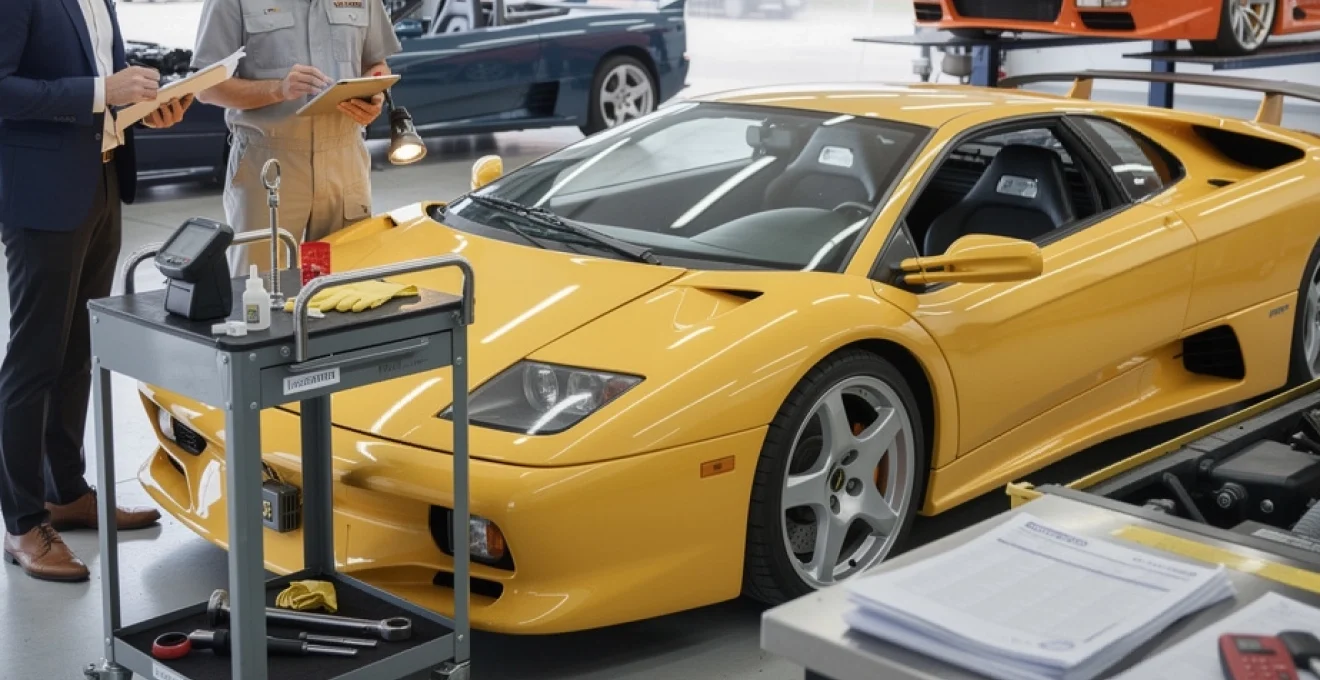
The 2000 Lamborghini Diablo sits at a sweet spot in supercar history. It keeps the raw, analogue V12 drama of the early 1990s cars, yet benefits from the late‑run improvements in power, refinement and build quality that came with Audi oversight. For many enthusiasts, a 2000 model year Diablo VT, VT Roadster or GTR represents the last truly uncompromising Lamborghini that can still be used and maintained with a degree of sanity.
If you are considering buying a 2000 Diablo, you are looking at a six‑figure investment in a 25‑year‑old supercar whose value now rivals contemporary Ferrari Testarossas and Porsche 959s. Getting the model year right, verifying authenticity and understanding the mechanical weak points matters as much as choosing the right colour. A well‑bought car can be thrilling, usable and financially sensible; a poor one can become a very expensive lesson.
Decoding the 2000 lamborghini diablo model year: VT, VT roadster and GTR differences
Identifying a genuine 2000 lamborghini diablo VT versus late‑1999 production crossovers
The 2000 model year Diablo VT sits in the facelift generation introduced for 1999, with fixed headlights, revised bumpers and an updated interior. However, production did not follow neat calendar boundaries. Cars registered in 2000 may in fact be late‑1999 builds, and some genuine 2000 VTs share components with earlier cars as Lamborghini ran down old stock.
To separate a true 2000 Lamborghini Diablo VT from a late‑1999 crossover, you need more than a registration date. The VIN, build plate and factory records are crucial. A genuine 2000 VT should have the later 5.7‑litre V12 with variable valve timing and around 529–530 hp, larger brakes and 18‑inch wheels. Some early ’98‑built facelift cars still wore a mix of 17‑ and 18‑inch rims, so wheels alone are not definitive. Analysing the VIN sequence against known production ranges gives a far more reliable indicator of model year than the number on the number plate.
Factory specifications for the 2000 diablo VT: power output, drivetrain and interior updates
By 2000, the Diablo VT specification had matured into a very capable grand touring supercar. The 5.7‑litre V12 featured variable valve timing, delivering approximately 529 hp and a broad torque curve that made the car surprisingly tractable at low speeds. All 2000 VTs used a five‑speed manual gearbox and the viscous‑coupling AWD system that could send up to 25% of torque to the front axle when required.
Inside, the 2000 Diablo benefits from the low‑profile instrument pack introduced with the facelift, improved switchgear and, on many cars, a better air‑conditioning system than the early 5.7s. Build quality under Audi ownership improved noticeably: panel gaps are more consistent, leather fit and finish is tighter and electrical reliability is better than on pre‑1998 cars. For many buyers, this blend of classic styling, Lamborghini character and Audi‑era robustness makes the 2000 Diablo VT one of the most desirable years to target.
Comparing 2000 diablo VT roadster features to fixed‑roof VT examples in the UK and europe
The 2000 Lamborghini Diablo VT Roadster adds open‑air drama to the package without the scuttle shake often associated with older convertibles. All Roadsters are all‑wheel drive, with a carbon‑fibre targa‑style top that stores over the engine cover. In practice, you get nearly identical performance to the coupe, with only a slight weight penalty and an even more intense soundtrack.
In the UK and Europe, VT Roadsters are significantly rarer than fixed‑roof VTs. Production from 1998–2000 is generally quoted at around 130 examples worldwide, with only a fraction in right‑hand drive. This scarcity boosts collectability and prices. Buyers should examine the roof panel mechanism carefully, checking for worn latches, water ingress and misalignment. When the roof is correctly adjusted, Roadsters feel almost as stiff as the coupe, a point often praised by long‑term owners who regularly take their cars on long continental trips to the factory and major events.
Track‑focused 2000 diablo GTR homologation specifics: chassis numbers, roll cage and aero package
The 2000 Lamborghini Diablo GTR is a very different proposition to a VT or VT Roadster. Built as a track‑focused evolution of the already hardcore Diablo GT, the GTR featured a more powerful V12 (around 590 hp in many references), a stripped‑out interior and extensive race hardware. Many cars were originally delivered to teams and collectors for one‑make racing and endurance events, making originality and history particularly important.
GTRs can be identified by specific chassis numbers tied to the limited production run, an integrated multi‑point roll cage, fire system, air‑jack fittings and an aggressive aero package including a larger rear wing and reworked front splitter. Some have since been converted to road use, especially in Europe and Australia, but any potential buyer should treat them as competition cars first. Expect a much harsher ride, more noise and running costs closer to a GT racing car than to a regular 2000 Diablo VT.
Verifying authenticity: VIN decoding, build sheets and lamborghini polo storico certification
Reading a 2000 lamborghini diablo VIN: model code, market code and production sequence
The Vehicle Identification Number is the backbone of any authenticity check on a 2000 Lamborghini Diablo. A typical Diablo VIN encodes the model family, body style, engine, market and production sequence. While exact structures vary slightly by market, the core format allows you to confirm whether you are looking at a VT, VT Roadster or GTR, and whether the car is left‑ or right‑hand drive.
On a 2000 model year car, the VIN should correspond to the facelift generation. Cross‑reference the VIN against known production ranges published by marque specialists and clubs; experienced inspectors can often spot at a glance whether a number has been tampered with. Check that the stamped VIN on the chassis, the aluminium build plate and the number in the logbook all match. Any discrepancy is a major red flag, particularly given the increasing value of low‑production V12 Lamborghinis.
Using lamborghini polo storico records to confirm build date, options and colour combinations
Lamborghini’s Polo Storico department has become increasingly important for buyers of classic Diablos, especially since the explosion in Countach and Miura values over the past decade. For a 2000 Diablo VT or GTR, factory records can confirm the build date, original colour and trim, and any options or special requests. That information is vital when trying to distinguish a genuine rare colour combination from a later respray.
Polo Storico certification also adds weight in the market. Cars with a full factory dossier and a certificate often achieve a premium at auction, somewhat like Ferrari Classiche‑certified cars. For a buyer, the cost of commissioning documentation is usually modest relative to the value of the car and can quickly pay for itself, especially if you are evaluating two similar examples and want an objective way to differentiate them. Think of it as the birth certificate of your Diablo.
Spotting non‑OEM body kits, replica parts and incorrect badging on a supposed 2000 diablo
Given the Diablo’s status as a 1990s poster car, it is unsurprising that body kits and replica parts have been popular for years. When inspecting a supposed 2000 Diablo VT or VT Roadster, pay attention to panel fit, material quality and minor details. Genuine panels combine aluminium and composite sections mounted over a steel space frame. Poorly fitting aftermarket bumpers, skirts or wings often betray themselves with inconsistent gaps and non‑factory fasteners.
Incorrect badging is another clue. A standard VT dressed up with SV graphics or GT‑style carbon parts may look dramatic but will not carry the same value. Check that the presence of features such as roof scoops, wide‑body arches or fixed rear wings aligns with the model indicated by the VIN and factory records. Subtle anomalies, such as non‑OEM mirrors, incorrect rear lights or cheap replica wheels, often signal deeper cost‑cutting in previous ownership.
Cross‑checking service booklets, dealer stamps and UK V5C logbook details for inconsistencies
An apparently complete service booklet is only as trustworthy as the details it contains. For a 2000 Lamborghini Diablo in the UK or Europe, cross‑check the chassis number, engine number and registration mark in the booklet against the V5C logbook and any early invoices. Look for continuity in dealer stamps: in the UK, the historic dominance of a single official dealer in the 1990s means a patchy main‑dealer history is not unusual, but gaps of many years with no specialist involvement deserve questioning.
Mileage readings should climb steadily; any sudden drop when the car changed country or plate suggests odometer interference. International buyers should also verify export and import records, especially as many UK Diablos have found homes in Europe, Asia and Australia as values increased. A small amount of effort here often uncovers inconsistencies before money changes hands.
Mechanical inspection checklist for a 2000 diablo V12 and AWD drivetrain
Engine diagnostics: 5.7‑litre V12 compression test, oil analysis and timing chain inspection
The Diablo’s 5.7‑litre V12 is a development of Lamborghini’s legendary 1960s engine and, when maintained, is extremely robust. A pre‑purchase inspection on a 2000 model should always include a compression test across all twelve cylinders. Figures should be even and within a narrow band. Any significant variation suggests wear or valve leakage, which on this engine often means expensive top‑end work.
Oil analysis is another valuable tool. A lab report that shows fuel dilution, coolant contamination or high metal content can reveal issues not yet obvious in road testing. From the mid‑1990s, Diablos gained more reliable mechanical cam chain tensioners, but it remains wise to listen for chain rattle on overrun. Persistent noise here can indicate stretched chains or worn guides, both requiring engine‑out surgery. Treat regular servicing at roughly 6,000–7,000 miles or annually as non‑negotiable.
Fuel and ignition systems: throttle‑by‑wire quirks, ECU fault codes and injector health
Later Diablos integrated more sophisticated engine management, and by 2000 you are dealing with complex electronics as well as mechanical hardware. Many cars now show age‑related issues with connectors and earths, leading to intermittent misfires or warning lights. Reading ECU fault codes with the correct diagnostic tool should be part of any assessment, even if no engine light is showing.
On a test drive, throttle response should be crisp and linear. Any hesitation, flat spots or inconsistent idle suggests problems ranging from dirty throttle bodies and injectors to sensor faults. Think of the fuel and ignition system as the nervous system of the car: slightly tired components may not stop it running, but they rob it of the clean, savage power that defines a good Diablo.
Viscous coupling AWD system, front differential and prop‑shaft wear patterns on high‑mileage cars
The all‑wheel‑drive system on a 2000 Diablo VT uses a viscous coupling to feed torque to the front axle under slip. It is generally reliable, but abuse or neglect can create expensive problems. On a lift, inspect the front differential and prop‑shaft for leaks, play and visible damage. Any clunks or vibrations under load on the road can point to worn joints or out‑of‑balance shafts.
High‑mileage cars—30,000 miles or more, which is considered substantial for a Diablo—deserve particular attention here. While the AWD system transforms wet‑weather traction compared with the early rear‑drive cars, some owners have driven VTs very hard on track days. Evidence of repeated launches, track rubber residue and aggressive geometry settings should prompt detailed investigation of drivetrain components before committing to purchase.
Cooling system integrity: alloy radiators, coolant hoses and overheating history on UK‑imported diablos
Overheating is one of the quickest ways to ruin a Diablo V12. The cooling system relies on multiple radiators, electric fans and long coolant runs, any of which can become problematic after two decades. Inspect alloy radiators for corrosion, previous repairs and blocked fins. Hoses should be supple, without swelling or cracking, and clips should look consistent and professional rather than a mix of hardware‑store items.
Ask the seller directly about any history of overheating, especially on UK‑imported cars that may have seen heavy summer use in Southern Europe or the Middle East before arriving. A system that triggers fans at the correct temperature and stabilises quickly is essential. If the temperature needle climbs in traffic and only recovers once on the move, budget for a full cooling system overhaul sooner rather than later.
Clutch, flywheel and gearbox inspection: single‑plate clutch life, synchro wear and replacement costs
All road‑going 2000 Diablos use a single‑plate clutch working hard against a very torquey engine. Real‑world life can be as low as 18,000–25,000 miles, and much less if the car has seen frequent stop‑start city driving or inexperienced owners. Engagement should be smooth and progressive; any judder, slip under load or burning smell is a warning sign.
The five‑speed manual gearbox is strong but not indestructible. Crunching into second or third, jumping out of gear or baulking during fast shifts suggests synchro wear. A specialist can often estimate remaining clutch life by inspection and feel, but budget thousands, not hundreds, for a full replacement including labour. Compared with the engine, access to the transmission is relatively straightforward but still time‑consuming.
Chassis, suspension and braking system evaluation on a 2000 lamborghini diablo
The chassis of a 2000 Diablo combines a steel space frame with double‑wishbone suspension and anti‑roll bars, a set‑up that delivers impressive poise for such a wide and heavy car. Over time, the weaknesses lie less in the basic design and more in consumable components. Suspension bushes, ball joints and dampers all live hard lives supporting a mid‑engine V12 supercar, often over speed bumps and less‑than‑perfect roads.
On a test drive, listen for knocks, creaks and rattles over rough surfaces. A healthy Diablo should feel firm and tightly controlled, not loose or crashy. Early cars suffered from relatively weak brakes, but by the facelift period and into 2000, larger discs and calipers offered much stronger stopping power. Still, brake fade on a spirited drive can indicate old fluid or tired components. Inspect discs for cracking and significant lip wear, and check that the car tracks straight under heavy braking. Given the performance potential—0‑60 mph in the low‑4‑second range and top speeds around 200 mph—brake and chassis condition should be treated with the same seriousness as engine health.
| Component | Typical issue on 2000 Diablo | What a buyer should look for |
|---|---|---|
| Front wishbone bushes | Perishing and play | Clunks over bumps, vague steering, uneven tyre wear |
| Dampers (especially rear) | Heat‑related wear, leaks | Oil misting, bouncy or under‑damped ride |
| Brake discs | Warping, cracks after track use | Pulsation through pedal, visible scoring or cracks |
Many 2000 Diablos also feature electronically adjustable dampers or front‑axle lift systems. These add convenience but also complexity. An inoperative lift or stuck damping mode can turn into a costly repair, so verify all functions multiple times rather than relying on a quick demonstration.
Bodywork, paint and corrosion: composite panels, accident repair and respray detection
Although the Diablo uses a mixture of aluminium and composite panels for the bonnet, engine cover, sills and bumpers, rust is still a concern due to the underlying steel chassis and subframes. A professional inspection with the car on a lift should include the footwells, jacking points, suspension mounting locations and door bottoms. Evidence of galvanic corrosion where steel and aluminium meet is not uncommon on older Italian exotics and can be time‑consuming to rectify properly.
Accident repair is a bigger risk than rust on many 2000 cars. The combination of limited visibility, huge performance and sometimes modest driver talent means that a surprising number of Diablos have seen bodywork at some point. Look for overspray on trim, mismatched orange‑peel in the paint, uneven panel gaps and non‑original fasteners. A paint depth gauge can be useful, but experience and a good eye are even better. Resprays are not automatically a problem—many owners have refreshed original colours—but undisclosed crash damage or poorly repaired structural sections should be taken seriously.
| Area | Risk factor | Typical tell‑tale |
|---|---|---|
| Front bumper and splitter | Kerbing and low‑speed impacts | Cracked fibreglass, touched‑in paint |
| Rear quarters | Spin‑related damage | Uneven arch lips, filler visible from inside |
| Roof and A‑pillars (Roadster) | Improper roof removal | Stress cracks, chipped paint at latch points |
Because values have risen sharply—in some cases doubling between around 2018 and 2022—there is financial incentive to bring marginal cars back to market. Any history file that includes detailed photographs of past repairs, with invoices from recognised specialists, should be viewed positively compared to cars with conspicuous new paint and no paperwork.
Interior, electrics and original equipment on 2000 model year diablos
The 2000 Diablo cabin reflects a transition between the wild, almost kit‑car feel of early 1990s supercars and the more considered ergonomics of modern machines. You sit low, with a shallow dashboard and that trademark scissor door beside you, but the updated fascia and instruments lend a more contemporary look. Leather quality is better than on earlier Diablos, yet still not at today’s standards; shrinkage around vents, loose stitching and faded bolsters are common on cars stored in strong sunlight.
Electrics have always been a talking point on older Lamborghinis. By 2000, the situation had improved, but buyers should still approach switches, window regulators, seat motors and climate control panels with a critical eye. A healthy Diablo should start cleanly hot or cold, idle steadily and show consistent readings for oil pressure, voltage and coolant temperature. Intermittent faults that an owner brushes off as “Italian character” usually point to wiring or grounding issues that take hours rather than minutes to track down.
Original equipment adds value. Factory wheels, stereo head unit, steering wheel and tool kit all reflect a car that has been preserved rather than modified. Period‑correct but reversible upgrades—such as a discreetly installed modern audio system—are widely accepted. Extensive retrims in non‑standard colours or aftermarket carbon dashboards often date quickly and can drag down desirability, especially for collectors seeking a 2000 Diablo as an investment as well as a driving tool.
Service history, maintenance records and specialist support in the UK and europe
With any 2000 Lamborghini Diablo, the service history tells as much of the story as the odometer. Unlike mass‑produced sports cars, Diablos were often maintained by a small number of marque specialists rather than a wide dealer network. In the UK, it is not unusual to find cars that have passed through the hands of the same independent expert multiple times over two decades. That continuity is a strong sign of attentive ownership.
Look for annual servicing regardless of mileage, detailed invoices that list parts as well as labour, and evidence of big‑ticket items being addressed: clutches, radiators, suspension refreshes and brake overhauls. Given that estimated annual mileage for many Diablos now sits below 1,500 miles, skipped services on the basis of low use are still a concern. Time, not distance, degrades fluids, seals and rubber components. Access to experienced specialists across the UK and mainland Europe means there is little excuse for poor maintenance on a car in this price bracket.
On a 25‑year‑old supercar, the cheapest car to buy is rarely the cheapest car to own; strong paperwork beats low asking prices almost every time.
From a practical standpoint, establishing a relationship with a trusted workshop before buying helps enormously. A pre‑purchase inspection from someone who knows Diablos intimately can uncover looming costs that even a conscientious owner may not have noticed. Think of this as part of the purchase price; skipping it on a six‑figure car is a false economy.
Market valuation: pricing a 2000 lamborghini diablo VT, VT roadster and GTR in today’s market
The market for late‑run Diablos has matured significantly in the last decade. Around 2,884 Diablos were built across all years and variants, but only a fraction are 2000 model year cars, and an even smaller number are right‑hand drive. Estimates suggest roughly 10% of total Diablo production was RHD, making 2000 UK‑delivered VTs and VT Roadsters particularly scarce. That rarity, combined with the appeal of the facelift styling and improved engineering, has pushed values well above the £60,000–£100,000 range often seen as recently as the mid‑2010s.
For a 2000 Diablo VT coupe with sensible mileage, strong history and largely original specification, transaction prices today typically sit in the upper mid‑six‑figure bracket in pounds or euros, with exceptional cars exceeding that. VT Roadsters command a premium due to low production numbers and high desirability; collectors in warm‑weather markets are especially keen on these. The GTR occupies a different tier again: as a track‑homologated special with around 83–100 GT‑family cars and far fewer GTRs built, asking prices in Europe can approach or exceed the €800,000 level often seen for the Diablo GT.
As manual, naturally aspirated V12 supercars disappear from new showrooms, late Diablos occupy an increasingly important niche between raw classics and modern hypercars.
Looking ahead, the trajectory for well‑documented 2000 model year Diablos appears positive. Recent high‑profile launches such as the reborn Countach and events like the Diablo’s 30th anniversary celebrations have renewed interest in 1990s Lamborghinis. For you as a buyer, the key is not attempting to time the market perfectly but buying the best example you can sensibly afford. Professionally inspected, correctly documented and carefully used, a 2000 Lamborghini Diablo VT, VT Roadster or GTR offers a depth of experience—visual, mechanical and emotional—that even the most sophisticated modern supercar struggles to replicate.