
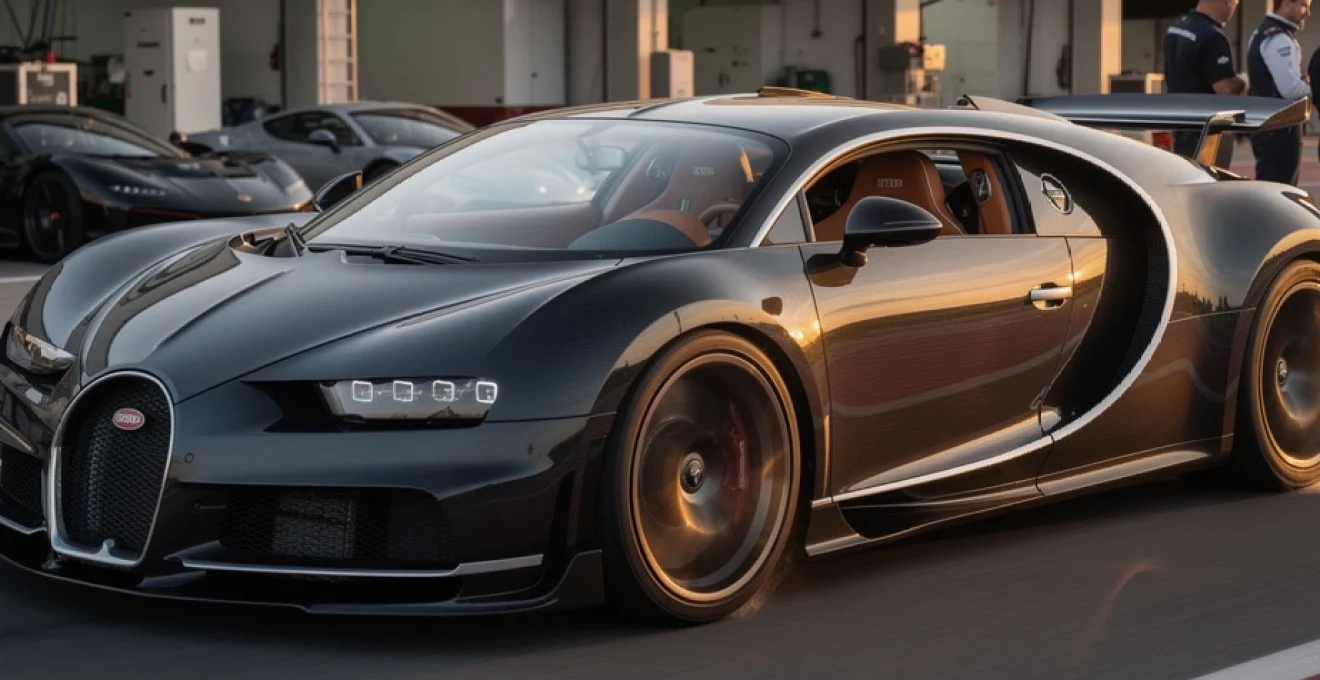
The Bugatti Veyron Super Sport arrived at a time when the idea of a 400 km/h road car still sounded like science fiction. Here was a machine that did not just brush that threshold; it obliterated it with a verified 431 km/h run, backed by TÜV certification and global headlines. For anyone fascinated by extreme engineering, the Super Sport represents a rare convergence of powertrain innovation, aerodynamics, tyre technology and chassis development that pushed the limits of road‑legal performance. Understanding how this hypercar achieved its numbers is not just an exercise in admiration; it offers useful insight into how far engineering can be pushed while keeping a car usable, refined and exploitable by a committed but non‑professional driver.
Bugatti veyron super sport in the hypercar pantheon: positioning against koenigsegg agera R, SSC tuatara and rimac nevera
Top speed records and verified runs: Ehra-Lessien, TÜV certification and the 431 km/h benchmark
The 2010 Bugatti Veyron 16.4 Super Sport was created with a single objective: extend the performance envelope of the original Veyron and secure an undisputed top‑speed record for a production car. On 3 July 2010, at Volkswagen Group’s Ehra‑Lessien test track, the Super Sport reached 431.072 km/h (268 mph), a figure independently measured and certified by the German authority TÜV. That number became the famous 431 km/h benchmark and still serves as a reference point whenever hypercar speed claims surface.
Measured on Ehra‑Lessien’s 8.7 km straight, the Super Sport performed two runs in opposite directions, with the average determining the official record. Production cars were then limited electronically to 415 km/h (258 mph) to protect the bespoke Michelin tyres. In the era of headline‑grabbing claims from rivals such as the Koenigsegg Agera R, SSC Tuatara and Rimac Nevera, the key distinction is verification: independent timing, repeatable conditions and a car representative of customer specification. Whenever you evaluate extreme top‑speed claims today, the Veyron Super Sport’s rigorously documented run remains the gold standard.
At over 430 km/h, the limiting factor is no longer engine power but tyre integrity, aerodynamic stability and thermal management working in perfect harmony.
Production numbers, exclusivity strategy and impact on hypercar collectability
Initially, Bugatti announced a limited run of 30 Veyron Super Sport units. Demand from clients already familiar with the Veyron’s engineering depth quickly outstripped that plan, and the final production figure reached just 48 cars built between 2010 and 2012. To put that into perspective, even the already‑rare “standard” Veyron 16.4 looks almost mainstream alongside the Super Sport.
This scarcity has had three clear effects on the hypercar market. First, it has anchored the Super Sport as the definitive combustion‑era record car in many collectors’ eyes. Second, it has created a hierarchy within the Veyron family itself: the Super Sport and Grand Sport Vitesse sit at the top, with the World Record Edition (WRE) and unique specifications occupying a micro‑stratum of desirability. Third, it has normalised the idea that a hypercar is not simply a vehicle but a scarce, quasi‑financial asset whose rarity profile can be modelled almost like an investment fund.
Comparative performance metrics versus bugatti chiron super sport and veyron 16.4
Within Bugatti’s own range, the Veyron Super Sport occupies a very specific niche. Compared with the original Veyron 16.4, the Super Sport gained almost 200 Nm of torque and just under 200 PS, yet shed around 50 kg. Official figures quote 1,200 PS (1,183 bhp) at 6,400 rpm and 1,500 Nm (1,106 lb ft) between 3,000 and 5,000 rpm. The 0–100 km/h time remained at a stated 2.5 seconds, but the 0–200 km/h and 0–300 km/h sprints dropped significantly: 0–200 km/h in about 7.3 seconds and 0–300 km/h in around 14.6 seconds.
The later Chiron Super Sport ultimately surpassed these numbers, with 1,600 PS and the ability to exceed 300 mph in pre‑production form. Yet the character of the performance differs. The Chiron is marginally more elastic and calmer at speed, while the Veyron Super Sport delivers a slightly rawer, more mechanical feel in the mid‑range. If you value the first truly 400+ km/h homologated car, the Veyron Super Sport holds a unique place even alongside newer Bugatti products.
Market valuations, auction results and investment trends for veyron super sport models
Since production ended, Veyron Super Sport values have shown a clear upward trajectory. Early secondary‑market data points around 2014–2016 often sat near or slightly above the original list price, depending on mileage and configuration. Over the past five years, auction hammer prices for low‑kilometre cars have regularly exceeded €2 million, with very special specifications and ultra‑low mileage examples stretching beyond €3 million in some cases.
Several trends drive this. You are looking at the last word in the original W16 line, the highest‑performance derivative of a car widely regarded as the “Concorde moment” for road cars. Add in the small production run, the world‑record narrative and the craftsmanship of the Molsheim build process, and the Super Sport becomes more than transport. For collectors focused on long‑horizon appreciation, factors such as service history, official Bugatti maintenance plans and documented provenance are now as carefully scrutinised as paint finish or interior trim.
Powertrain engineering: 8.0‑litre quad‑turbo W16, drivetrain architecture and performance envelope
W16 engine architecture: block layout, firing order, forged internals and lubrication system
The Bugatti Veyron Super Sport’s 8.0‑litre W16 is effectively two narrow‑angle 4.0‑litre V8s sharing a common crankshaft. The block is an all‑alloy construction with a bore and stroke of 86 mm x 86 mm for a total displacement of 7,993 cc. Each bank uses dual overhead camshafts and four valves per cylinder, so the engine employs 64 valves in total. The compact W‑layout shortens the engine package, enabling its mid‑longitudinal installation without excessive wheelbase growth.
Internally, forged pistons, high‑strength connecting rods and a heavily engineered crankshaft are designed for sustained high‑load operation. A dry‑sump lubrication system with multiple scavenging stages keeps oil pressure stable even during prolonged high‑g cornering and extreme acceleration. Cooling is handled by nine radiators: three for the air‑to‑liquid intercoolers, three engine radiators and one each for transmission oil, differential oil and engine oil, plus a separate unit for the climate system. Compression is set at 9.0:1, relatively modest to accommodate high boost pressures while preserving reliability on pump fuel.
Quad‑turbocharging system: turbo sizing, boost pressure management and intercooler design
To elevate the engine from the regular Veyron’s 1,001 PS to 1,200 PS territory, Bugatti re‑engineered the forced‑induction system. The Super Sport uses four larger turbochargers coupled with uprated intercoolers, reducing charge‑air temperatures and allowing higher, more sustained boost. The turbochargers are configured in parallel pairs, each feeding a bank of eight cylinders, with careful attention paid to minimising turbo lag while still delivering enormous flow at high rpm.
Boost pressure management relies on a fast‑acting electronic control system integrated into Bugatti’s in‑house engine management software. Wastegates, recirculation valves and throttle mapping work together to deliver a torque plateau of 1,500 Nm between 3,000 and 5,000 rpm, giving you that seemingly endless thrust from middling speeds. The upgraded intercoolers, positioned in the airflow path, lower intake temperatures significantly, enhancing both power and detonation resistance, particularly vital in repeated high‑speed runs or hot‑climate driving.
7‑speed ricardo dual‑clutch gearbox: shift logic, torque capacity and cooling solutions
The gearbox is a 7‑speed dual‑clutch unit supplied by Ricardo, designed from the outset to handle the extravagant torque of the W16. With reinforced second and third gears and a taller seventh gear compared with the regular Veyron, the Super Sport’s transmission balances brutal acceleration with relaxed, lower‑rpm cruising at 250+ km/h. Gearshifts take around 150 milliseconds, with minimal interruption in torque thanks to the pre‑selection of the next ratio.
You can operate the transmission via magnesium paddles behind the steering wheel or leave it in fully automatic mode. The dual‑clutch architecture generates considerable heat under heavy use, so Bugatti engineered dedicated oil cooling, additional heat exchangers and software that monitors temperature thresholds. For owners planning extended autobahn runs or even private‑track high‑speed sessions, ensuring the gearbox’s cooling system is fully up to date and regularly serviced is one of the most practical maintenance tips.
AWD layout and haldex‑type coupling: torque distribution, differential tuning and traction control
Putting 1,200 PS to the tarmac demanded an all‑wheel‑drive system far more sophisticated than conventional performance cars of the day. The Veyron Super Sport uses an electronically controlled permanent AWD layout, with a front differential incorporating a Haldex‑type coupling and a mechanically regulated limited‑slip differential at the rear. Under normal driving, around 30% of torque goes to the front axle and 70% to the rear, lending the car a rear‑biased character.
However, the system can send up to 100% of torque to either axle if slip is detected. Traction control (ASR) and ESP stability control work in the background, trimming power or braking individual wheels when necessary. Launch control is activated via a console button and a clear sequence of pedal inputs, giving you repeatable 0–100 km/h times of around 2.5 seconds, provided road conditions and tyre temperatures are optimal. The software tuning is deliberately progressive: the goal is confidence and repeatability rather than lurid oversteer theatrics.
Performance figures: 0–100 km/h, 0–300 km/h, in‑gear acceleration and power‑to‑weight ratio
The raw numbers remain extraordinary. Officially, the Veyron Super Sport accelerates from 0–100 km/h in 2.5 seconds, 0–200 km/h in around 7.3 seconds and 0–300 km/h in about 14.6 seconds. Independent tests have sometimes recorded even quicker intermediate times under ideal conditions. The car’s top speed is 431.072 km/h in de‑restricted form, 415 km/h in customer trim.
With a kerb weight of approximately 1,838 kg, the Super Sport offers a power‑to‑weight ratio of around 654 PS per tonne. In‑gear acceleration is arguably even more impressive than the 0–100 km/h figure: overtakes from 100–200 km/h happen in a handful of seconds, making fast‑lane driving feel almost surreal. For you as a driver, this means careful planning: the car compresses time and distance so dramatically that familiar reference frames on the road no longer apply.
| Model | Power | Torque | Kerb weight | Top speed (limited) |
|---|---|---|---|---|
| Veyron 16.4 | 1,001 PS | 922 Nm | ~1,888 kg | 407 km/h |
| Veyron Super Sport | 1,200 PS | 1,500 Nm | ~1,838 kg | 415 km/h |
Aerodynamics and high‑speed stability: from drag reduction to downforce management
Revised bodywork versus standard veyron: extended front, NACA ducts and rear revisions
The Super Sport’s bodywork is more than an aesthetic refresh; it is a carefully tuned aerodynamic package. At the front, a revised apron with larger, single‑blade main intakes and a full‑width lower duct improves both cooling and airflow management around the wheels. New brake‑cooling slots sit beneath uprated headlights borrowed from the Grand Sport, optimising illumination and thermal performance simultaneously.
The most visible change appears above the engine. The standard Veyron’s short roof and two “snorkel” air intakes were replaced by a longer, tunnelled roof with integrated NACA ducts. These reduce drag and enhance the ram‑air effect at speed, contributing to the additional power output. At the rear, straightened fascia edges open up larger mesh areas for hot‑air evacuation, while a redesigned diffuser and dual‑exit exhaust refine the car’s pressure distribution at speeds beyond 350 km/h.
Active rear wing and airbrake: deployment modes, angle of attack and braking distances
An active rear wing is central to the Veyron Super Sport’s stability. In normal high‑speed driving, the wing deploys into the airflow at roughly 196 km/h (122 mph) – lower than the original Veyron’s 220 km/h (137 mph) threshold – to increase rear downforce and balance the aerodynamic centre of pressure. As speed rises, the angle of attack adjusts to maintain an optimal blend of drag and downforce.
Under heavy braking from high speed, the wing tilts to a steep angle, transforming into an airbrake. This can shorten 100–0 mph stopping distances by several car lengths compared with relying on friction brakes alone. Instrumented tests have recorded 100–0 mph in under 90 metres on warm, dry tarmac. For you, the net effect is a car that feels planted and predictable even during emergency deceleration from velocities that would be aircraft take‑off speed in other contexts.
High‑speed mode key, ride height adjustment and underbody airflow management
To access the car’s highest speed range, the driver must engage the dedicated “Top Speed” mode via a separate key inserted into a lock near the driver’s seat. This physical key is a deliberate design choice: it forces you to stop, consider conditions and consciously authorise the change. Once engaged, the car drops its ride height, adjusts the angle of the rear wing and reconfigures underbody flaps to minimise drag.
The underbody is almost entirely flat, with diffusers and management surfaces guiding airflow cleanly beneath the car. At top speed, even minor turbulence underneath the chassis can destabilise the vehicle, so Bugatti’s engineers focused on smooth transitions and controlled vortex generation. The ride‑height change reduces frontal area and prevents excess air volume from entering under the nose, lowering the risk of aerodynamic lift.
Thermal management through aero: cooling apertures, radiator placement and brake ventilation
At 400 km/h, heat is the constant enemy. Every major aerodynamic feature on the Veyron Super Sport plays a secondary role in cooling. The enlarged front intakes channel air towards three engine radiators and the intercooler heat exchangers. Side gills feed air to the radiators and rear brakes, while the revised rear fascia maximises the exit area for hot airflow, preventing heat soak in the engine bay.
Brake ventilation is particularly critical on a 1,800+ kg car capable of repeated 300–0 km/h stops. Dedicated ducts and careful rotor‑shield design ensure fresh air reaches the carbon‑ceramic discs, while the wheel design promotes turbulence that helps evacuate hot air. If you intend to run a Super Sport on track, monitoring disc temperature and ensuring the brake‑cooling system is debris‑free become essential parts of pre‑ and post‑drive checks.
Chassis, suspension and braking: translating 1,200 PS into controllable dynamics
Carbon‑fibre monocoque structure: torsional rigidity, load paths and crash performance
The Veyron Super Sport uses a carbon‑fibre monocoque with aluminium subframes front and rear. Compared with the standard Veyron, the Super Sport’s tub adopts a new carbon weave that increases torsional rigidity by around 10% while saving approximately 25 kg. Reinforced A‑pillars, derived from the open‑roof Grand Sport, improve rollover protection and enhance occupant safety.
This stiff base allows the suspension to work more precisely, keeping alignment changes to a minimum under the immense loads generated by acceleration, braking and cornering. The monocoque’s crash structures are designed to dissipate energy through predictable load paths, combining F1‑style materials with full‑crash‑regulation compliance. For a car routinely capable of 250+ mph, that blend of rigidity and crash performance is non‑negotiable.
Adaptive suspension system: damping maps, anti‑roll control and variable ride height
The suspension is based on double wishbones with coil‑sprung, hydro‑electronic dampers. Three main modes – Standard, Handling and Top Speed – alter ride height, damping rates and active aero calibration. Standard mode offers a surprisingly compliant ride, suitable for normal roads. Handling mode stiffens damping, reduces ride height and optimises roll control for more aggressive driving, such as fast mountain passes or track use.
Top Speed mode, as described earlier, focuses almost entirely on minimising drag and maintaining stability near the car’s maximum velocity. Thicker anti‑roll bars, compared with the base Veyron, improve body control without making the car nervous. The overall set‑up is deliberately neutral to mild understeer at the limit, a deliberate safety bias for a car that can overwhelm most drivers’ experience if provoked too abruptly.
Michelin PAX high‑speed tyres: bespoke compound, construction and speed rating validation
Tyres are one of the true engineering heroes of the Veyron Super Sport story. Michelin developed bespoke PAX run‑flat tyres sized 265/680 R500A at the front and 365/710 R540A at the rear. These tyres were tested extensively up to and beyond the car’s 431 km/h record to validate their speed rating and structural integrity. Each set was designed to withstand not just peak speed, but repeated high‑load cycles on the test track and road.
The compound balances grip with durability under intense heat. At 400+ km/h, centrifugal forces are enormous, and even slight growth in tyre diameter or sidewall deformation can destabilise the car. For you as an owner, tyre age, not just tread depth, becomes a critical consideration. Replacing tyres proactively, even at apparently “good” tread levels, is essential if you plan to access even a fraction of the car’s performance envelope.
Ceramic composite braking hardware: disc sizing, calliper technology and fade resistance
The braking system uses carbon‑fibre reinforced silicon carbide composite discs from SGL Carbon. Front rotors measure 400 mm in diameter and are clamped by eight‑piston aluminium monobloc callipers with four pads each side. At the rear, 380 mm discs are paired with six‑piston callipers and two pads per side. Titanium pistons reduce unsprung mass and improve heat resistance.
ABS and emergency Brake Assist come as standard, and the system is integrated with the active rear wing’s airbrake function. Fade resistance is exceptional; repeated 200–0 km/h stops generate immense heat but remain consistent provided the system is in good health. If you are evaluating a used Super Sport, careful inspection of disc condition, pad wear and calliper seals provides valuable insight into how the car has been driven.
Design, cockpit and ergonomics: molsheim craftsmanship and high‑speed usability
Exterior design cues unique to the super sport: exposed carbon, dual‑tone schemes and aero elements
Visually, the Veyron Super Sport combines recognisable Veyron cues with low‑drag detailing. The entire outer skin is carbon fibre rather than a carbon‑and‑aluminium mix, allowing for exposed carbon finishes. Bugatti even offered fully lacquered bare‑carbon bodywork at roughly a 20% premium over list price, making it one of the most expensive factory options of its era.
Five World Record Edition cars featured a striking black exposed carbon body with vivid orange accents and wheels. Other Super Sports adopted more subtle dual‑tone schemes, often mixing tinted carbon with solid paint. Polished aluminium strips flow from the base of the A‑pillars to the rear, visually emphasising the car’s sweeping profile. Compared with the original Veyron, the Super Sport looks slightly more aggressive and purposeful, but still unmistakably Bugatti rather than a track refugee.
Interior materials and craftsmanship: leather, carbon fibre trim and bespoke options
Inside, the Super Sport retains the Veyron’s signature blend of minimalism and luxury. Soft leather, high‑grade aluminium switchgear and exposed carbon‑fibre door panels coexist without visual clutter. Super Sport script appears on the headrests and the transmission tunnel sidewalls, with many cars featuring contrast stitching or quilted leather inserts as an option.
Clients could commission bespoke details such as personalised fuel caps, custom sill plates or embroidered signatures. If you are considering a car as a long‑term asset, a tasteful but distinctive interior specification can enhance desirability, especially when paired with a rare exterior colour. The key is coherence: Molsheim’s best cabins feel like they were designed as a whole, rather than modified piecemeal.
Driver interface: analogue instrumentation, steering wheel controls and visibility at speed
The driver faces a curved binnacle with five analogue instruments. At the centre sits an 8,000 rpm tachometer; to the left, an engine‑output gauge scaled to 1,200 PS, and to the right, a 430 km/h speedometer. Digital readouts within the dials provide auxiliary information without overwhelming you with data. The centre console houses a traditional analogue clock, Burmester audio controls, climate settings and the gear selector.
The steering wheel has an Alcantara‑trimmed rim with a coloured 12 o’clock marker, magnesium shift paddles and integrated controls. Visibility is better than you might expect from such a low, wide car, although rearward views are naturally limited by the mid‑engine layout. At high speed, the clear, legible instrumentation and intuitive control layout help keep cognitive load manageable, allowing you to focus on the road and the car’s feedback.
Comfort versus performance: NVH refinement, seating ergonomics and long‑distance usability
One of the Veyron Super Sport’s most remarkable qualities is its refinement. Despite its 1,200 PS output, the car is quiet and composed at a steady motorway cruise. Road noise is well suppressed, wind buffeting is minimal and the suspension filters out smaller imperfections. Seats offer strong lateral support but remain genuinely comfortable over hundreds of kilometres, making a high‑speed cross‑continent trip a realistic proposition rather than a theoretical boast.
NVH refinement also has a safety dimension. Lower ambient noise levels reduce fatigue, allowing you to remain alert and focused during demanding drives. Climate control, seat heating and high‑grade audio add to the GT‑like ambience. If you plan to use a Super Sport regularly, these qualities make it far easier to integrate into real‑world life than many more focused, track‑oriented hypercars.
Development history, special editions and legacy within bugatti’s modern era
Engineering leadership: contributions from wolfgang dürheimer, frank heyl and the molsheim team
The Veyron Super Sport emerged from a culture of relentless iteration. After early difficulties with the original Veyron programme, new leadership in Bugatti and the wider Volkswagen Group prioritised engineering rigour and achievable targets. Figures such as Wolfgang Schreiber on transmissions and later senior leaders in Bugatti’s technical organisation championed solutions that balanced ambition with reliability.
The Super Sport can be seen as the distilled result of those lessons. Rather than chasing a headline at the expense of usability, the team focused on reinforcing the monocoque, upgrading cooling, refining aerodynamics and recalibrating software. If you view the Veyron line as a learning curve, the Super Sport represents its apex: the last and most resolved expression of the original concept before the more radical step to the Chiron platform.
World‑record edition and other limited super sport variants: production runs and unique specs
Among the 48 Super Sports built, the five World Record Edition (WRE) cars form a sub‑set of particular interest. Each mirrored the Ehra‑Lessien record car’s black exposed carbon body with orange accents and wheels. Inside, they featured quilted leather on the seats and transmission tunnel, orange stitchwork and Super Sport logos in orange on key touchpoints.
Beyond the WRE, various one‑off and ultra‑low‑volume specifications exist, often commissioned by long‑standing Bugatti clients. Unique paint‑to‑sample finishes, tinted carbon, differing wheel designs and interior personalisation create a landscape where no two cars are truly identical. This diversity, coupled with the small overall production run, means you are unlikely ever to encounter two Super Sports that look exactly the same.
The most coveted modern hypercars are rarely just fast; they are fast, rare, technically significant and bound to a clear narrative that the market understands.
Media tests and benchmarks: top gear, evo, autocar and independent instrumented testing
Media coverage has been central to cementing the Veyron Super Sport’s reputation. High‑profile tests on European roads and proving grounds highlighted not only the top speed, but also the way the car shrinks around the driver at more normal velocities. Testers repeatedly commented on the ease with which the car could be driven smoothly in traffic, followed by mind‑bending acceleration when space allowed.
Independent instrumented tests often confirmed or slightly bettered Bugatti’s own acceleration and braking claims, lending credibility to the official figures. Television features and magazine covers helped embed the Super Sport in popular culture as much as in the specialist car world. For you as a buyer or enthusiast, that media legacy adds another layer of intangible value, ensuring the car remains recognisable far beyond connoisseur circles.
Influence on future bugatti models: chiron, bolide and the evolution of the W16 platform
The lessons learned from the Veyron Super Sport flowed directly into the Chiron and its derivatives. Higher‑power versions of the W16, such as those used in the Chiron Super Sport and track‑focused Bolide, build on the airflow, cooling and combustion knowledge gained from running an 8.0‑litre quad‑turbo engine at the edge of the possible. Aerodynamic strategies, active‑chassis logic and high‑speed tyre development have all evolved, but their roots lie in the Super Sport.
As the automotive world moves towards electrification, the Veyron Super Sport stands as a defining monument of the internal‑combustion hypercar era. For you, whether as an investor, a driver or simply an admirer of engineering excellence, it offers a masterclass in how to take a seemingly impossible brief – a 1,000+ PS, 400+ km/h road car – and turn it into a usable, repeatable and profoundly influential reality.