
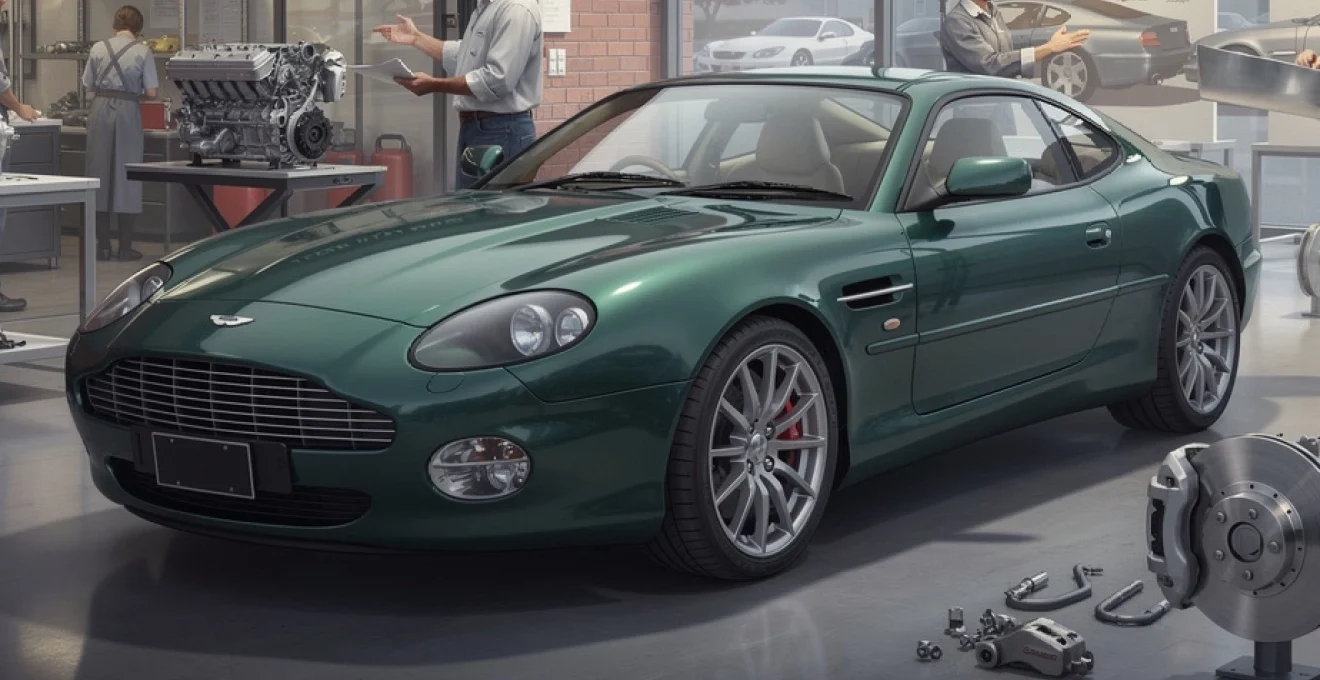
The Aston Martin DB7 Vantage Zagato sits in a very small circle of modern grand tourers where design, engineering and rarity intersect. For anyone who cares about hand-built performance cars, this is one of those machines that quietly rewrites what a limited‑run GT can be. Only 99 coupés were created, all carrying a re‑imagined V12 DB7 package under a dramatically re‑sculpted body. If you are evaluating blue‑chip modern classics or simply want to understand why this car has become a reference point in the collector market, the DB7 Vantage Zagato provides a compelling study in Anglo‑Italian collaboration, coachbuilding finesse and highly focused engineering.
Aston martin DB7 vantage zagato in context: collaboration between newport pagnell and zagato milan
From DB4 GT zagato to DB7 vantage zagato: tracing the Anglo‑Italian design lineage
The DB7 Vantage Zagato cannot be understood without the lineage that began with the DB4 GT Zagato in 1960. That earlier car, built in just 19 examples, combined Aston Martin’s competition chassis know‑how with Milanese aluminium coachwork and is still regarded as one of the most valuable post‑war Aston Martins. The DB7 Vantage Zagato echoes this formula: bodies formed in Italy, then mated to a shortened DB7 Vantage platform at Bloxham and supported by the craftsmanship expertise centred around Newport Pagnell. The result is a car that feels like a spiritual successor rather than a simple styling exercise.
Limited production strategy: 99 coupés, chassis allocation and customer selection
For the DB7 Vantage Zagato, Aston Martin sanctioned a production run of only 99 units, a number pitched deliberately below mainstream “special editions” yet above the ultra‑tiny DB4 GT Zagato series. Chassis were allocated in advance to key markets in the UK, mainland Europe and parts of Asia‑Pacific, with prospective buyers typically known to the brand through earlier DB7 Vantage or V12 Vanquish ownership. This kind of curated allocation helped to maintain exclusivity and, as you see in today’s registry data, has produced a global spread of cars but in very small numbers per country. For you as a collector, this means local supply is often measured in single digits.
Positioning the DB7 vantage zagato within early-2000s GT rivals (ferrari 550, porsche 911 turbo, bentley continental GT)
Launched in the early 2000s, the DB7 Vantage Zagato arrived into a market dominated by the Ferrari 550 Maranello, Porsche 996‑generation 911 Turbo and, shortly after, the first Bentley Continental GT. Against these rivals, Aston Martin’s strategy was not to chase outright lap times but to present a more artisanal, coachbuilt grand tourer. The Ferrari delivered similar power from a front‑engined V12 but in far greater volumes (over 3,000 units), while Porsche focused on all‑weather usability and Bentley emphasised high‑tech luxury and twin‑turbo torque. The Zagato instead blended hand‑finished aluminium bodywork, a short‑wheelbase chassis and a naturally aspirated V12, making it especially appealing if you value analogue driving feel and rarity over pure specification sheets.
Role of andrea zagato and henrik fisker in the DB7 vantage zagato design process
The design process paired Andrea Zagato with Aston Martin’s then‑design director Henrik Fisker. Zagato’s team created the concept sketches after discussions at Pebble Beach in 2001, while Fisker ensured the proportions and surfacing remained authentically Aston Martin. Think of it as a duet rather than a solo performance: the Milanese studio provided the strong visual signatures – the “double bubble” roof, single large grille and muscular haunches – while Gaydon and Newport Pagnell balanced these ideas with the DB7 platform’s hard points, crash requirements and cooling needs. If you compare the DB7 Zagato to the standard DB7 Vantage, the difference in attitude and stance reveals just how intensively both teams re‑thought the car.
Design language and coachwork: interpreting the zagato signature on the DB7 platform
“double-bubble” roof architecture and its aerodynamic and packaging implications
The most recognisable element of the DB7 Vantage Zagato is the classic Zagato double‑bubble roof. Originally developed in the 1950s to give racing drivers extra helmet clearance without increasing frontal area, the concept applies similar thinking here. The twin domes allow slightly lower overall roof height while maintaining headroom, subtly reducing the car’s aerodynamic drag and visual mass. For you as a driver, this creates a more intimate cockpit without feeling cramped. In aerodynamic terms, the sculpted roof channels airflow towards the rear screen and Kamm tail, contributing to stability at the car’s 185 mph claimed top speed.
Shortened wheelbase and revised proportions versus standard DB7 vantage
Compared with the standard DB7 Vantage, the Zagato’s chassis is shortened by 151 mm with a wheelbase reduced by 60 mm. That change trims front and rear overhangs and creates a more cab‑rearward stance, closer in spirit to a compact GT than a classic 2+2 coupé. Visually, the effect is similar to tailoring a suit to a slimmer, more athletic cut. For you on the road, the shorter wheelbase aids agility and enhances turn‑in response, at the cost of a slightly more assertive ride over broken surfaces. The overall weight reduction of around 60 kg versus the DB7 Vantage also helps the car feel lighter on its feet.
Aluminium body panelling, hand-finishing and panel fit tolerances at aston martin works
The DB7 Vantage Zagato uses hand‑formed aluminium body panels over the shortened steel chassis. Bodies were crafted in Italy, then shipped to the UK for final assembly and finishing. Panel fit on these cars reflects the era’s blend of traditional coachbuilding and increasingly stringent quality control: gaps and shut lines were targeted to tolerances that, at the time, were notably tighter than those of earlier Newport Pagnell cars from the 1980s. If you inspect a well‑preserved example, you will notice consistent door, bonnet and boot gaps that speak to many hours of manual adjustment. For collectors, original panel fit and undisturbed welds are strong indicators of accident‑free history.
Front fascia redesign: grille aperture, projector headlamps and cooling airflow management
The front fascia was extensively re‑designed for the Zagato. A single, enlarged grille aperture dominates the nose, framed by more compact headlamp units and a cleaner bumper treatment. This is not just styling theatre. The larger opening and internal ducting manage airflow to the V12’s radiators and ancillary coolers, supporting sustained high‑speed running and greater thermal headroom. The headlamps use projector‑style optics that give a more modern lighting signature than the standard DB7 units. As a result, the car presents a bolder face while delivering practical benefits in both cooling efficiency and night‑time visibility, crucial for the kind of long‑distance GT use many owners favour.
Rear-end treatment: kamm tail, lamp units and integrated aero detailing
At the rear, the DB7 Vantage Zagato moves away from the DB7’s familiar tail to a more upright, almost Kamm‑style form with a drop‑down boot lid and single round tail lamps. This abrupt cut‑off, inspired by mid‑century racing cars, reduces drag by allowing cleaner separation of airflow. The rounded lamp units sit within deeply sculpted bodywork, reinforcing the car’s visual width. Subtle aero detailing – such as the boot edge profile and the integration of the rear bumper – helps generate stability at speed without the need for conspicuous spoilers. For you, this means a car that looks elegantly simple yet remains composed deep into triple‑digit territory.
Powertrain engineering: V12 vantage specification and performance characteristics
5.9-litre AJ-V12 engine tuning, compression ratio and ECU calibration for the zagato
Under the bonnet sits Aston Martin’s 5.9‑litre V12, often referred to as the AJ‑V12, tuned to around 435 bhp at 6,000 rpm and 410 lb ft at 5,000 rpm in DB7 Zagato specification. This represents a mild but meaningful hike over the standard DB7 Vantage output, achieved primarily through revised engine mapping and breathing. Compression ratio remained close to the base engine, preserving reliability and drivability, but the ECU calibration sharpens throttle response and widens the usable power band. If you are used to modern turbocharged units, the linearity of this naturally aspirated V12 – building power cleanly all the way to the red line – feels refreshingly old‑school.
Intake and exhaust system differences from the standard DB7 vantage (manifolds, back-pressure, sound profile)
The DB7 Vantage Zagato uses a re‑mapped exhaust system with Aston Martin’s active valve technology first seen on the Vanquish, reducing back‑pressure at higher engine loads. Intake routing and manifolds are optimised for the shorter chassis packaging, subtly altering flow characteristics. The result is not just a performance gain but a more distinctive sound profile. Under light throttle, the car remains subdued, suitable for long‑distance touring. Push harder and the valves open, releasing a harder‑edged V12 note that many owners describe as one of the car’s defining pleasures. If you value aural character as much as raw figures, this is a key part of the DB7 Zagato appeal.
Transmission options: 6-speed manual getrag gearbox ratios and final drive selection
Most DB7 Vantage Zagatos were specified with a six‑speed manual transmission, paired with an AP twin‑plate clutch designed to handle the V12’s torque while maintaining reasonable pedal effort. Gearbox ratios were chosen to exploit the engine’s broad spread of power, with a relatively short final drive helping the car achieve sub‑5‑second 0–60 mph runs. Think of it as giving you close‑ratio engagement in the lower gears for acceleration, while still offering relaxed cruising in top. The manual layout and mechanical feel contribute significantly to driver involvement, especially compared with contemporary torque‑converter automatics.
Performance metrics: 0–60 mph, 0–100 mph and top speed versus DB7 GT and vanquish
Performance figures vary slightly between sources, but a representative set for the DB7 Vantage Zagato places 0–60 mph at around 4.9 seconds and top speed at roughly 185 mph. By comparison, the DB7 GT, using a similar engine tune, delivers a very similar straight‑line performance but in greater numbers, while the original Vanquish edges ahead in outright speed thanks to its more advanced chassis and aerodynamics. What sets the Zagato apart is how the short‑wheelbase chassis and reduced weight make these numbers feel more immediate. You experience acceleration that feels more vivid than the raw data suggests, similar to how a lighter sports car can feel quicker than a more powerful but heavier GT.
Chassis, suspension and braking: dynamic behaviour of the DB7 vantage zagato
Short-wheelbase handling characteristics: turn-in response, yaw behaviour and stability
The shorter wheelbase profoundly shapes the DB7 Vantage Zagato’s handling. Initial turn‑in is noticeably crisper than the standard DB7 Vantage, with quicker yaw response when you load the front axle. On tighter roads, the car feels more pointy, almost like a scaled‑down GT rather than a long‑legged tourer. At very high speeds, that same agility requires a more measured input from the driver, but aerodynamic tuning and suspension calibration keep the car stable. If you are moving from a regular DB7, expect a more alert, more interactive driving experience that rewards smooth steering and throttle inputs.
Suspension hardware: springs, dampers and anti-roll bar calibration unique to the zagato
Suspension hardware for the DB7 Vantage Zagato uses uprated springs and dampers compared with the standard car, with rates chosen to control body movement on the shorter chassis. Anti‑roll bars are tuned to balance front‑to‑rear grip and maintain progressive breakaway characteristics. The goal was not a track‑focused setup but a more tightly controlled GT that still functions as a road car first. In practice, you get firmer vertical body control, especially over crests and compressions, with only a modest increase in low‑speed ride harshness. Properly maintained dampers and bushings are critical to preserving this character in older examples.
Wheel and tyre package: 18-inch alloy design, section widths and bespoke pirelli fitment
The standard wheel package consists of unique 18‑inch, five‑spoke Zagato‑styled alloy wheels, typically wrapped in performance tyres such as 245/40 front and 275/35 rear fitments. Period documentation references Pirelli performance tyres specified to match the car’s weight and intended usage. For you as a buyer or owner today, sticking close to the original sizes and speed ratings is important, as changes in tyre profile or compound can noticeably affect ride, steering feel and noise levels. Many enthusiasts regard fresh, correct‑spec tyres as one of the single most effective upgrades you can make to any older GT, including the DB7 Zagato.
Braking system: brembo callipers, disc dimensions and fade resistance on track
Braking hardware is supplied by Brembo, with ventilated discs at all four corners and powerful multi‑piston callipers. In period, Aston Martin highlighted that the related supercharged Vantage used the largest road‑car discs of its time, signalling how seriously the brand took stopping performance on its heavier GTs. The DB7 Zagato benefits from this emphasis: fade resistance is strong for fast‑road use, and properly maintained systems cope well with occasional track work. For more intensive circuit driving, modern pad compounds and high‑temperature fluid can further improve consistency without compromising originality.
Steering feel and NVH tuning for grand touring versus high-speed autobahn use
Steering on the DB7 Vantage Zagato uses power‑assisted rack‑and‑pinion hardware, tuned to deliver greater road feel than many contemporaries. NVH (noise, vibration and harshness) calibration was geared towards high‑speed cruising, especially for autobahn and autostrada conditions. Cabin sound levels at a steady 80–90 mph remain civilised, with the exhaust note receding into the background until you open the throttle. If you are looking for a genuine long‑distance GT, this balance of tactile steering and refined isolation makes the car particularly satisfying on extended journeys rather than just on short blasts.
Interior specification and craftsmanship: bespoke cockpit details of the DB7 vantage zagato
2-seater configuration, luggage space optimisation and bulkhead redesign
Unlike the standard DB7 Vantage 2+2 layout, the DB7 Vantage Zagato is configured strictly as a two‑seater. The rear seats disappear, replaced by a structural bulkhead and expanded luggage shelf that improves torsional rigidity and practicality. Boot space remains modest but usable for weekend touring, while the cabin feels more focused, with both occupants enjoying generous legroom and head clearance beneath the double‑bubble roof. If you typically travel solo or as a pair, the loss of emergency rear seats is more than offset by the enhanced sense of purpose and additional storage options in the cabin.
Bridge of weir leather, seat stitching patterns and colour-contrast options
The interior showcases Bridge of Weir and carefully selected analine leathers, including distinctive quilted seat centres and door panels unique to the Zagato. Colour schemes often feature rich, classic hues such as Chestnut or cream, frequently contrasted with darker dashboards and carpets. The feel is more akin to high‑end furniture than mass‑produced automotive trim. If you are assessing a car today, even minor damage or poorly matched re‑trim work can detract from value, because the factory stitching patterns and leather quality are such a core part of the DB7 Zagato identity.
Dash layout, analogue instrumentation and zagato-specific trim inlays
The dashboard architecture follows the DB7 Vantage template, with analogue instrumentation, centrally mounted ventilation and classic rotary controls. Zagato‑specific details include sill plates bearing build numbers, bespoke trim inlays and, in many cars, unique colour combinations or contrasting piping. The experience is deliberately analogue: physical dials for speed, revs and vital temperatures, minimal digital intrusion and simple switchgear. For anyone tired of screen‑dominant modern interiors, this is a refreshing reminder that a GT cockpit can be both luxurious and straightforward.
Optional equipment, audio systems and period-correct in-car electronics
Optional equipment on DB7 Vantage Zagatos could include heated windscreens and mirrors, upgraded audio systems, aluminium pedal sets, and Tracker security systems. In‑car electronics remain resolutely early‑2000s: CD‑based navigation, conventional audio head units and limited driver‑assistance systems. While these features may feel dated, preserving them in working order supports authenticity. If you plan to use the car frequently, a discreet audio upgrade or hidden Bluetooth module can improve usability without disturbing the original dash layout, an approach many conscientious owners adopt.
Production, chassis numbers and colour specifications of the 99 examples
VIN identification, chassis number ranges and build sequence documentation
Each DB7 Vantage Zagato carries a unique VIN and build number out of the 99‑car series, typically displayed on the sill plates and in factory documentation. Chassis numbers follow the DB7 convention, with specific sequences denoting Zagato specification. For serious collectors, verifying that the VIN, engine number and build plaque all correspond to factory records is essential. Cars accompanied by full build sheets, original purchase invoices and service books provide a much clearer picture of how the car left Bloxham and whether any significant changes have been made since.
Factory paint codes, rare exterior colours and one-off special orders
Factory paint options for the DB7 Vantage Zagato ranged from classic silvers and dark greens to deep blues and occasional bold special orders. Colours such as Skye Silver over Chestnut leather, or rich blue over cream, are especially prized due to their period‑correct elegance. Because only 99 cars were built, some colours appear on just a handful of examples worldwide. If you are evaluating a purchase, confirming that the current colour matches the original factory paint code can significantly influence desirability and long‑term value, particularly when dealing with rarer shades.
Regional distribution: UK, european LHD, middle east and Asia-Pacific allocations
The DB7 Vantage Zagato was never officially sold in the United States due to homologation constraints; North American demand was instead met by the related DB AR1 roadster. As a result, production cars were allocated primarily to the UK, continental Europe, the Middle East and selected Asia‑Pacific markets. Right‑hand drive examples are concentrated in the UK and a small number of Commonwealth territories, while most continental cars are left‑hand drive. This uneven distribution means that, depending on where you live, sourcing a car in your preferred drive configuration can require cross‑border searches and import planning.
Known celebrity and high-profile owners influencing provenance
Like many limited‑run Aston Martins, a portion of the DB7 Vantage Zagato production went to high‑profile clients and long‑standing marque supporters. Provenance linked to recognised collectors, motorsport figures or public personalities can exert a noticeable pull on auction prices, especially when combined with low mileage and strong documentation. However, from a driving perspective, the car’s inherent qualities matter more than the name on the first logbook. If you are focused on enjoyment rather than display, prioritising condition and maintenance history over celebrity association is often the smarter approach.
Market values, collectability and investment outlook for the DB7 vantage zagato
Historic auction results at RM sotheby’s, bonhams and gooding & company
Recent auction results demonstrate how strongly the market now views the DB7 Vantage Zagato. Well‑kept examples with low mileage and full histories have sold in the mid‑to‑high six‑figure euro range, with some cars exceeding €230,000 when condition, colour and provenance align. Over the last decade, hammer prices have generally trended upwards, with occasional spikes for exceptionally preserved, single‑owner cars. If you track sales across major houses, you will notice that truly fresh‑to‑market examples often outperform price guides, indicating deep, unmet demand for the best cars.
Price evolution versus contemporary limited-run aston martins (V12 vanquish S, one-77, V12 zagato)
In value terms, the DB7 Vantage Zagato occupies an interesting middle ground among limited‑run Aston Martins. It sits below hyper‑limited halo models such as the One‑77, which transact in the multi‑million‑euro bracket, but above most regular V12 Vanquish S examples and many standard DB7 Vantages. Compared with the later V12 Zagato (itself produced in very small numbers), the DB7 Zagato often appeals to a slightly different buyer: one who appreciates the earlier car’s analogue character and direct lineage to the DB4 GT Zagato era. This positioning suggests solid long‑term fundamentals, especially as good cars become harder to find.
Key originality factors: matching numbers, service history and factory-correct specification
For collectability, three originality factors dominate: matching numbers, comprehensive service history and adherence to factory‑correct specification. A DB7 Vantage Zagato with original engine and gearbox, untouched body shell, complete service stamps and original books, tools and keys will almost always command a premium. Non‑factory paint colours, aftermarket wheels, modified exhausts or interior re‑trims can all erode value, even if they appeal to individual tastes. If you are buying with investment potential in mind, focusing on cars that remain faithful to how they left Bloxham is a practical, low‑risk strategy.
| Factor | Impact on value | Practical tip |
|---|---|---|
| Matching numbers drivetrain | High | Verify engine & VIN against factory records |
| Service history completeness | High | Look for continuous dealer or specialist stamps |
| Original paint & interior | Medium–High | Check codes, invoices and colour consistency |
| Mileage & usage pattern | Medium | Balance low miles with evidence of regular use |
Impact of mileage, concours awards and aston martin heritage trust records on valuation
Mileage is often treated as a shorthand indicator of condition, but for a hand‑built GT like the DB7 Vantage Zagato, context matters more. A car with 10,000–20,000 carefully accumulated kilometres and annual servicing may drive better, and be mechanically healthier, than a delivery‑mileage example that has barely turned a wheel. Concours wins, detailed restoration invoices and certification from recognised bodies such as the Aston Martin Heritage Trust can all support higher values by reducing uncertainty for future buyers. If you intend to preserve your car’s investment potential, maintaining thorough documentation, storing the car correctly and using trusted specialists for any work will reward you just as much as the time spent behind the wheel.