
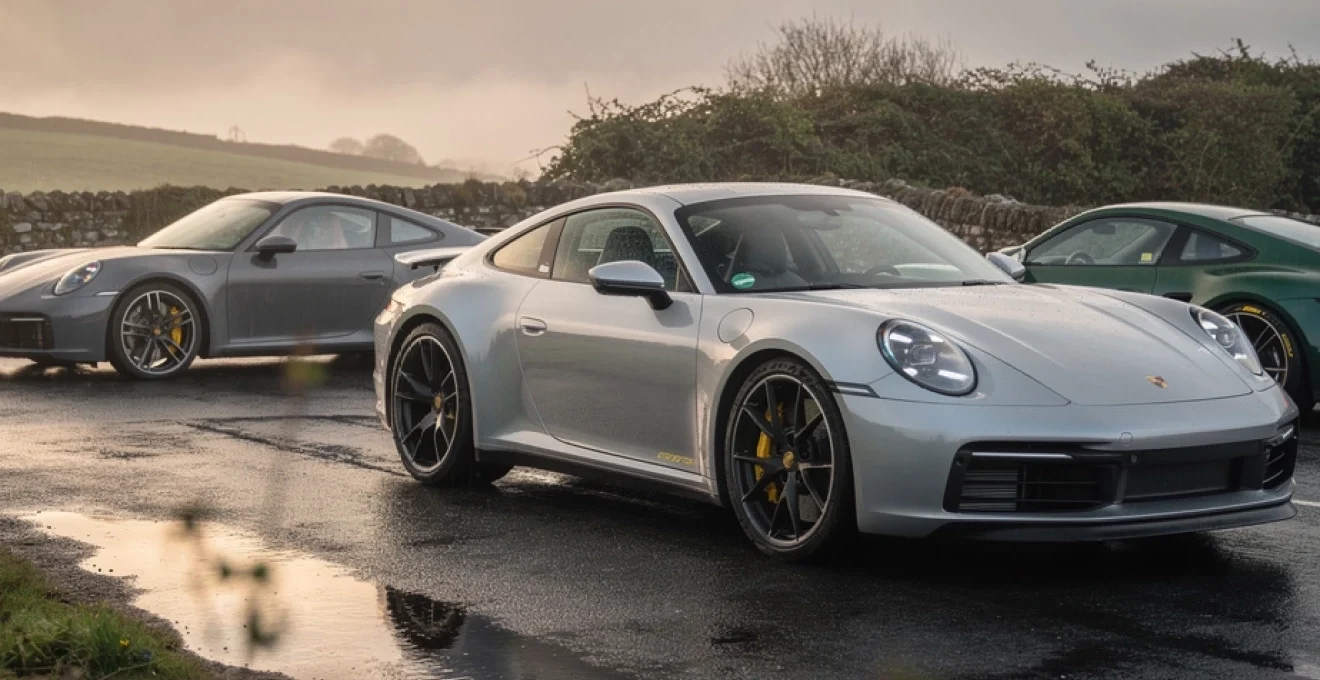
The 2025 Porsche 911 Coupe, known internally as the 992.2, arrives as a carefully judged evolution of one of the world’s most recognisable sports cars. Instead of tearing up the rulebook, Porsche has sharpened almost every element that matters to you as an enthusiastic driver: aerodynamics, powertrains, digital cockpit and day‑to‑day usability. The result is a 911 that feels even more focused, yet still usable on a wet Tuesday commute in the UK. For drivers considering a switch into a modern performance car with real heritage, the latest 911 Coupe offers a compelling blend of tradition and cutting‑edge technology that is difficult to replicate elsewhere.
Exterior design evolution of the 2025 porsche 911 coupe: bodywork, aero package and lighting signature
The 2025 Porsche 911 Coupe keeps the classic 911 silhouette but introduces a noticeably sharper, more technical look. The front and rear bumpers have been redesigned, LED Matrix headlights are now standard, and the rear light bar has been reworked to accentuate width and stance. For anyone familiar with the outgoing 992.1, the new car appears more planted, with stronger surfaces and bolder detailing. Design changes are not purely cosmetic; they serve aerodynamic, cooling and lighting functions that directly improve high‑speed stability and efficiency.
Reworked front and rear bumpers: wider intakes, integrated sensors and active cooling flaps
The new bumpers are among the easiest visual cues distinguishing the 992.2 from its predecessor. The front apron integrates larger, more purposeful cooling intakes, which are especially prominent on GTS models with their five vertical active cooling flaps per side. These flaps open under heavy load to feed more air to the radiators and close at cruising speeds to reduce drag and fuel consumption. Sensors for assistance systems are now neatly packaged in a high‑gloss panel beneath the number plate area, so you gain the benefits of modern driver aids without disrupting the clean front‑end styling.
At the rear, the bumper is simpler but more muscular, with a higher‑set number plate and a re‑profiled diffuser section. Integrated oval exhaust outlets on GTS models and reworked trims for Carrera and Carrera S clearly communicate where each model sits in the range. The design subtly draws inspiration from the Turbo and GT3 lines, giving the base 911 Coupe an undeniably serious presence when viewed on the road or in a showroom.
Revised LED matrix headlights and taillight light bar design on carrera, carrera S and GTS
Matrix LED headlights are now standard across the 2025 Porsche 911 Coupe range, combining all lighting functions into the classic 911 “bug eye” units. This frees the bumper from separate indicator strips and simplifies the frontal graphics. The optional HD Matrix system uses around 64,000 individually controlled pixels to shape the beam, masking out oncoming traffic while keeping the rest of the road illuminated. For night driving on unlit UK B‑roads, this level of precision lighting is a genuine performance upgrade rather than a simple gadget.
At the rear, a new full‑width light bar with integrated “PORSCHE” script makes the car appear lower and wider. The internals of the taillights have been redesigned to deliver a more three‑dimensional effect, and the lighting signature remains instantly recognisable in poor visibility. A transparent strip on GTS models emphasises the Coupe’s width even further, echoing track‑focused models without losing GT usability.
Aerodynamic optimisation: active rear spoiler, underbody airflow and drag coefficient targets
Underneath the styling tweaks lies a carefully honed aero package. The 2025 911 Coupe makes more extensive use of active elements than the 992.1, from the adaptive front flaps and underbody diffusers to the variable rear spoiler. At motorway speeds the rear wing deploys to increase downforce over the rear axle, while at very high speeds it adopts a specific angle to balance drag, stability and fuel use. When parked or at low speed, it retracts flush with the bodywork, preserving the iconic 911 profile.
Underbody airflow has been tidied with revised panels and additional guiding elements near the front axle. In effect, the flat floor acts like a subtle ground‑effect aid, smoothing airflow and improving stability in crosswinds. Exact Cd drag figures vary slightly by model and wheel package, but Porsche targets incremental reductions versus the 992.1 while maintaining sufficient cooling for the more powerful engines and, on the GTS, the hybrid hardware. For you as a driver, that translates to a 911 that feels even calmer and more locked‑in at an indicated 150 mph on a track day.
Wheel and tyre packages: 19/20-inch vs 20/21-inch fitment, centre-lock options and pirelli P zero spec
The standard wheel configuration for the 2025 911 Carrera Coupe continues with staggered diameters: 19‑inch front and 20‑inch rear. Carrera S and GTS models typically move to 20/21‑inch fitments, emphasising stance and allowing wider rear rubber for traction. Several new wheel designs arrive, including Exclusive Design wheels with optional carbon‑fibre aero blades that help shave drag and add a technical motorsport look.
Tyre choice remains critical to the 911’s balance. Most UK‑bound cars will ship on bespoke Porsche‑approved N‑rated Pirelli P Zero or equivalent ultra‑high‑performance tyres; optional all‑season or winter tyres are also calibrated for the latest PASM and stability‑control software. Centre‑lock wheels are generally reserved for track‑leaning models, but even on conventional five‑stud wheels, tyre and geometry settings are tuned to give predictable breakaway and superb front‑end bite in cool, damp conditions.
Paint to sample and SportDesign package: visual differentiation from 992.1 models
If you want a 2025 Porsche 911 Coupe that stands out from previous generations, factory customisation options go deeper than ever. The Paint to Sample programme offers an extended palette of heritage and modern shades, from subtle slate tones to bold Lugano Blue or the latest metallic yellows. These colours work brilliantly with the crisper surfacing of the 992.2, especially when paired with satin or high‑gloss wheel finishes.
Optional SportDesign packages add more aggressive front splitters, side skirts and unique rear bumper treatments. While the aero effects are modest on road, the visual impact is clear when the new 911 Coupe is parked alongside a 992.1. The combination of sharper details, modern lighting signatures and more assertive bodywork means your car will be instantly identifiable as the latest generation even to casual observers.
Powertrain and performance specs of the 2025 porsche 911 coupe (992.2)
Under the engine cover, the 2025 Porsche 911 Coupe continues to rely on the classic rear‑mounted flat‑six formula, but the details have moved forward. Both Carrera and Carrera S gain updated versions of the 3.0‑litre twin‑turbo engine, while the Carrera GTS introduces a performance‑focused hybrid system dubbed T‑Hybrid. The combination of higher output, sharper response and ever‑tighter emissions compliance shows how far Porsche is willing to push combustion technology before transitioning fully to electric sports cars.
Updated 3.0-litre twin-turbo flat-six: power, torque and rev range for carrera and carrera S
The entry 911 Carrera’s 3.0‑litre twin‑turbo flat‑six now produces around 388 hp and 331 lb ft, an increase of approximately 9 hp over the 992.1. Key hardware changes include a larger charge‑air cooler relocated above the engine and turbochargers previously reserved for the earlier GTS. The result is stronger mid‑range torque and a cleaner top‑end rush without sacrificing everyday drivability.
The Carrera S pushes output to roughly 473 hp while maintaining the same 3.0‑litre displacement. Revised turbochargers, optimised charge‑air plumbing and updated engine management contribute to the extra 30 hp. Peak power arrives near 6,500 rpm, but the engine is happiest when worked hard, providing that trademark flat‑six howl above 5,500 rpm. For fast road use, this balance of performance and refinement makes the Carrera S a sweet spot if you enjoy exploiting an engine’s full rev range on track or on a well‑sighted country road.
GTS hybrid assistance rumours: 48-volt system, e-turbo integration and performance projections
The headline mechanical change for 2025 is the adoption of a hybrid‑assisted powertrain in the Carrera GTS. Rather than a heavy plug‑in system, Porsche has introduced a compact, motorsport‑inspired layout using a 3.6‑litre flat‑six, an electrically driven turbocharger and an electric motor integrated into the eight‑speed PDK gearbox. Official figures quote system output at about 532 hp and 449 lb ft, with 0–62 mph in as little as 3.1 seconds for the GTS Coupe.
The electric turbocharger can spool independently of exhaust gas flow, effectively eliminating turbo lag and recovering up to 11 kW of energy via the exhaust stream under recuperation. A small 400‑volt traction battery, similar in size and weight to a conventional starter battery, stores up to 1.9 kWh of energy. This is performance hybridisation in its purest sense: the focus is on throttle response and acceleration rather than electric‑only running, and the overall weight gain for the GTS Coupe is kept to around 103 lb versus the outgoing car.
8-speed PDK calibration, optional 7-speed manual gearbox and launch control strategy
An eight‑speed dual‑clutch gearbox remains standard across the 2025 911 Coupe range. For the hybrid GTS, the PDK unit is reinforced to handle the extra torque and to house the integrated electric motor. Ratios from first to sixth remain relatively short for crisp acceleration, while seventh and eighth act as overdrive gears for refined, low‑rpm cruising. Shift speeds are effectively instantaneous, and updated software makes gearbox responses more predictive during spirited driving.
Manual transmission availability is reducing across the broader range; current indications suggest that a seven‑speed manual continues to be offered primarily on specific enthusiast‑orientated variants rather than every Coupe derivative. Launch Control, when combined with the Sport Chrono Package, delivers repeatable 0–62 mph runs by tightly managing engine torque, clutch slip and traction control. If you enjoy track days, the way Launch Control allows you to access the car’s full capability without mechanical sympathy concerns is genuinely impressive.
Performance metrics: 0–62 mph, top speed and nürburgring lap-time targets vs 992.1
Headline numbers for the 2025 Porsche 911 Coupe are predictably strong. The Carrera Coupe reaches 62 mph in around 3.9 seconds (3.7 seconds with Sport Chrono), with a top speed close to 183 mph, edging its predecessor by 0.1 seconds and 1 mph. The Carrera S further trims the sprint to roughly 3.1 seconds with Launch Control and tops out at around 191 mph. GTS models dive below the three‑second barrier and approach 194 mph, thanks to their hybrid‑assisted shove.
At the Nürburgring Nordschleife, internal development targets are understood to include several‑second improvements versus the 992.1 across comparable trims, largely due to better traction, more consistent brake performance and the hybrid’s instant torque fill. While exact lap times are often as much about tyre choice as power, expect the 992.2 Coupe to sit noticeably ahead of the outgoing generation when independent test data arrives.
Exhaust system tuning: sports exhaust, particulate filters and sound character in euro 7 context
The sound of a 911 remains central to its identity, even as Euro 7 and global noise regulations tighten. Standard exhaust systems have been retuned to retain a clean, mechanical flat‑six note with less booming at motorway speeds. Optional sports exhaust setups add freer‑flowing silencers and distinctive finishers, improving volume and character without breaching legal limits. The GTS models feature a GTS‑specific sports exhaust as standard.
All engines now rely on integrated petrol particulate filters and more advanced catalytic converters. These components sit closer to the engine to speed light‑off after cold starts and work in concert with finely controlled fuel injection to minimise emissions. For the driver, the main difference is a more cultured, higher‑frequency sound than some earlier 991‑era cars, but the 992.2 still offers a stirring soundtrack when fully extended in Sport or Sport Plus modes.
Chassis, handling and driving dynamics in the 2025 porsche 911 coupe
The 2025 911 Coupe continues to serve as a benchmark for sports‑car handling. The rear‑engined layout might sound old‑fashioned on paper, yet the combination of PASM adaptive suspension, revised steering, sophisticated stability software and carefully tuned tyres produces a level of agility and confidence few rivals can match. For UK buyers, particular attention has been paid to wet‑weather traction, high‑speed stability and ride quality on broken road surfaces.
PASM adaptive dampers, spring rates and ride-height options for UK roads
Porsche Active Suspension Management (PASM) comes as standard on the 2025 911 Coupe, using electronically controlled dampers with a broader spread between comfort and sport settings than before. On typical British roads, the softest modes smooth over expansion joints and potholes in a way that feels almost GT‑like, while firmer modes clamp down body movements when driving quickly across country.
On Carrera GTS models, a PASM Sport chassis lowers the ride height by approximately 10 mm and introduces shorter, stiffer springs and motorsport‑derived rear coils. While this setup is undeniably firmer, the damping sophistication means the car remains viable as a daily driver if you accept a tauter ride. For those regularly encountering steep driveways or speed bumps, the optional hydraulic front‑axle lift system raises the nose by around 40 mm at low speeds and can be programmed to operate automatically at specific GPS locations.
Rear-axle steering, torque vectoring and mechanical limited-slip differential setup
Rear‑axle steering becomes standard on GTS models and is available on Carrera S, enhancing both agility and stability. At low speeds, the rear wheels turn in the opposite direction to the fronts, effectively shortening the wheelbase and making tight manoeuvres or hairpins feel more compact. At higher speeds, the wheels steer in phase, increasing stability during fast lane changes and high‑speed cornering.
Porsche Torque Vectoring Plus uses controlled braking of the inside rear wheel, together with an electronically controlled mechanical limited‑slip differential, to send more torque to the outside rear tyre during cornering. The effect is a car that turns in more eagerly and can be steered subtly on the throttle without feeling nervous. If you value a 911 that feels both playful and secure on a damp Welsh mountain road, this integration of PTV+, PASM and rear‑axle steering is one of the key reasons the 992.2 feels so capable.
Brake systems: standard cast-iron discs vs porsche ceramic composite brakes (PCCB)
Braking hardware has been uprated across the 911 Coupe line‑up. The Carrera S now borrows the previous GTS brake package, with 16‑inch front and 15‑inch rear discs squeezed by aluminium monobloc calipers. Red calipers are standard on GTS, with black finishes available as an alternative for a more understated look. Brake cooling is enhanced by a switchable underbody ventilation channel that can prioritise aero efficiency or brake temperature control as conditions demand.
For heavy track use, Porsche Ceramic Composite Brakes (PCCB) remain the ultimate option. These lightweight carbon‑ceramic discs significantly reduce unsprung mass, improve fade resistance during repeated high‑speed stops and stay remarkably consistent even after long sessions. For everyday driving and occasional track days, the standard cast‑iron setup offers excellent performance and lower replacement costs, making it the pragmatic choice for most UK owners.
Steering feel improvements: electric power steering mapping and front-axle geometry tweaks
Electric power steering continues to evolve with each 911 generation, and the 2025 Coupe benefits from fresh calibration and minor geometry revisions at the front axle. The aim is simple: deliver more linear build‑up of effort around the straight‑ahead and greater texture through the rim as loads increase mid‑corner. In practice, the 992.2’s steering feels natural, precise and confidence‑inspiring, even compared with older hydraulic systems that purists often reference.
On UK back roads, this clarity allows you to place the car with millimetre accuracy, whether clipping an apex or avoiding a pothole. Combined with revised front‑end aero, the steering remains calm at motorway speeds and resists tramlining on rutted tarmac. If you are stepping up from a fast hatchback or saloon, the steering quality will likely be one of the most striking aspects of the 911 driving experience.
Tyre compounds and wet-weather calibration for british climate testing
Extensive testing in variable European climates, including the UK, has informed tyre and chassis calibration for the 2025 Porsche 911 Coupe. Summer‑biased ultra‑high‑performance tyres still underpin the dynamic character, but stability‑control and ABS tuning have been refined for wet and cold conditions. The aim is to give you the confidence to enjoy the car year‑round, not just on warm, dry days.
Specific compounds offer a broader temperature operating window, providing useful grip even when ambient conditions hover around 5°C. In wet mode, the car’s electronics pre‑emptively adjust throttle mapping, gearbox strategy and differential locking to reduce sudden weight transfers and wheelspin. If you have experienced earlier 911s that felt spiky in the rain, the 992.2’s behaviour in poor weather marks a clear step forward.
Interior, infotainment and digital cockpit upgrades in the 2025 porsche 911 coupe
Inside, the 2025 911 Coupe blends familiar architecture with a more digital, connected experience. The dashboard remains subtly driver‑oriented, but the instrument cluster is now fully digital, and the infotainment system supports native apps and video streaming when parked. The cabin still feels like a sports car cockpit first and a luxury GT second, which suits the 911’s character perfectly.
Reconfigured instrument cluster: fully digital dials, central rev counter and custom drive modes
The traditional mixture of analogue and digital dials has been replaced by a 12.6‑inch curved, fully digital instrument cluster. Yet Porsche has wisely retained a centrally positioned virtual rev counter, preserving the classic 911 “five‑tube” aesthetic in one of the selectable layouts. Other views can prioritise navigation, hybrid energy flow (on GTS), or a reduced Sport Chrono screen for track use.
Customisable drive modes allow you to define not only throttle and gearbox behaviour but also damper firmness, exhaust valve status and, in hybrid models, energy deployment strategies. Using the steering‑wheel‑mounted mode switch, you can toggle quickly between an everyday Comfort setup and a more aggressive Sport Plus configuration without hunting through sub‑menus.
Porsche communication management (PCM) software, online navigation and apple CarPlay integration
The latest generation of Porsche Communication Management (PCM) runs on a 10.9‑inch central touchscreen with faster processing and cleaner graphics. Online navigation uses real‑time traffic data and dynamic rerouting to keep journey times down, while native Spotify, Apple Music and video streaming apps reduce dependence on a connected smartphone. For iPhone users, Apple CarPlay enjoys deeper integration than before, with select functions mirrored into the instrument cluster and accessible via voice using Siri.
Logging into PCM with a Porsche ID is now simplified using a QR‑code system, allowing you to carry personal settings between vehicles. Over‑the‑air updates keep maps and software current, reducing dealership visits. For daily use in the UK, where congestion and route‑planning can be complicated, the combination of online services and crisp, responsive interaction makes the system feel genuinely modern rather than a token addition.
Sports seats, seating position and optional adaptive sports seats plus for track use
The 2025 911 Coupe continues to deliver a low, focused driving position with excellent visibility over the front wings. Standard sports seats offer plenty of adjustment and strong lateral support without being overly tight. For more committed drivers, Adaptive Sports Seats Plus add multi‑way electric adjustment, enhanced bolstering and memory functions, making it easier for multiple drivers to share the car while maintaining their perfect setup.
If regular track days are part of your ownership plan, fixed‑back bucket seats or lightweight options help lower the driving position further and save weight. The rear seats remain available as a no‑cost option on the Coupe, although two‑seat configuration is standard to shave a few kilos and underline the car’s sports‑car focus. Those rear chairs are still perfectly adequate for children or occasional adults on short journeys, which keeps the 911 surprisingly practical.
Material choices: Race-Tex, extended leather and lightweight interior packages
Material choice has a major influence on the perceived character of the cabin. Extended leather packages now cover more of the upper dashboard, door tops and rear compartments, creating a richer, more cocooned environment. New colour combinations, such as black with Cognac or classic black and red, give you the opportunity to tailor the ambience towards understated luxury or motorsport‑inspired drama.
Race‑Tex, Porsche’s suede‑like microfibre, can be specified for the steering wheel, seat centres, headlining and door panels, improving grip and giving a purposeful, race‑car feel. Lightweight interior packages remove heavy sound‑deadening, fit thinner glass and replace some storage components with simpler panels. If you are chasing lap times or simply enjoy a more mechanical, less filtered experience, these options lend the car a more focused personality without compromising overall build quality.
Driver assistance systems: adaptive cruise control, lane-keep assist and traffic jam pilot features
Although the 911 remains a driver’s car at heart, the 2025 Coupe offers a full suite of assistance technologies to reduce fatigue on long journeys. Standard equipment typically includes ParkAssist with reversing camera, Lane Keeping Assist, cruise control, traffic sign recognition and drowsiness detection. Optional systems such as adaptive cruise control with stop‑and‑go and more advanced lane‑centring functions move the car closer to a “traffic jam pilot” capability in heavy congestion.
Crucially, these features are calibrated to intervene subtly, preserving a natural driving feel. You remain in charge, but the car can manage repetitive throttle and brake inputs on the M25 or M1, freeing mental bandwidth. Settings are easily configurable via the steering‑wheel controls and PCM, allowing you to tailor how much help you want on any given journey.
Trim levels, options and pricing strategy for the 2025 porsche 911 coupe in the UK
For UK buyers, understanding the 2025 Porsche 911 Coupe range is as much about specification strategy as it is about raw performance. The Carrera, Carrera S and GTS each target a different type of driver, and the options list remains extensive. Taking time to configure the right car for your use case—whether that is daily commuting, occasional touring or intensive track work—has a direct impact on both driving satisfaction and long‑term residual values.
Model range overview: carrera, carrera S and GTS coupe at launch
At launch, the 992.2 Coupe line‑up centres on three core trims. The 911 Carrera serves as the entry point, with rear‑wheel drive, the updated 3.0‑litre twin‑turbo engine and PASM suspension. It is far from basic; performance, equipment levels and interior quality all remain firmly premium. For many drivers, especially those new to the brand, the Carrera offers more than enough performance and dynamic ability.
The 911 Carrera S builds on this with more power, larger brakes and expanded standard equipment including a sport exhaust. It remains rear‑drive but delivers a measurable step in urgency and track pace. The 911 Carrera GTS, topping the initial range, adds the hybrid‑assisted 3.6‑litre engine, PASM Sport chassis, rear‑axle steering as standard and a more overtly sporting character. For those seeking the most advanced 911 Coupe short of Turbo or GT models, the GTS is the halo option.
Sport chrono package, lightweight package and aero kits as performance-focused options
Certain option bundles are particularly important for performance‑minded UK buyers. The Sport Chrono Package adds a steering‑wheel mode dial, dynamic engine mounts, an overboost function for Launch Control and additional display pages in the digital cluster for lap timing and performance metrics. For anyone planning track time, Sport Chrono is strongly recommended, as it unlocks the car’s full acceleration potential.
The Lightweight Package (where available) removes rear seats, reduces sound insulation, introduces lightweight glass and can combine with specific wheels and interior trim to cut significant kilos. Aero kits, including fixed rear wings and deeper splitters, further sharpen the car on circuit by increasing downforce and reducing lift at high speed. The effect on resale can also be positive, as well‑specified, focused cars tend to attract keen enthusiasts on the used market.
UK pricing projections, PCP finance examples and residual value expectations
Indicative UK pricing follows the pattern set by US figures. The 2025 911 Carrera Coupe sits just above £100,000 once currency and local taxes are factored in, with the Carrera S and GTS climbing progressively higher. Compared with the outgoing 992.1, list prices have increased, but so too have standard equipment levels, brake size and interior specification. From a value perspective, the uplift is not purely cosmetic.
Personal Contract Purchase (PCP) remains a popular route into 911 ownership. Strong residual values—traditionally among the best in the segment—help keep monthly payments competitive relative to list price. As an example, a well‑specified Carrera S might retain 55–60% of its value after three years and 30,000 miles, depending on market conditions, colour and option choices. Selecting timeless paint colours, sports seats, Sport Chrono and sensible wheel options tends to protect residuals and makes your car more attractive to the next buyer.
Personalisation via porsche exclusive manufaktur: bespoke colours, stitching and trims
Porsche Exclusive Manufaktur offers almost limitless possibilities if you want a 911 Coupe that feels genuinely individual. Beyond Paint to Sample, you can specify contrasting interior stitching, embossed crests in the headrests, coloured seatbelts, carbon‑fibre or open‑pore wood trims and even personalised interior plaques. For many owners, this level of tailoring is part of the appeal, turning a high‑performance sports car into a personal statement.
From a professional standpoint, thoughtful personalisation tends to hold its value better than overly experimental choices. Subtle contrast stitching, tasteful two‑tone leather and discreet exterior accents can make your car stand out without alienating future buyers. Conversely, highly specific taste choices may take longer to sell, even if they are deeply satisfying on a personal level.
Comparison with rivals: 2025 jaguar F-Type successor, aston martin vantage and BMW M4 competition
In the 2025 performance‑car landscape, the 911 Coupe continues to face strong competition. The forthcoming Jaguar F‑Type successor is expected to lean heavily into electrification, while the latest Aston Martin Vantage majors on front‑engined GT drama and a twin‑turbo V8 soundtrack. The BMW M4 Competition offers coupé practicality and brutal straight‑line pace, particularly in xDrive form.
Yet the Porsche 911 occupies a unique niche. Few cars blend such a compact footprint, usable 2+2 seating, everyday refinement and track‑ready dynamics in one package. If you value steering precision, brake feel and a sense of mechanical cohesion above raw numbers alone, the 2025 Porsche 911 Coupe remains an exceptionally compelling choice—especially in the UK, where narrow roads and mixed weather reward a car engineered so precisely around control, feedback and driver confidence.