
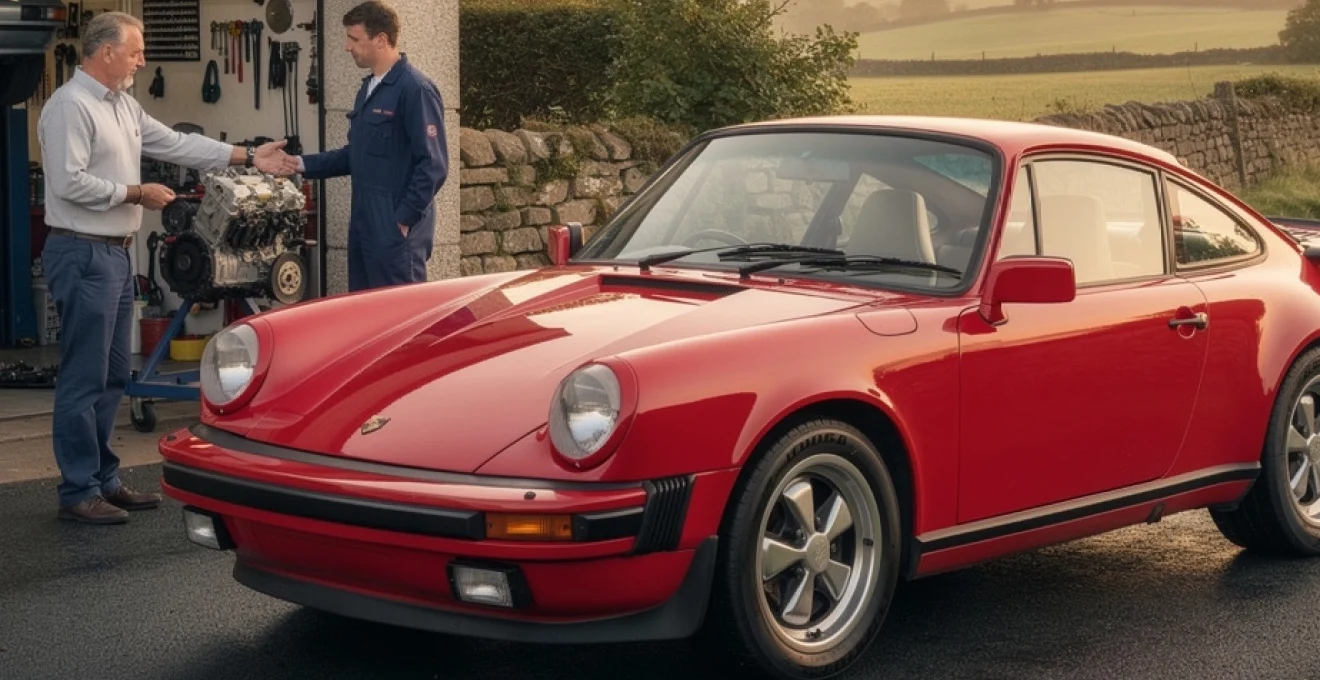
The mid‑1980s marked a turning point for the air‑cooled 911. Emissions rules, safety legislation and changing customer expectations were forcing sports cars to soften, yet the so‑called 1986 Porsche 911 SC retained the raw, mechanical feel that enthusiasts still chase today. Sitting deep in the impact‑bumper era, the 1986 model year bridges the gap between the earlier, purist 3.0‑litre SC and the more mature 3.2 Carrera, combining old‑school feedback with genuine everyday usability. If you are looking at a car from this year in the UK market, you are effectively considering the last fully analogue interpretation of the classic 911 shape before ABS, power steering and more electronic aids changed the driving experience for good.
Understanding where the 1986 car fits in the wider G‑Series story helps you buy, maintain and enjoy one with confidence. The terminology around SC, Carrera, chassis codes and engines can be confusing, especially as many cars are casually described using period nicknames rather than strict factory designations. For anyone searching for a usable classic that still feels alive on British B‑roads, a correctly understood and well‑sorted 1986 911 is one of the most rewarding options available.
1986 porsche 911 SC market positioning and model year specifics in the 911 G‑Series timeline
Transition from 3.0 SC to 3.2 carrera: clarifying terminology and chassis codes for 1986 models
Strictly speaking, Porsche stopped using the official 911 SC badge after the 1983 model year. From 1984 onwards, the naturally aspirated impact‑bumper cars were badged Carrera 3.2. However, many enthusiasts and dealers still refer to mid‑’80s cars as “SC‑shape” or even “SC” because they share the same G‑Series impact‑bumper platform introduced in 1974. When someone mentions a “1986 911 SC”, they usually mean a 1986 3.2 Carrera built on the G‑body shell, not the earlier 3.0‑litre SC.
All 1986 cars sit firmly inside the second‑generation 911 (G‑Series) timeline, which ran from 1974 to 1989. Chassis numbers for 1986 Carrera coupés start approximately in the WP0ZZZ91ZGS1xxxxx range for Rest‑of‑World (RoW) markets, with UK right‑hand‑drive examples following the same global pattern but with market‑specific option mixes. This makes 1986 a late‑period impact‑bumper year: the car retains torsion‑bar suspension and unassisted steering but benefits from years of incremental improvements in rust protection, cooling and cabin ergonomics.
Key differences between 1986 SC‑labelled cars and earlier 1978–1983 porsche 911 SC variants
If you are cross‑shopping an early 3.0 SC (1978–1983) with a 1986 “SC‑shape” Carrera 3.2, the headline change is the engine. The earlier car uses a 3.0‑litre flat‑six with Bosch K‑Jetronic CIS injection, while the later version uses the 3.2‑litre Motronic‑controlled unit derived from the same architecture but with a longer‑stroke crankshaft and higher compression. Power rose from 204 hp in the final European 3.0 SCs to 231 hp in RoW Carrera 3.2s, with torque delivery feeling broader and more relaxed in everyday driving.
Visually, a casual observer sees very little difference. Detail updates such as integrated front foglights, relocated aerial, slightly revised interior ventilation and seat rail height changes arrived by 1986, but the core silhouette stays the same. Mechanically, the later car also gained marginally larger brake discs and, from 1986, improved ventilation and slightly lower front seat rails that offer a subtly better driving position, particularly for taller drivers.
1986 production numbers, VIN ranges and regional specifications (RoW vs UK vs US)
Across the impact‑bumper era, Porsche built more than 193,000 G‑Series 911s, with around 76,000 of those being 3.2 Carreras between 1984 and 1989. For 1986 model‑year production specifically, global output of Carrera coupé, Targa and Cabriolet variants sits in the low‑tens‑of‑thousands, with coupés still forming the majority. UK‑delivered right‑hand‑drive numbers are a fraction of this, which explains why clean, original 1986 cars in the UK are now strongly sought after.
Regional specification plays a big role in how an individual 1986 car feels. RoW and UK cars typically enjoy the full 231 hp output thanks to higher compression ratios and fewer emissions constraints. US‑spec examples are detuned to around 217 hp with different exhaust layouts, catalytic converters and Motronic mapping. VIN decoding, combined with option code plates and service history, allows you to confirm exactly which configuration you are looking at, including market‑specific features such as headlamp types and speedometer units.
Factory option codes (m‑codes) most commonly found on 1986 porsche 911 SC examples
Factory option codes, often called M‑codes, help you understand how a 1986 911 left Stuttgart. On UK‑market cars, frequent options include M220 limited‑slip differential, M470 or M473 front and rear spoilers, air conditioning, electric seats and various audio packages. Some cars were specified with the desirable M491 “Turbo Look” wide‑body package, which added Turbo‑style flared arches, brakes and suspension without the turbocharged engine.
A typical UK coupé might combine sport seats, electric windows, sunroof and the valuable LSD option. When you inspect a car, cross‑checking the option sticker under the bonnet or in the service book against the physical equipment is a simple way to identify later changes. Enthusiasts often consider well‑chosen options that improve the driving experience, such as M220 LSD, to be value‑enhancing, while heavy luxury packs that add weight but little driver benefit are sometimes viewed less favourably.
Air‑cooled flat‑six engineering: 3.0 and 3.2‑litre boxer engine architecture in the 1986 porsche 911 SC
Magnesium vs aluminium crankcase construction and impacts on reliability and rebuild strategy
The impact‑bumper era saw a move from magnesium to aluminium crankcases. Early 2.7‑litre cars used a magnesium case that saved weight but proved marginal when paired with rising power outputs and heat from stricter emissions equipment. By the time of the 3.0 SC and the later 3.2‑litre engine found in 1986 cars, Porsche had switched to a stronger aluminium case. For you, that translates into better long‑term stability, less risk of distortion and a more robust foundation for high‑mileage use or performance upgrades.
During an engine rebuild, aluminium cases tolerate machining and line‑boring more gracefully than magnesium. Specialists often report 3.0 and 3.2 engines covering 200,000 km or more before needing a full bottom‑end overhaul, provided oil changes and valve clearance checks have been respected. If you are budgeting for a long‑term ownership plan, an aluminium‑cased 3.2 from 1986 is usually a safer bet than an early 2.7, especially when considering the cost of rectifying past overheating or poor maintenance.
Bosch K‑Jetronic CIS vs bosch motronic fuel injection calibration on mid‑80s 911 engines
The earlier SC’s Bosch K‑Jetronic CIS system is a mechanical‑continuous fuel injection setup that meters fuel based on airflow. It is durable and relatively simple once understood, but fine‑tuning for emissions and performance can be time‑consuming. By 1986, the Carrera’s 3.2‑litre engine used Bosch Motronic, combining digital ignition and fuel control in a single electronic control unit. Think of Motronic as the brain coordinating spark and fuel more precisely, improving both economy and drivability.
This change has real‑world benefits. Cold starting, idle quality and part‑throttle response are generally superior on a healthy Motronic‑equipped 3.2. It also unlocks the possibility of OEM+ ECU remapping for fast‑road use, something not available on the purely mechanical CIS. If you enjoy tweaking your car while keeping it road‑friendly, a 1986 engine with Motronic gives far more flexibility than the older system.
Compression ratios, camshaft profiles and power outputs for UK‑spec 1986 911 SC models
UK‑spec 1986 Carreras benefit from the higher 10.3:1 compression ratio used on RoW cars, compared with the lower figures found in US‑spec engines. Combined with slightly revised combustion chambers and the longer 74.4 mm crankshaft borrowed from the 3.3‑litre Turbo, the result is 231 hp at around 5,900 rpm and a strong 284 Nm of torque. Camshaft profiles remain relatively mild compared to more aggressive racing grinds, giving a broad torque band that works well on tight B‑roads.
Performance figures reflect this balance. Period tests quoted 0–60 mph in around 5.5–6.0 seconds and a top speed close to 150 mph for the 3.2 Carrera, depending on specification and test conditions. For context, many modern hot hatchbacks only just match these numbers, yet the 911 delivers them with a lighter kerb weight, around 1,150–1,250 kg depending on options, and far more mechanical involvement.
Common failure points: head stud issues, valve guide wear and oil leaks around the timing chain housings
No air‑cooled flat‑six is completely free of weaknesses. Across both 3.0 and 3.2 engines, head stud problems are a recurring theme. Early engines used Dilavar lower studs that can corrode and snap over time, particularly in damp climates. A pre‑purchase inspection should always include checking for broken studs and, ideally, confirmation that upgraded steel or later‑spec Dilavar items have been fitted during a rebuild.
Valve guide wear is another concern on 3.2s, especially cars used mainly for short journeys. Blue smoke on overrun and high oil consumption can indicate worn guides. Oil leaks around the timing chain housings, rocker covers and crankshaft seals are also common but usually manageable. A dry engine on a 1986 car is almost suspicious; light misting is acceptable, but significant drips on the driveway can suggest deferred maintenance or poor‑quality past work.
Performance upgrades: SSI heat exchangers, sport exhausts and OEM+ ECU mapping for road use
Sensible performance upgrades can sharpen a 1986 911 without ruining its character. Many owners fit SSI stainless‑steel heat exchangers that mimic the freer‑flowing pre‑1974 exhaust layout. On a 3.0 SC, SSIs plus a suitable sport exhaust and mild camshaft tweak can liberate around 20 hp, taking a 204 hp engine close to 225 hp. On a 3.2, gains are usually smaller in absolute terms, but throttle response and mid‑range pull feel noticeably crisper.
One of the most cost‑effective modifications on a Motronic‑equipped 3.2 is OEM+ ECU remapping. Carefully calibrated chips can add around 15–20 hp at the top end and fatten the torque curve in the 3,000–5,000 rpm band, exactly where you spend most time on the road. The key is to work with a reputable tuner who understands air‑cooled engines; chasing big peak numbers at the expense of drivability and reliability rarely makes sense for a dual‑purpose road car.
915 gearbox and drivetrain characteristics in the 1986 porsche 911 SC
915 manual transmission design, gear ratios and synchroniser technology compared with G50
The 915 gearbox is one of the defining mechanical features of earlier impact‑bumper 911s. Although many 3.2 Carreras from 1987 onwards gained the later G50 transmission, 1986 cars still used the 915 five‑speed. This ‘box employs Porsche‑type synchronisers and relatively long gearing, designed to balance motorway refinement with lively acceleration. Critics sometimes describe the shift as vague or obstructive, but in truth a 915 in good health rewards a deliberate, unhurried technique.
Compared with the G50, the 915 is lighter and slightly more compact, contributing to the classic feel of mid‑’80s cars. Its synchro design demands proper oil choice and precise linkage adjustment, but once set up it offers a period‑correct, mechanical experience that many enthusiasts prefer. If you expect a modern, rifle‑bolt change, the 915 may initially feel alien; treat it as part of the car’s personality and it makes far more sense.
Clutch actuation, cable mechanism and pedal box feel in right‑hand‑drive UK cars
Unlike the later G50 with its hydraulic clutch, the 915 uses a cable‑operated mechanism. Pedal effort is higher than many modern cars, especially in stop‑start traffic, but the feedback through the pedal is excellent. Right‑hand‑drive UK cars package the pedal box in a slightly offset position, which surprises some first‑time drivers. After a few miles, the layout becomes second nature and actually contributes to the distinctive driving position that owners grow to love.
A correctly adjusted cable clutch should engage smoothly and progressively, with no judder or graunch. If you notice a very heavy pedal, difficulty selecting gears when stationary or a biting point on the floor, budget for cable, omega‑spring or clutch assembly work. None of this is catastrophic, but neglect can accelerate synchro wear and make town driving unnecessarily tiring.
Limited‑slip differential (LSD) options, final drive ratios and impact on acceleration
Many UK‑market 1986 cars were specified with the optional M220 limited‑slip differential. On a rear‑engined 911, an LSD transforms traction out of tight bends and makes the car far more predictable when exiting slow corners in the wet. For spirited B‑road use or track days, an LSD‑equipped 915 gearbox is highly desirable, improving both lap times and driver confidence.
Final drive ratios on standard 915s aim at a compromise between acceleration and relaxed cruising. A stock 3.2 Carrera with 915 will typically turn just under 3,000 rpm at 70 mph in top gear, keeping motorway noise reasonable while still allowing strong in‑gear response. Shorter final drives are sometimes used in modified or club‑sport builds, but for mixed road use the factory gearing remains hard to beat.
Typical 915 gearbox wear patterns: second‑gear synchro, shift linkage bushes and oil choice
When assessing a 1986 car, pay close attention to the gearbox. The classic tell‑tale sign of 915 wear is baulking or crunching when selecting second gear, especially on a fast 1–2 upshift when the oil is cold. This usually points to worn synchro rings and dog teeth. While rebuilds are straightforward for a specialist, costs can easily run into four‑figure territory, so a smooth‑shifting car is worth a premium.
Happily, some shift quality issues are far cheaper to address. Perished linkage bushes, a poorly adjusted gear lever or incorrect oil can all make a healthy 915 feel worse than it is. Using the right GL‑5 spec oil recommended by experienced 911 specialists, then renewing the bushes and correctly setting the linkage, often transforms the shift feel. It is one of the most satisfying maintenance jobs you can do on a mid‑’80s 911.
Chassis dynamics: torsion‑bar suspension, steering and braking on a 1986 porsche 911 SC
Front MacPherson struts, rear trailing arms and torsion bar sizing on standard UK‑market cars
The 1986 911 retains the classic torsion‑bar suspension layout. At the front, MacPherson struts work alongside longitudinal torsion bars, while at the rear, semi‑trailing arms carry transverse torsion bars. Standard UK‑market cars typically use front torsion bars in the 19 mm range and rears around 24–25 mm, giving a compliant ride with enough roll resistance for brisk road driving. This setup, combined with the rear‑engine weight distribution, delivers the distinctive 911 balance: light steering, eager turn‑in and strong traction out of bends.
For everyday use on mixed UK roads, the stock spring rates are well chosen. They allow the tyres to maintain contact over broken surfaces, an area where many modern, stiffly sprung performance cars struggle. If you are planning mainly fast‑road rather than track use, there is rarely a need to go dramatically stiffer; subtle upgrades work better than race‑car levels of firmness.
Bilstein vs boge dampers, anti‑roll bar diameters and factory M474 ‘sport’ suspension options
Many 1986 cars left the factory with Boge dampers as standard, while Bilstein gas‑pressure units appeared either as an option or as part of the M474 Sport suspension package. The latter also brought slightly thicker anti‑roll bars and, in some cases, different ride heights and alignment settings. On a used car, dampers are often long past their best; replacing tired originals with fresh Bilsteins is one of the single biggest improvements you can make.
Anti‑roll bar diameters increased subtly through the G‑Series run to help manage rising kerb weights. A typical mid‑’80s car uses front bars around 20 mm and rears around 18 mm, though exact sizes vary by market and option pack. Matching bar sizes to torsion bar rates is important; overly stiff anti‑roll bars on soft springs can lead to twitchy breakaway characteristics that make the car harder to read at the limit.
Unassisted rack‑and‑pinion steering feel, front axle geometry and bump‑steer correction
One highlight of any 1986 911 is the unassisted rack‑and‑pinion steering. With no power assistance, feedback flows directly through the wheel, giving you a granular sense of grip levels at both ends. On a typical British B‑road, this makes the car feel alive at sensible speeds, something many electrically assisted modern systems struggle to replicate. The trade‑off is heavier parking‑lot manoeuvring, but most owners consider that a small price to pay.
Front axle geometry is sensitive to ride height changes. Lowering a G‑Series car without correcting for bump‑steer can introduce nervousness over mid‑corner bumps. Good specialists fit steering rack spacers or adjustable track‑rod ends to restore correct steering arm angles, preserving stability. If you are buying a lowered 1986 911, ask who set the geometry and whether any bump‑steer correction has been carried out.
Brembo brake calipers, solid vs vented discs and fade resistance on road and track
Brakes on 1986 Carreras use four‑piston Brembo‑type calipers with vented discs all round. Compared with earlier solid‑disc cars, the vented setup offers significantly better heat dissipation and fade resistance. For spirited B‑road driving on modern performance pads and fresh fluid, braking performance is more than adequate, even by contemporary standards. Period road tests consistently praised the 911’s ability to stop as hard as it could go, and that remains true today when the system is maintained correctly.
On track, sustained heavy use will eventually reveal the limits of disc size and cooling, but upgrades such as high‑boiling‑point brake fluid, braided hoses and ducting can extend fade‑free operation. Drilled or grooved discs are popular, although the real gains often come from pad compound choice. For most UK owners, a high‑quality fast‑road pad is the best balance between bite, longevity and noise.
Popular suspension upgrades: corner‑weighting, poly‑bushes and geometry set‑ups for fast road driving
Chasing the perfect fast‑road setup for a 1986 911 often starts with the basics. Renewing tired rubber bushes, fitting quality dampers and then having the car professionally aligned and corner‑weighted transforms stability and turn‑in. Corner‑weighting ensures each wheel carries an appropriate share of the load, improving both balance and braking performance. It is especially useful on cars used for occasional track days.
Polyurethane bushes are frequently fitted in place of rubber. When used selectively—such as in anti‑roll bar mounts rather than engine and gearbox mounts—they sharpen responses without adding excessive noise or harshness. Asking a specialist to set up the geometry for “fast road” rather than “track only” keeps the car friendly in mixed conditions, especially on bumpy, cambered B‑roads that can expose overly aggressive camber or toe settings.
Exterior design and bodywork: impact‑bumper aesthetics and corrosion hotspots on the 1986 911 SC
Impact bumper architecture, bellows design and changes from pre‑’74 long‑bonnet 911s
The visual hallmark of the G‑Series era is the impact‑bumper design introduced for 1974. To meet US 5 mph crash regulations without destroying the 911’s proportions, Porsche engineered energy‑absorbing aluminium bumpers mounted on telescopic impact tubes, with black rubber bellows bridging the gap to the body. By 1986 the execution was fully resolved, with integrated front foglights and neatly blended rear overriders.
Compared with the slender chrome‑bumpered, long‑bonnet cars of the pre‑’74 era, the 1986 911 looks more muscular and planted. Many enthusiasts now consider this shape the definitive classic 911 silhouette: wide‑shouldered but still compact, with the iconic round headlamps and sloping engine cover. If you appreciate tradition mixed with subtle modernisation, the 1986 impact‑bumper aesthetic is hard to beat.
Wheel options: 15‑inch and 16‑inch fuchs alloys, offset specifications and tyre fitments
Factory wheels on 1986 cars were typically forged Fuchs alloys in 15‑inch or 16‑inch diameters. A common UK‑market setup is 6Jx16 front and 7Jx16 rear, wearing 205/55 R16 and 225/50 R16 tyres respectively. The low unsprung weight of forged Fuchs contributes to the car’s supple ride and sharp steering, and the black‑centre, polished‑rim look has become synonymous with classic 911s.
Offset specifications are important when considering aftermarket alternatives. Incorrect offsets can upset steering feel, introduce tramlining or cause rubbing on inner arches. If you are buying a car on non‑factory wheels, confirm that the tyre sizes and offsets respect Porsche’s original geometry. Returning a modified car to period‑correct Fuchs often improves both drivability and resale appeal.
Rust‑prone areas: kidney bowls, sills, inner wings, screen surrounds and front pan
Although Porsche introduced full body galvanising in the mid‑1970s, no 1986 shell is completely immune to rust. Critical areas include the so‑called kidney bowls (behind the rear quarter panels), outer and inner sills, front suspension pan, inner wings and the lower corners of the windscreen and rear screen apertures. Water traps behind trim and sound‑deadening can hide corrosion until it is advanced.
During an inspection, tap gently around the kidney bowl areas, look for bubbling under window seals and examine the front pan from underneath for patches or fresh underseal. A recent respray is not necessarily a bad sign, but mismatched textures, overspray on seals and uneven panel gaps can flag previous accident damage or poor‑quality repairs. High‑quality metalwork is expensive, so a structurally sound but cosmetically imperfect car can be a smarter buy than a freshly painted example with questionable history.
Factory colours and paint codes for 1986, including guards red, grand prix white and baltic blue
Colour has a noticeable impact on both desirability and resale value. Popular 1986 shades include Guards Red (L027), Grand Prix White (L908) and Baltic Blue Metallic, alongside classic silvers and blacks. Period brochures also offered more unusual hues, and Porsche’s special‑order programme allowed buyers to specify almost any paint on request.
The paint code sticker, usually found under the bonnet, confirms the original colour. While a high‑quality colour change is not automatically a deal‑breaker, collectors often prefer cars still wearing their factory shade. If you are buying primarily as an investment, matching colour, interior trim and options to the Certificate of Authenticity can significantly strengthen the car’s provenance.
Body styles in 1986: coupé, targa and cabriolet shell rigidity and NVH considerations
In 1986 Porsche offered three body styles: coupé, Targa and Cabriolet. The coupé remains the benchmark for torsional rigidity, lightness and low noise, making it the purist’s choice for hard driving. The Targa, with its removable roof panel and wraparound rear glass, offers open‑air motoring with more structural stiffness than a full cabriolet, though some scuttle shake and wind noise are inevitable.
The Cabriolet, introduced only a few years earlier, was a commercial success and brought the 911 to a new audience. However, its additional reinforcement adds weight, and the fabric roof cannot match the coupé’s refinement or security. If your priority is precise handling and minimal NVH, a coupé is the best fit; if you value roof‑down driving above all, a well‑sorted Targa or Cabriolet delivers a uniquely charismatic experience.
Originality, documentation and provenance when buying a 1986 porsche 911 SC in the UK
Matching‑numbers verification using engine and gearbox serials and porsche certificate of authenticity
For UK buyers, confirming matching numbers is a key step in assessing a 1986 911’s value. The engine and gearbox have stamped serial numbers that should correspond to the build data. A Porsche Certificate of Authenticity or similar factory documentation can verify the original engine and transmission numbers, build date, colour and option codes. Matching numbers do not automatically make a car better to drive, but they generally increase collectability.
Evidence of original engine and gearbox, combined with clear factory records, is often the strongest indicator that a 911 has led a careful life rather than a hard and anonymous one.
If the car has had a replacement engine or transmission, documentation of who supplied and fitted it, and why, becomes crucial. A professionally rebuilt period‑correct unit can still be excellent, but the price should reflect the departure from factory specification. For long‑term investment, originality usually wins.
Service history standards: OPC vs independent specialist stamps and key maintenance intervals
By now, very few 1986 911s enjoy a continuous Official Porsche Centre (OPC) history. That is not a problem. In many cases, a thick folder of invoices from respected independent specialists is more meaningful than sparse main‑dealer stamps. Look for evidence of regular oil changes, valve clearance adjustments, brake fluid renewals and attention to the timing chain tensioners.
Typical service intervals are every 12,000 miles or annually, whichever comes first, with valve clearances checked at around 24,000‑mile intervals. A well‑documented top‑end rebuild at 90,000–130,000 miles, addressing valve guides and head studs, is a positive sign rather than a negative. If the paperwork seems thin for the last decade, budget for a thorough baseline service once you take ownership.
Identifying accident damage and poor restorations via panel gaps, overspray and jig reports
Given their age, many 1986 cars have seen paintwork or body repairs. The question is not whether work has been done, but how well it was executed. Examine panel gaps around doors, bonnet and engine lid; they should be reasonably consistent, allowing for period production tolerances. Uneven gaps, especially combined with fresh paint, can suggest past accident damage.
Overspray on trim, seals or wheelarches is a sign of rushed work. Where possible, inspect the car on a lift, looking for ripples in the floorpan or evidence of chassis pulling. Some high‑end restorations come with jig reports showing measurements against factory specifications; these documents are valuable when you are paying top money for a supposedly immaculate example.
Impact of non‑OEM modifications on collectability and valuation in the UK classic car market
Non‑OEM modifications are common on 1986 911s, reflecting decades of changing tastes. Popular changes include aftermarket exhausts, lowered suspension, different wheels or interior retrims. From a driving perspective, many of these can be improvements, but collectors often value originality most highly. The UK market tends to reward cars that retain factory appearance, wheels and ride height, especially if combined with original paint and interior.
As a rule of thumb, reversible “OEM+” upgrades that respect the car’s character can add appeal, while irreversible changes or heavy customisation narrow the future buyer pool.
If you are looking mainly for an engaging driver’s car rather than a concours queen, a sympathetically modified 1986 911 can offer better value. Just factor in the potential cost of sourcing original parts if you later decide to return the car to stock configuration.
Driving experience and performance of the 1986 porsche 911 SC on british b‑roads
Real‑world acceleration, in‑gear performance and braking distances compared with modern sports cars
On paper, a 1986 Carrera 3.2 is matched or out‑gunned by many modern hot hatches. On the road, especially on tight, sight‑limited British B‑roads, the story is very different. The combination of modest weight, strong 3.2‑litre torque and compact dimensions allows you to maintain momentum in a way few newer cars can match. In‑gear acceleration from 30–70 mph feels particularly strong, with third and fourth gears covering most real‑world scenarios.
Braking distances from motorway speeds remain competitive when the system is in good order and fitted with modern tyres. The big difference compared with modern sports cars is the level of involvement: you feel the weight transfer, sense the tyres loading up and modulate the brakes accordingly. If you enjoy being an active part of the process rather than a passenger to electronics, a mid‑’80s 911 is deeply satisfying.
Weight distribution, lift‑off oversteer and throttle‑steer characteristics in wet and dry conditions
The 911’s rear‑engine layout creates unique handling traits. With roughly two‑thirds of the weight over the rear axle, traction out of slow corners is superb, but the front can feel light at high speed. Classic lift‑off oversteer—where backing off the throttle mid‑corner transfers load to the front and unweights the rear—remains part of the car’s character. Managed properly, this becomes a tool rather than a trap, allowing you to rotate the car into the apex and then power out with the engine working hard.
In the wet, respect is essential. Cold tyres, standing water and abrupt inputs can catch out the inexperienced. However, the progressive nature of the chassis means that, once you learn to read the signals coming through the seat and steering wheel, the 1986 911 becomes highly communicative. Many owners find that regular driving in mixed conditions actually improves their skills, as the car gives honest feedback about every decision you make.
Noise, vibration and harshness (NVH) from the air‑cooled flat‑six at motorway cruising speeds
At motorway speeds, a well‑maintained 1986 911 is more refined than its reputation suggests, but it will never be as hushed as a modern GT car. The flat‑six sits close behind you, sending a constant background thrum through the body shell. Wind noise around the frameless doors and, on Targa and Cabriolet models, roof seals, also contributes to overall NVH. For many, this is part of the charm rather than a flaw.
Simple steps such as renewing door seals, engine bay sound‑deadening and correctly aligning windows can make a noticeable difference. At a steady 70 mph, the engine turns comfortably below 3,000 rpm in fifth, keeping noise at a level that allows relaxed conversations. If you are coming from a modern, heavily insulated car, the experience feels more like wearing a good pair of open‑back headphones than sitting in a sealed pod—which is exactly why so many enthusiasts love it.
Long‑term ownership costs, maintenance routines and parts support for the 1986 porsche 911 SC
Annual service schedules, valve clearance checks and timing chain tensioner upgrades
Owning a 1986 911 in the UK is entirely realistic if you approach maintenance proactively. An annual service typically includes oil and filter changes, general inspection and fluid top‑ups. Every second service should involve valve clearance checks and adjustments, plus new spark plugs. Keeping on top of these intervals not only preserves performance but also helps catch developing issues early, such as leaks or worn components.
One widely recommended reliability upgrade is the fitment of later‑style hydraulic timing chain tensioners. These replaced the earlier spring‑loaded units and greatly reduce the chance of chain slap or failure. Many 3.0 SCs have already been updated; most 3.2s left the factory with the improved design, but confirmation is still worthwhile. In reliability terms, this is akin to fitting a modern smoke alarm in a period house: unobtrusive, but immensely valuable if something goes wrong.
Typical running costs in the UK: insurance, road tax (VED), fuel consumption and tyres
Running costs for a 1986 911 vary with usage and location, but some broad figures help planning. Classic insurance policies for garaged, limited‑mileage cars often range from £250–£600 per year, depending on your profile. Vehicle Excise Duty (VED) is generally lower than for new high‑output vehicles, and some cars are now approaching historic‑tax status, which further reduces annual costs.
Fuel consumption, driven sensibly, sits in the 24–28 mpg range on mixed routes; enthusiastic B‑road driving will naturally drop this figure. Tyre costs are modest compared with modern, larger‑rimmed performance cars, especially if you stick to standard 16‑inch Fuchs. Allow a realistic annual budget for servicing, unexpected repairs and a contingency for medium‑term items such as clutch, suspension refresh or top‑end work, and you can enjoy classic 911 ownership without unpleasant financial surprises.
Parts availability from porsche classic, design911, rose passion and independent breakers
One of the strongest arguments for choosing a 1986 G‑Series 911 over more obscure classics is parts support. Porsche Classic continues to supply a vast catalogue of genuine components, from mechanical parts to trim and body panels. Specialist suppliers such as Design911 and Rose Passion stock OEM and high‑quality aftermarket alternatives, often with next‑day delivery in the UK. This ecosystem keeps cars on the road and reduces downtime when something fails unexpectedly.
Independent breakers and enthusiast forums also provide a steady flow of used parts, particularly for cosmetic items and interior trim that may be discontinued from the factory. The result is a car that feels every inch a 1980s icon yet is far easier to keep running than many younger, more complex performance machines. For anyone planning to use a 1986 911 regularly—commuting, touring or exploring British B‑roads—that ongoing support network is as important as the car’s original engineering strength.